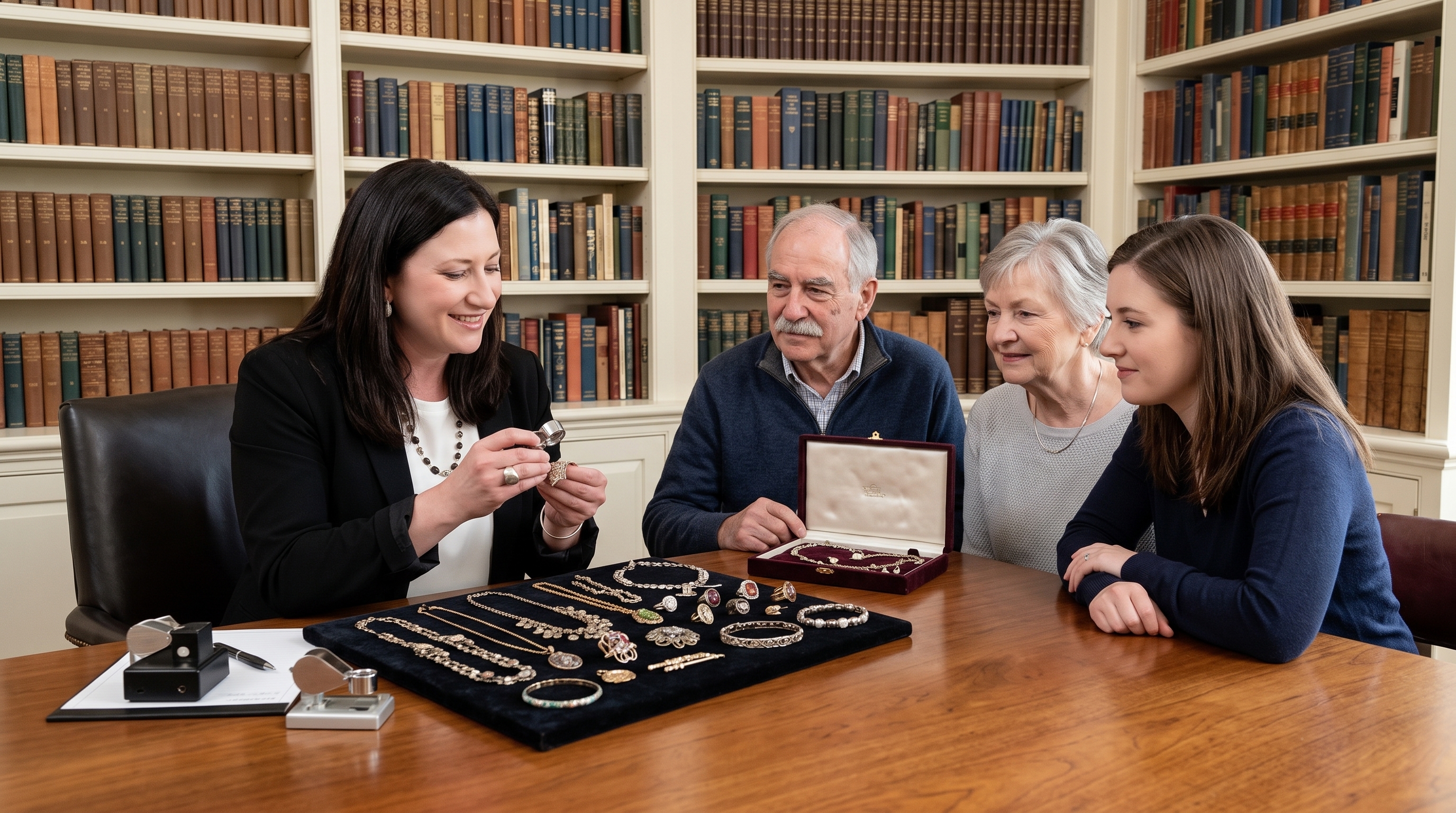
Just the other day, I had a lovely family come to me after their grandmother passed on. They were going through her jewelry box, full of beautiful pieces – some clearly cherished, others a bit of a mystery. One necklace, in particular, caught their eye. It looked like a simple antique gold chain with a small pendant, but something about it felt special. They were wondering if it was just costume jewelry or if it held more significant value, especially since they needed to divide the estate fairly among the siblings. This kind of situation is so common, and it’s exactly where a professional appraisal comes in handy.
When you're dealing with estate jewelry, whether it's for insurance, equitable distribution among family, or even considering a sale, knowing its true worth is paramount. It’s not just about what something looks like; it’s about understanding its place in the market and its unique characteristics.
Often, people think an appraisal is just about the big diamond or gemstone. And while those certainly play a significant role, a good appraisal looks at the entire piece. We consider the metal itself – is it 10k, 14k, 18k gold, platinum? The craftsmanship is vital, too. Is it a mass-produced piece or a finely handcrafted antique with intricate details, perhaps from a specific historical period? For example, a delicate filigree brooch from the Art Nouveau era might hold significant value not just for its materials, but for its artistry and historical context. Even the condition of the piece, whether it needs repairs, can influence its value. My job is to examine all these elements, not just the sparkle, and give you a comprehensive picture.
It's also important to understand that 'value' isn't a single, fixed number. Depending on why you need the appraisal, we might be looking for different kinds of value. For estate purposes, we usually talk about Fair Market Value (FMV). This is the price a willing buyer would pay a willing seller, neither being under any compulsion to buy or sell, and both having reasonable knowledge of relevant facts. It's often what you'd see if you were selling it on the open market. For insurance, however, we typically appraise for Replacement Value, which is the cost to replace the item with a new one of similar kind and quality in the current retail market. These numbers can be quite different, so it's crucial we know the purpose of your appraisal right from the start.
I'll soon be GIA graduate gemologist. I've completed basic gemstone and diamond courses, and I have over ten years of experience appraising jewelry. My role is to identify and describe your pieces accurately, using my knowledge of materials, manufacturing, and market trends. I'll tell you if that stone is a diamond or a white sapphire, and describe its characteristics. I'll research comparable sales and current market conditions. The key here is my independence. Unlike a jeweler who might be interested in buying your pieces, I don't have a vested interest in the outcome. My only goal is to provide you with an unbiased, defensible valuation. It’s about giving you clear information so you can make informed decisions, without any pressure, right here in a comfortable setting.
So, if you’re sifting through a loved one’s treasures and wondering about their true worth, don't guess. A professional appraisal provides that essential clarity, giving you peace of mind and the solid information you need to move forward, whatever your next steps may be.