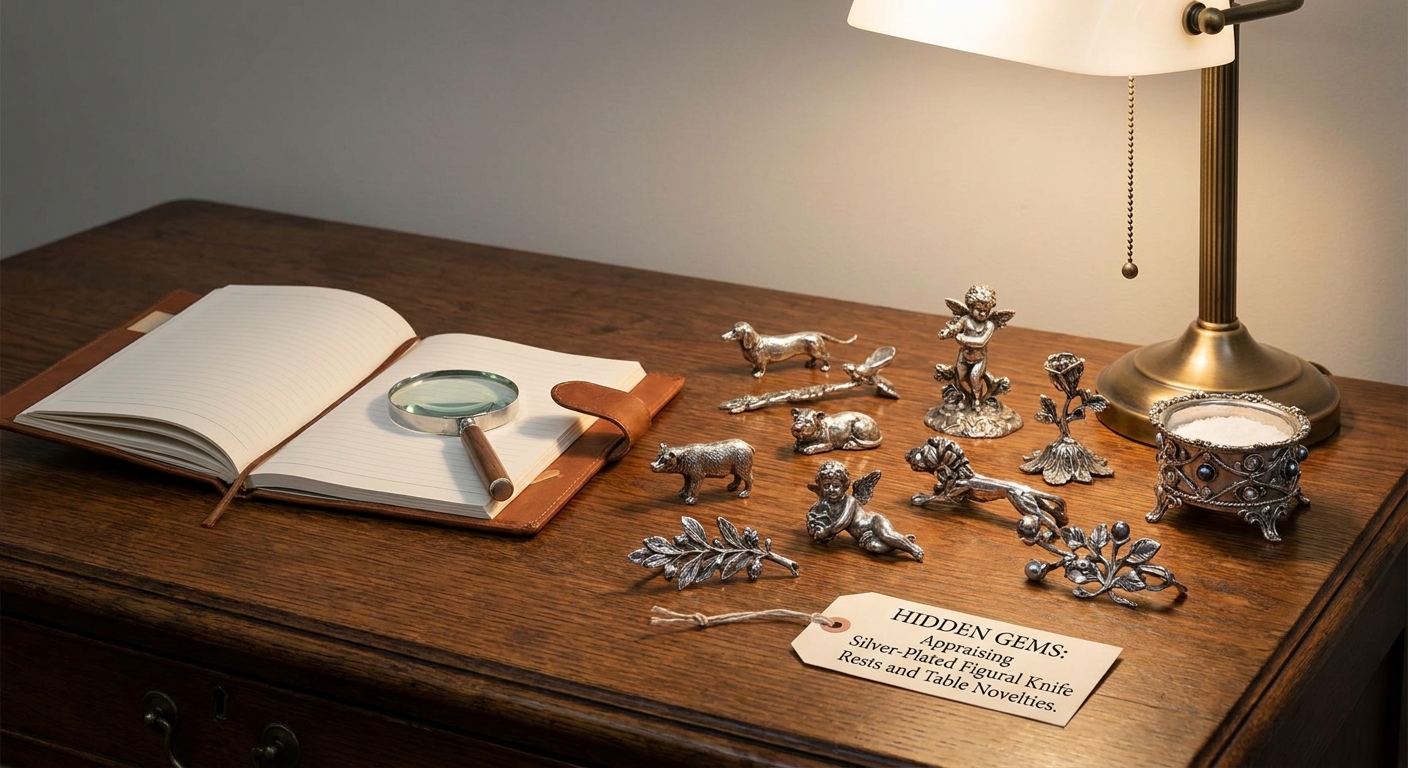
I had a family come into my office, sorting through a box of their grandmother's things. They pulled out these charming, peculiar little metal figures – a tiny dog, a detailed swan, even a miniature chef – all quite tarnished. They weren't sure if they were just old toys or something more, perhaps even solid silver. This is a common scene, and it perfectly illustrates how often true treasures are overlooked, especially when it comes to what we call 'table novelties' or figural knife rests.
Now, the first thing we often need to clarify with these pieces is whether they’re solid silver or silver-plated. Many folks see that lovely shine, or the tarnish, and assume it’s sterling. But often, especially with these charming Victorian-era figural items, they’re actually silver-plated. Don’t let that discourage you, though! Silver-plate, like EPNS (Electro-Plated Nickel Silver) or A1 Triple Plate, can still hold significant value, especially from renowned makers. We look for specific maker's marks, often tiny stamps on the underside, that tell us not just who made it, but the quality of the plating. A good appraisal will distinguish between the two and explain what those little marks mean for your item's worth.
Beyond the metal itself, the 'figural' aspect is where a lot of the charm and value truly lies. These little knife rests and table novelties were designed to delight and often tell a story. Think about a set of twelve different animals, each beautifully sculpted and detailed. Rarity plays a big part here. Common designs like a simple scroll might not fetch as much as a very specific, detailed fox hunt scene or a whimsical character from a popular children's book of the era. We consider the quality of the sculpting, the realism, and how unusual the subject matter is. Collectors often seek out complete sets or particularly rare figures, which can significantly boost their market appeal.
Condition, as always, is vital. While a bit of tarnish is expected and easily cleaned, deep scratches, dents, or significant loss of plating can impact value. However, sometimes a piece with a small flaw might still be highly desirable if it's exceptionally rare or from a sought-after maker. We also consider the context. Was it part of a larger set? Does it have any original packaging or a known history? While not always adding direct monetary value, these details can certainly add to the piece's story and sometimes, its desirability to certain collectors. It's about understanding the whole picture, right here.
So, if you’ve stumbled upon a box of these delightful little silver-plated figures, don't just tuck them away or dismiss them as trinkets. They could very well be 'hidden gems' waiting to be discovered. Understanding their true nature – whether they’re silver-plated or sterling, who made them, and how rare their design is – requires a professional eye. An appraisal helps you not only uncover their potential value for insurance, estate planning, or even sale, but also connect with a charming piece of history. Don't hesitate to reach out to a qualified appraiser; y'all might be pleasantly surprised by what treasures you hold.