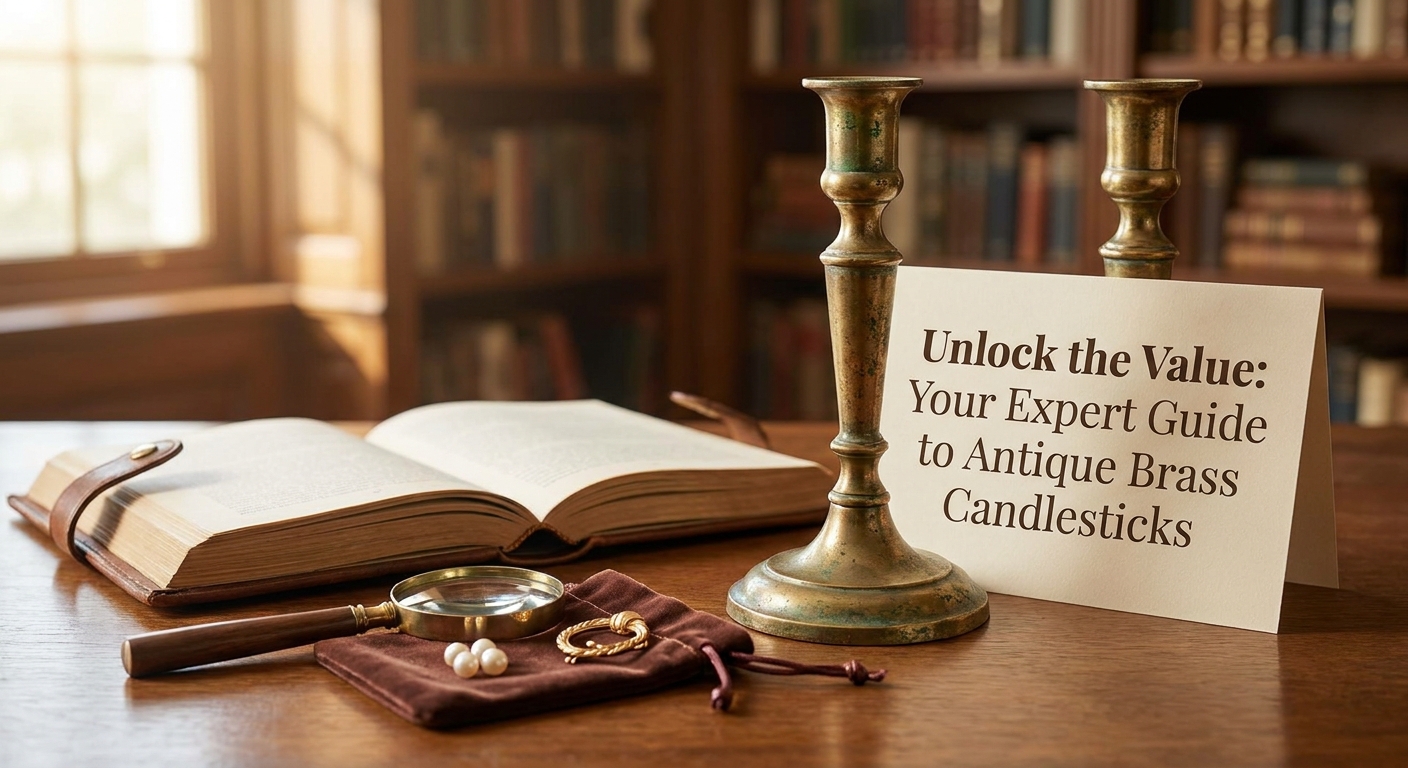
A sweet gentleman called me up, a bit perplexed. He was helping his mother downsize, bless her heart, and they’d unearthed a pair of tarnished brass candlesticks from the back of a cupboard. His first thought was, "These are just old and dirty," but something told him to pause before tossing them into a donation box. And good thing he did, y'all! What looked like simple, aged metal turned out to be a rather lovely pair of 18th-century English brass, much to his surprise.
This scenario plays out more often than you might think. Many folks inherit or stumble upon antique brass items, especially candlesticks, and underestimate their potential value. As an appraiser, with over 15 years in the jewelry world and currently deep in my GIA Graduate Gemologist studies, I’ve learned that value isn't always obvious. When I'm looking at antique brass candlesticks, there are a few key things I consider to unlock their true worth.
First, let's talk about construction and age. Early brass candlesticks, particularly those from the 17th and 18th centuries, were often cast in multiple sections and then joined together, usually with lead solder. You might see subtle seam lines, or even evidence of hand-tooling or filing where they were finished. Later pieces, especially after industrialization in the 19th century, tend to be more uniformly cast, sometimes even in one piece. A tell-tale sign of age and quality can also be the presence of a "push-up" mechanism – a small rod inside the candle cup that allows you to eject the candle stub. The type of push-up, whether it’s a simple rod or a more elaborate screw mechanism, can help pinpoint the period. For instance, a beautifully crafted Georgian candlestick with a robust push-up is quite different from a mass-produced Victorian piece.
Next up is condition and patina. Now, this is a big one. Please, resist the urge to polish those candlesticks to a gleaming shine! That rich, undisturbed layer of oxidation that develops over centuries, what we call patina, is often highly desirable. It tells a story and can significantly contribute to the item's value. Aggressive polishing can strip away this historical layer, sometimes diminishing the value. Of course, we also look for structural integrity: are there any major dents, cracks, or repairs? Original components, like the bobeches (those little dishes designed to catch wax), are always a plus. A candlestick with its original patina and minimal damage will almost always be more valuable than one that’s been over-cleaned or heavily repaired.
Finally, we consider rarity, design, and provenance. Is it a common design, perhaps a Colonial Revival piece from the early 20th century, or something truly unique? Candlesticks that feature unusual forms, intricate detailing, or particular historical significance tend to command higher prices. While maker's marks are less common on very old brass than on silver, any identifiable mark or a documented history of ownership (provenance) can certainly add to the story and, consequently, the value. The market for pairs is also generally stronger than for single candlesticks, though a truly exceptional single can still hold significant value.
Ultimately, determining the true market value of antique brass candlesticks involves a careful eye for these details and a deep understanding of current market trends. It's more than just a quick glance; it's a careful study of history, craftsmanship, and condition. If you've got a pair – or even a single – of these old beauties tucked away, don't just assume they're decorative. A professional appraisal can unveil their true worth, helping you understand their place in history and their financial significance for estate planning, insurance, or even just plain curiosity. It's a small investment that can reveal a big return, y'all.