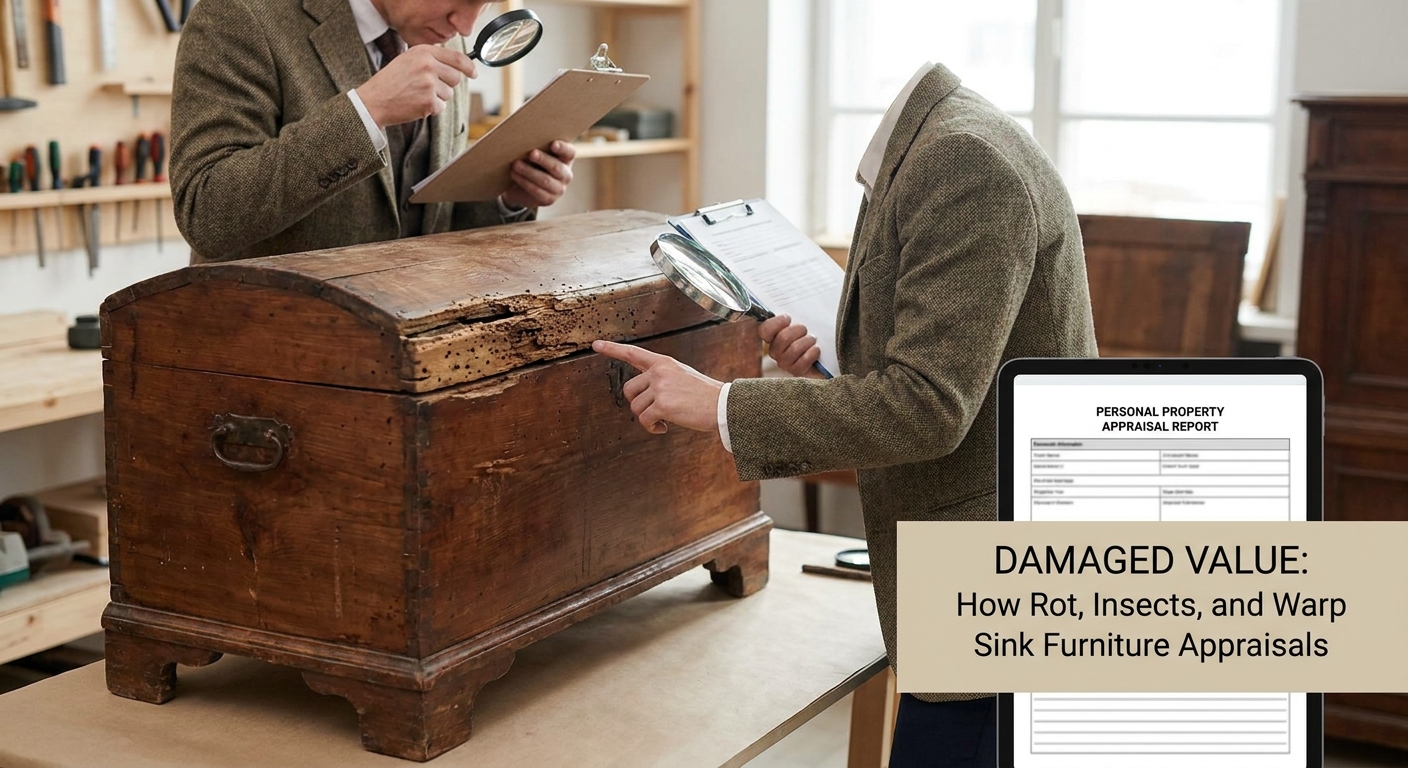
Just last month, I had a lovely family reach out about appraising an antique dining set they inherited. It was a beautiful, dark wood suite, passed down through generations, and they remembered holidays gathered around it. They had such fond memories, and from their photos, it certainly looked impressive. But when I arrived and started my examination, a different story began to unfold. The moment I opened a cabinet door, a faint, musty scent emerged, and I could see the tell-tale signs of moisture damage along the baseboards and a subtle bowing in the tabletop. It was a tough conversation, as the sentimental value was immense, but the market value, unfortunately, was far less than they had hoped.
This scenario, while unique in its details, is a common one when appraising furniture. While we often see the beauty and history in a piece, the reality is that rot, insects, and warp can dramatically sink its appraisal value. These issues aren't just cosmetic; they speak to the structural integrity, long-term stability, and overall preservation of the item.
Let's talk about rot and moisture damage first. Wood, being an organic material, is highly susceptible to water. Whether it's from a leaky roof, a damp basement, or even just high humidity over time, moisture can cause wood fibers to break down. This leads to dry rot, wet rot, and mold, which not only discolors and weakens the wood but can also emit an unpleasant odor. Imagine a stunning antique chest with beautiful inlay, but the legs are soft and crumbling at the base, or the veneer is lifting and bubbling due to water exposure. This kind of damage often requires extensive, costly restoration, and sometimes, the piece is beyond economic repair. Even if it can be fixed, the cost of that repair often outweighs the potential market value, which significantly impacts the appraised value.
Then there are those pesky insects. Oh, bless their hearts, they just love a good piece of old wood! We’re talking about powderpost beetles, termites, and other wood-boring insects. They tunnel through the wood, leaving behind tiny holes and a fine, sawdust-like material called "frass." Even if the infestation is no longer active, the damage they’ve left behind compromises the structural integrity of the furniture. A chair leg riddled with pinholes might look intact at a glance, but its strength is severely diminished. For an appraiser, signs of insect damage mean a piece is structurally unsound, less durable, and could potentially spread an infestation to other items. This is a big red flag, and it always lowers the value, sometimes quite drastically.
Finally, we have warp and other structural distortions. Wood is a living material, and it reacts to changes in temperature and humidity. When conditions fluctuate too much, it can cause the wood to expand, contract, bend, or twist. This is what we call warping. You might see a tabletop that's no longer flat, drawers that stick or don't close flush, or panels that have split or cracked. A well-made piece of furniture should be square and stable, and when it’s not, it impacts both its functionality and its aesthetic appeal. Repairing warp can be incredibly challenging, sometimes requiring disassembling the entire piece, reshaping components, and reassembling it. This level of intervention is often so expensive that the cost of restoration makes the piece uneconomical to repair for resale, lowering its value significantly.
So, what's the takeaway here, y'all? Before you start dreaming of grand auction prices for that inherited heirloom, take a good, close look at its condition. Don't just see the potential; see the reality of its current state. Inspect for softness in the wood, listen for creaks, look for tell-tale dust or tiny holes, and check if everything is sitting square and true. An appraiser will always consider these factors, as they are crucial in determining an accurate market value. Understanding these common issues can help you better prepare for an appraisal and have a more realistic expectation of your furniture’s worth.