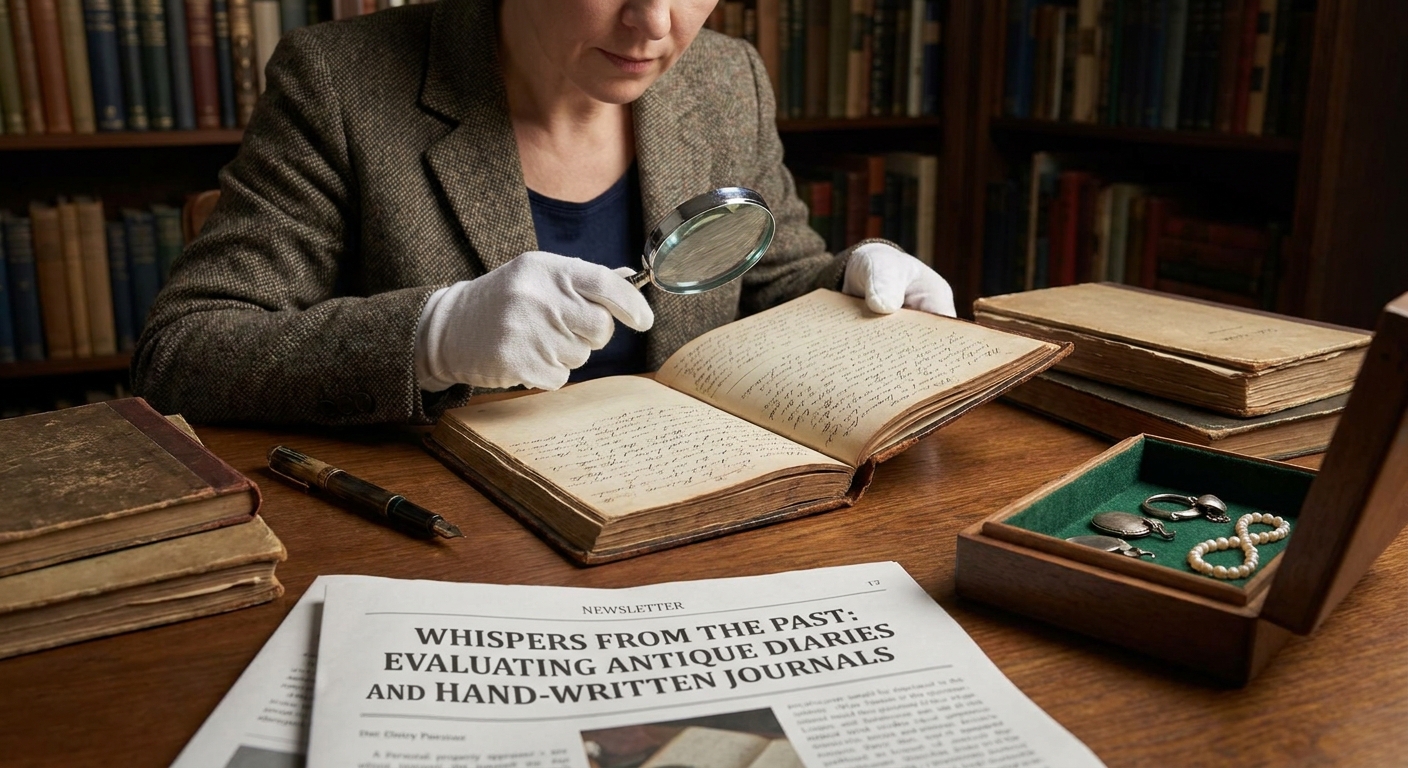
I had a lovely family come to me with a rather unassuming box they’d found tucked away in their grandmother’s attic. It was full of old photographs, dried flowers, and right there, nestled among them, was a small, leather-bound journal. Faded ink, delicate pages, and the distinct scent of age. They wondered, "Jessica, what in the world is this, and could it be worth anything?" It’s a common scenario, y’all, and one I truly enjoy exploring. These handwritten journals and diaries are more than just old books; they’re unique windows into history, carrying the whispers of lives lived long ago.
When we look at something like an antique diary or a handwritten journal, the very first thing we consider is its physical condition. Is the binding still intact, or are the pages loose and falling out? Is the paper brittle, yellowed, or stained? Has the ink faded so much it’s hard to read? A well-preserved journal, even with signs of age, will always fetch more interest than one that’s been poorly stored or damaged. Think about it like a cherished family heirloom; the better it’s cared for, the more its story can continue to be told. We want to see that it’s been respected, even if it’s had a long journey.
Next, and perhaps most fascinating, is the content itself. What secrets do those pages hold? Is it a daily account of mundane life, or does it offer a unique window into a significant historical event, a particular social custom, or even the thoughts of a person who later became important? A diary detailing a soldier’s experience in the Civil War, for instance, or a suffragette’s personal reflections, carries immense historical weight. Even a local journal describing life in a small town during a specific era can be incredibly valuable to regional historians or collectors. We're looking for unique perspectives, firsthand accounts, and connections to broader historical narratives. Sometimes, it’s not just what was written, but who wrote it – a known author, artist, or public figure can drastically increase an item's value, even if the content seems ordinary.
Then there's authenticity and provenance – that's just a fancy way of saying, "Is it real, and where did it come from?" For a handwritten document, we examine the paper, the ink, and the handwriting style to confirm its age and ensure it’s consistent with the period it claims to be from. We look for clues that match the historical period. Provenance helps us trace the journal's history, ideally back to its original owner. If it comes with a clear family history, or records of how it was acquired, that adds a layer of trust and often, value. Without a solid story of ownership, it can be a bit harder to establish its true worth to collectors.
Evaluating these 'whispers from the past' isn’t just about putting a number on them; it’s about understanding their story and their place in history. If you've stumbled upon an old diary or journal and are wondering about its potential, my best advice is to reach out to a certified personal property appraiser. We have the expertise to assess not just the physical item, but also its historical context, authenticity, and current market demand. It’s how we ensure these precious pieces of history are properly understood and valued, for you and for future generations.