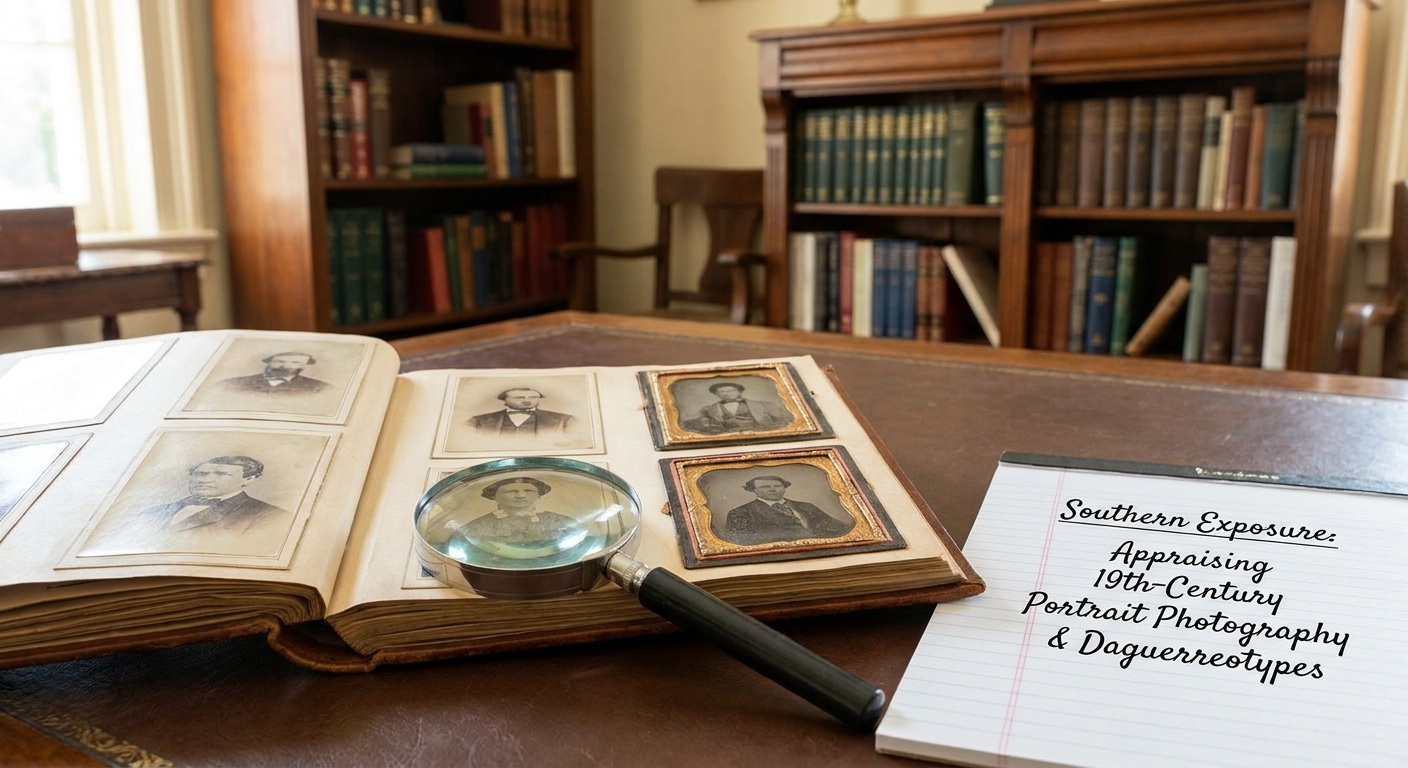
Consider the weight of a small, hinged case in your hand, perhaps made of gutta-percha or leather. When you click it open, an ancestor’s eyes meet yours, captured in a silvery, mirror-like image. These aren't just old family photos; they're often daguerreotypes, remarkable artifacts from the dawn of photography in the 19th century. For us appraisers, especially when they hail from the Southern United States, these pieces present a fascinating blend of art, history, and technical innovation.
When I’m appraising these early photographic portraits, the first thing we establish is exactly what you have. A true daguerreotype is a direct positive image made on a highly polished, silver-plated copper sheet. You can usually identify it by its distinct mirror-like surface; if you tilt it, the image seems to disappear and reappear, almost like a ghost. It's truly a marvel of its time. Other early photographic processes, like ambrotypes and tintypes, also came in similar cases and are often mistaken for daguerreotypes. Ambrotypes are images on glass, while tintypes are on thin metal, and neither has that distinctive reflective quality. Knowing which process created your image is the first crucial step in determining its market value.
After identification, condition is king, plain and simple. Even a historically significant daguerreotype can lose a substantial amount of value if it's been scratched, tarnished, or if the protective seal around the image has been broken. Daguerreotypes are incredibly delicate; even a fingerprint can cause permanent damage. Tarnish, that dark discoloration you might see, is a natural chemical reaction over time, but severe tarnish can obscure the image and reduce its appeal. The condition of the case itself also plays a role. Is it intact? Are the hinges working? Is the velvet lining still present and in good shape? A well-preserved image in its original, intact case will always command a higher value than one that’s been damaged or separated from its housing.
Finally, we look at what makes your particular daguerreotype or portrait photograph special. Who is pictured? Is it a prominent figure, or perhaps someone in a distinctive uniform or attire that speaks to the era? Images depicting African Americans, particularly free people of color or those from the Reconstruction era, can be especially significant. The photographer can also be key; some 19th-century Southern photographers were renowned, and their signed works are highly sought after. Provenance – the history of ownership – can add to the story, and sometimes, the value, especially if it connects the piece to a specific place or event in Southern history. These details help us place your piece within the broader market of collectors, historians, and institutions, right here in the South and beyond.
So, if you’ve got one of these precious glimpses into the past tucked away, don't just let it sit there gathering dust, y'all. Having a professional appraisal will not only tell you what it’s worth but also provide valuable insights into its history and proper preservation. It’s the best way to ensure these delicate treasures are understood, valued, and cared for properly for generations to come.