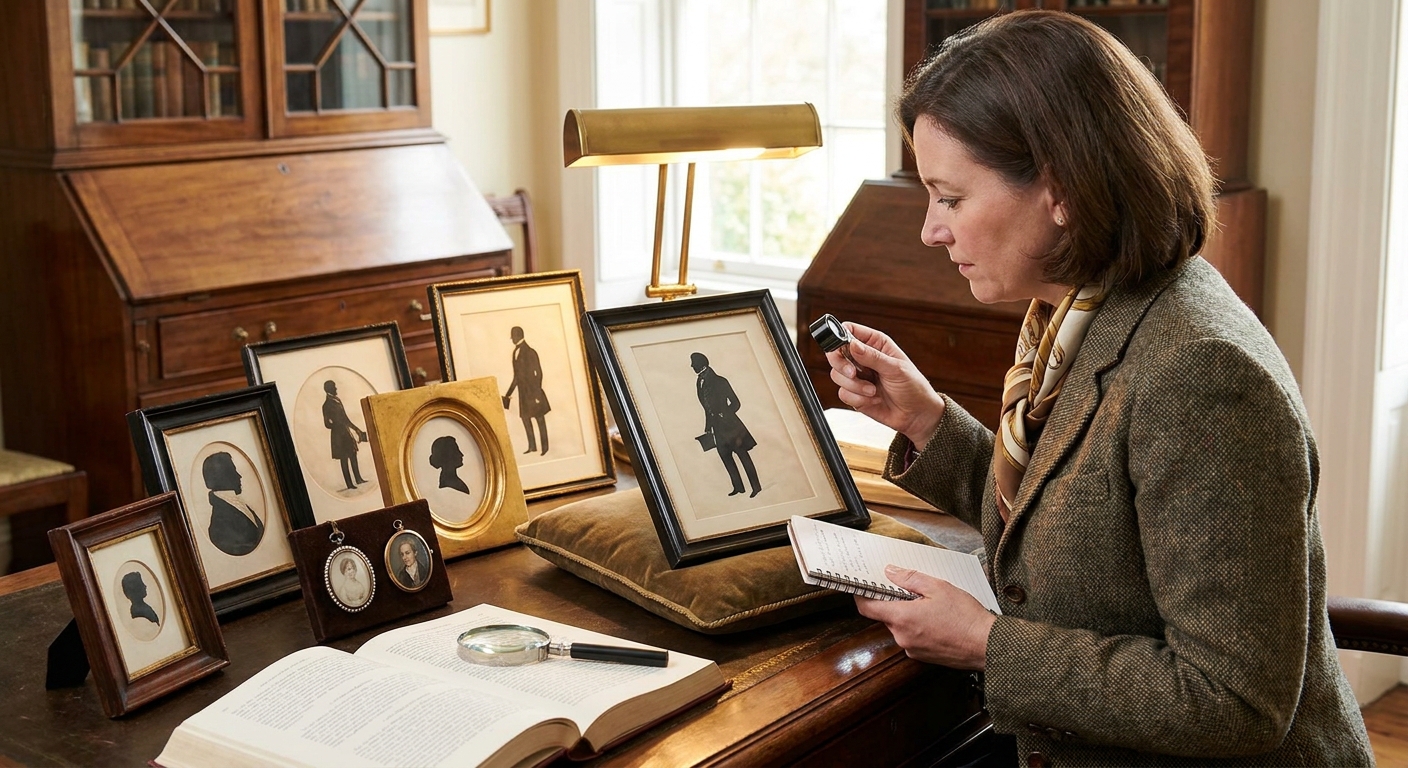
A small, dark profile, crisply cut from paper and set against a light background, often sits quietly in an old frame. It’s not a photograph, but a silhouette—a unique snapshot from the 19th century, captured long before cameras became commonplace. These unassuming images, seemingly simple in their stark black and white, are actually rich historical documents, and valuing these "voids" requires a keen eye for detail and a deep understanding of their unique place in art history.
Many folks might see these as charming heirlooms, perhaps a bit faded with time, and wonder if they hold any real value beyond sentiment. But I can tell you, as someone who’s spent over 15 years appraising everything from antique jewelry to these very paper treasures, a 19th-century silhouette can be a mighty valuable piece of history. The process of appraising them involves peeling back layers of time, examining not just the image itself, but the story it tells and the hand that created it.
One of the first things we consider is the artist and their technique. While many silhouettes were cut by amateurs, often for family albums, others were created by renowned professional artists of the era. Names like Augustin Edouart, Charles Balthazar Julien Févret de Saint-Mémin, or the Peale family are highly sought after. An attributed or signed piece by such a master can significantly increase its value. Beyond the artist, the technique itself matters. Was it a "hollow-cut," where the profile was carefully removed from the paper, leaving the void as the portrait? Or was it painted, perhaps with bronzed details to highlight hair or clothing? Each technique has its own nuances, and understanding them helps us place the piece accurately within the market. For example, a delicate hollow-cut silhouette, especially if it includes a hand-drawn bust line or other embellishments, can be a real treat to find.
Then there’s condition and context. The paper itself is fragile, so we look closely for tears, creases, foxing (those little brown spots caused by age and humidity), or repairs. An original, period frame, especially if it's in good shape and made of materials like rosewood, brass, or papier-mâché, adds considerable value. Often, you'll find silhouettes adorned with watercolor details, hair work, or even bits of fabric to enhance clothing. These embellishments, when original and well-preserved, contribute to the overall appeal and value. It’s also important to consider the size and presentation—a small, intimate profile is different from a larger, more elaborate family grouping.
Finally, we delve into provenance and subject matter. Knowing the history of ownership, or "provenance," can be incredibly important. If you know who the silhouette depicts—especially if they were a notable figure, a military officer, or someone with a documented lineage—it can elevate the piece from a generic portrait to a specific historical artifact. Any accompanying letters, family records, or original labels on the back of the frame that identify the sitter or the artist are invaluable. These details help us connect the silhouette to its past, giving it a richer narrative and often, a higher market value.
Appraising these lovely shadows is about more than just a quick glance; it’s a careful study of history, artistry, and preservation. If you have one of these fascinating 19th-century silhouettes tucked away, and you're curious about its true worth, a professional appraisal can help you understand its unique place in history and its value in today's market. It's a way to honor the past and ensure these delicate pieces of history are properly understood and cherished.