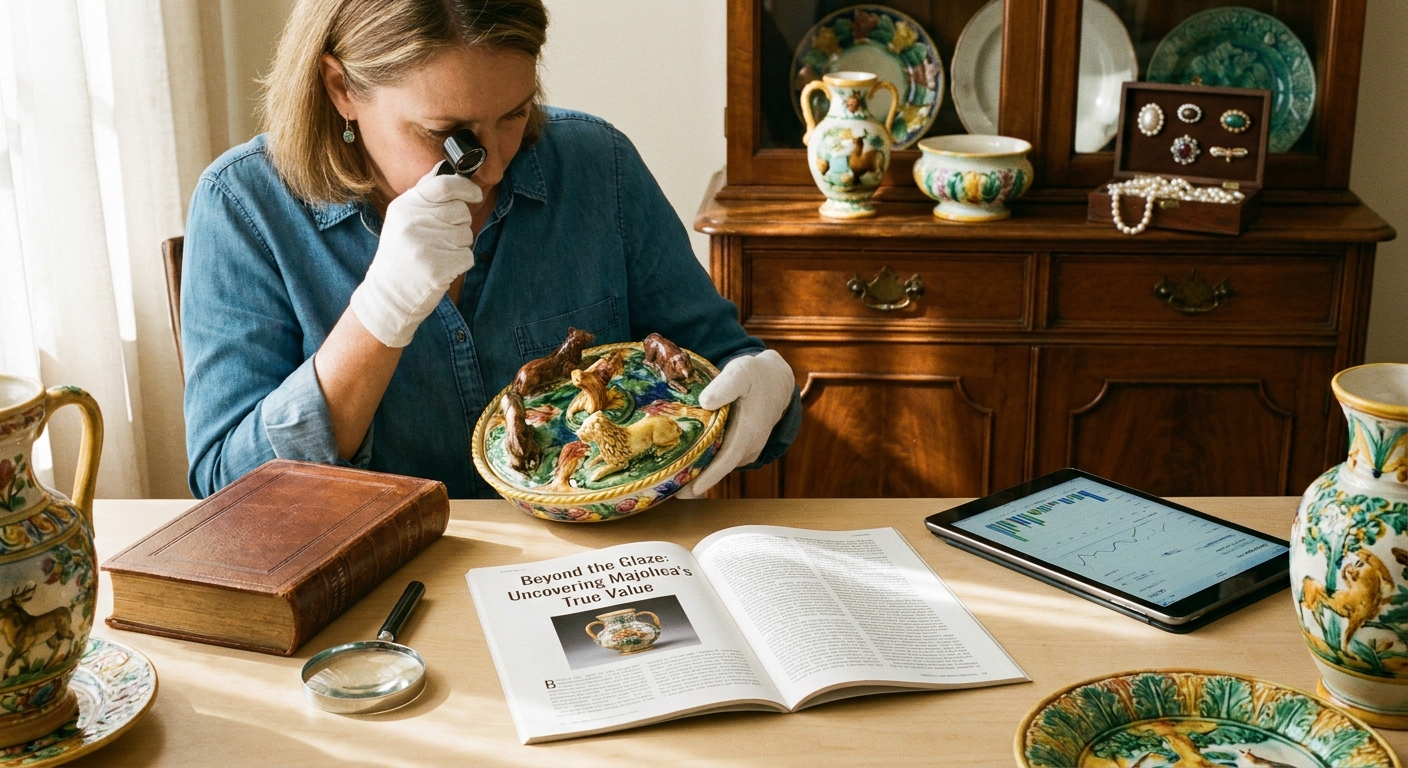
The gleam of a Majolica glaze can be incredibly captivating, drawing the eye with its bold colors and intricate designs. For many, these vibrant ceramic pieces are simply beautiful decorative items, perhaps inherited from a grandmother or picked up at an estate sale. But what lies beneath that rich, often iridescent surface? As an appraiser, I've seen Majolica pieces that were considered mere curiosities turn out to be significant treasures, and others, quite lovely to look at, whose market value was a bit more modest than their owners hoped. Uncovering the true value of Majolica goes well beyond its initial visual appeal.
Majolica, for those not familiar, is a distinctive type of lead-glazed earthenware, known for its bold colors and often whimsical, naturalistic, or classical designs. It enjoyed immense popularity, especially in the Victorian era, with manufacturers in England, France, and the United States producing a vast array of forms, from elaborate platters and pitchers to charming figural pieces like sardine boxes or game pie dishes.
When I’m evaluating a piece of Majolica, one of the very first things I’m looking at, even before its beauty, is its condition. Y’all might be surprised just how much a tiny chip or a hairline crack can impact value. Unlike some other collectibles where minor wear is expected, Majolica’s value is incredibly sensitive to condition issues. A perfect piece, or one with only very minor, age-appropriate wear, will always command a premium. Extensive damage, or even professional repairs, no matter how skillfully done, generally reduce market value significantly. If a repair isn't disclosed, it can be a real issue. So, if you’re looking at a piece, gently turn it over, run your fingers along the edges, and really examine the surface for any tell-tale signs of damage or restoration.
Next, we dive into the detective work of identification. Flipping a piece over to look for a maker’s mark is often the first thing I do, though not all pieces are marked. Makers like Minton, George Jones, and Wedgwood in England, or Sarreguemines in France, are highly respected, and their marked pieces generally command higher prices. American makers, such as the Griffin, Smith & Hill company (often identified by their "Etruscan Majolica" mark), also produced wonderful and collectible pieces. Knowing the maker, and sometimes even the specific pattern or mold number, can provide crucial insight into rarity and desirability. Catalogues and historical records often help us trace a piece’s lineage, which is part of the fun of it, if you ask me.
Finally, the form and subject matter play a considerable role. While a beautiful plate is always nice, certain forms are much more sought after by collectors. Elaborate figural pieces—think a large tureen shaped like a game bird, a corn-cob pitcher, or a stand for asparagus—often fetch considerably more than more common forms. Rarity of the specific design, the intricacy of the molding, and the quality of the glazes all contribute to its market appeal. Earlier pieces, particularly those from the height of its production in the mid to late 19th century, also tend to hold more value, especially if they are unique or represent a maker's innovative design.
Understanding the true value of your Majolica is a blend of appreciating its artistry, scrutinizing its condition, identifying its origins, and recognizing its market desirability. If you’ve got a piece of Majolica that you’re curious about, whether it’s for insurance, estate planning, or simply to satisfy your own curiosity, a professional appraisal can provide that clear, objective valuation. It’s the best way to ensure you really understand what that beautiful, glazed treasure is worth.