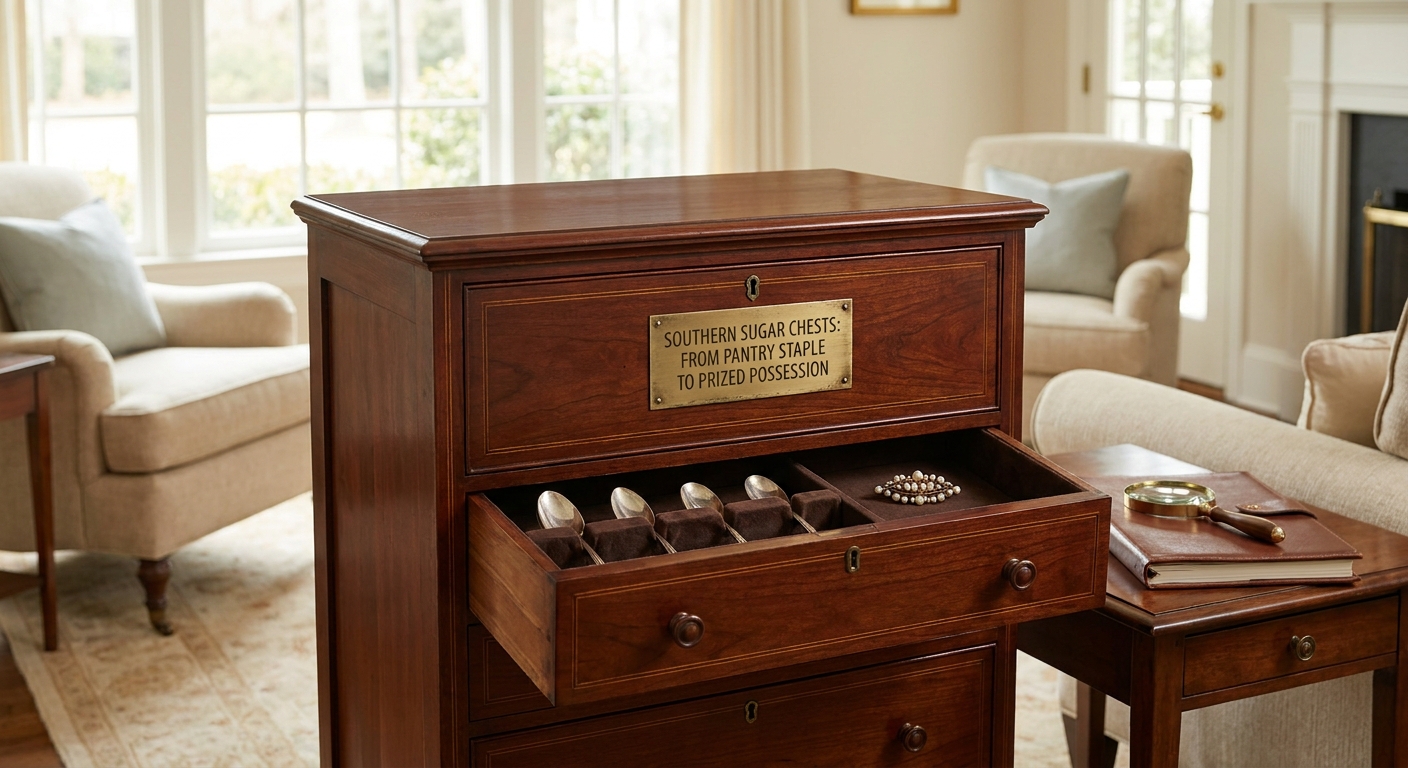
Consider a piece of furniture you might have tucked away, perhaps a small, elegant chest, often with a hinged lid. It might be made of beautiful cherry or walnut, showing the rich, aged surface that only time can create. Many assume it was for linens or keepsakes, but if it hails from the American South, particularly the Upper South, and has a distinctive divided interior, you might be looking at what’s known as a Southern sugar chest.
This wasn't just any storage box; it was a testament to the preciousness of sugar in the 18th and 19th centuries. Back then, sugar wasn’t the everyday commodity we know today. It was a costly luxury, often imported from the West Indies, and a powerful symbol of wealth and hospitality. Families would guard their sugar carefully, much like they would their silver or other valuables. A sugar chest, therefore, served a very practical, and often secure, purpose in the Southern home.
These chests typically stood on legs, sometimes quite tall, and featured a hinged top. Inside, you’d often find a divided compartment – usually one larger section for lump sugar and a smaller one for granulated sugar, or sometimes a separate drawer below. The lock and key were crucial, protecting the valuable contents from both servants and children. Imagine the trust placed in such a piece, right here in our own Southern heritage, holding what was essentially a family's liquid assets in sweet form.
The craftsmanship of these chests often varied by region. You’ll find beautiful examples from Kentucky, Tennessee, and Virginia, each showing subtle differences in their construction and style. They were commonly made from local hardwoods like cherry, walnut, or sometimes maple, showcasing the skilled hands of Southern cabinetmakers. The quality of the joinery – how the pieces of wood fit together – and the details of the hardware, like the hinges and escutcheon plates, can tell us a lot about its age and origin. An experienced appraiser looks for these tell-tale signs, distinguishing between a well-made original and later reproductions or modified pieces.
Today, these chests are no longer about storing sugar but about preserving history and art. When I appraise one, I look at several factors that contribute to its market value. Condition is paramount: original finish, minimal repairs, and intact hardware are highly desirable. Provenance, or the documented history of ownership, can also add significant value, especially if it connects the piece to a prominent family or historical event. The quality of the original craftsmanship and the rarity of the design are also key considerations. A sugar chest that retains its original lock and key, for example, is always a bit more special.
These chests are more than just old furniture; they’re a tangible link to our Southern past, carrying stories and significant value. If you have a piece like this, or any item you suspect holds more than sentimental worth, a professional appraisal can uncover its true market value and help you understand its place in history, y'all.