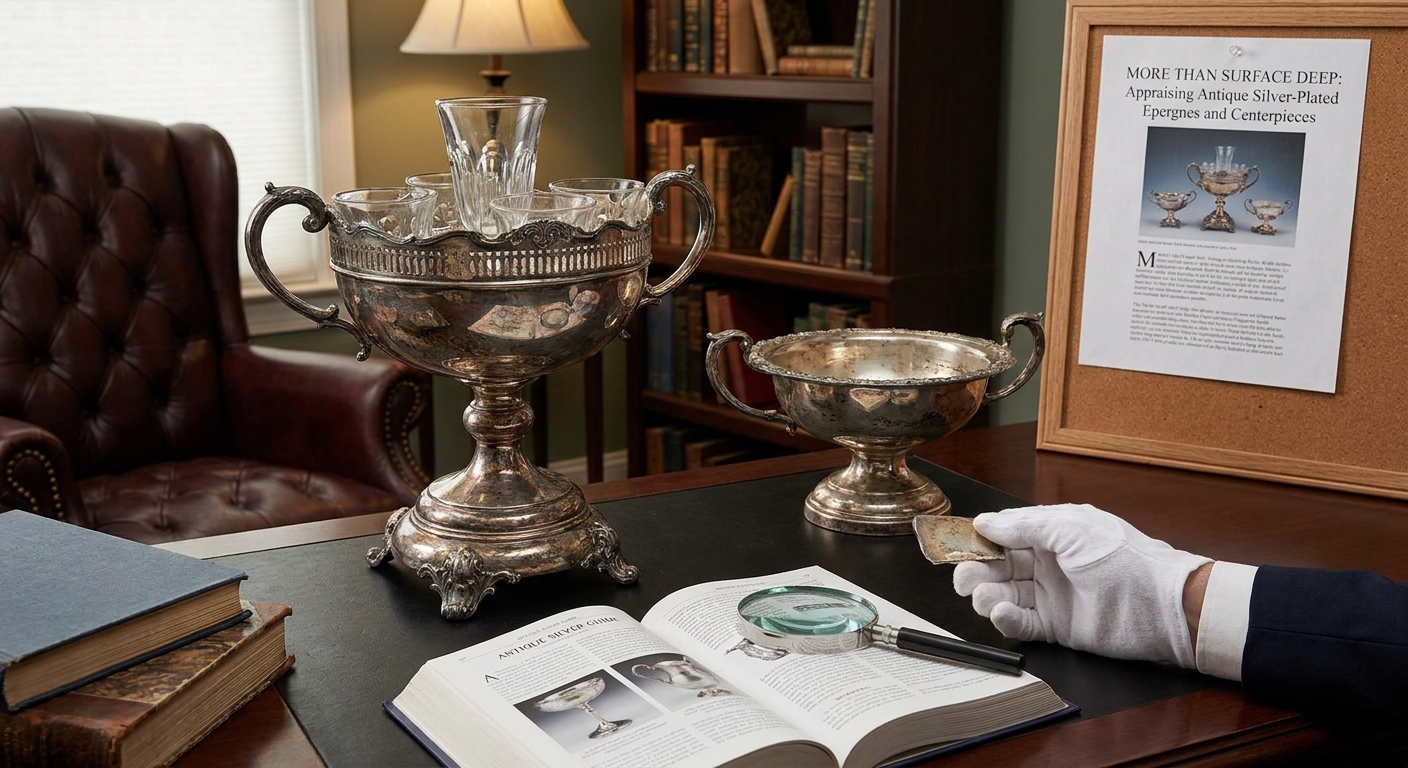
A magnificent centerpiece, perhaps with delicate glass bowls perched on elegant silver arms, can instantly capture a room's attention. These elaborate table decorations, often called epergnes, are true conversation starters, recalling grand dinners and elegant gatherings of yesteryear. When I see one, especially those intricate designs from the Victorian era, the first question I often get—and the one that dictates so much of its appraisal—is whether it’s solid sterling silver or silver-plated.
Many folks assume that if it looks like silver, it is silver. You see, y'all, while both sterling and silver-plate bring a lovely shine to the table, their underlying value is quite different. Sterling silver is a precious metal alloy, meaning its value is tied to the fluctuating silver market, the craftsmanship, and its historical significance. Silver-plate, on the other hand, is a thin layer of pure silver electroplated onto a base metal, usually copper, brass, or nickel silver. Identifying this distinction is crucial. Look closely for marks like "EPNS" (Electro-Plated Nickel Silver), "A1," "Triple Plate," or even just a maker's mark without any "Sterling" designation. These telltale signs confirm you're dealing with plate, and that's perfectly alright! Many silver-plated pieces are incredibly beautiful and historically significant in their own right.
The true "surface deep" aspect for silver-plated epergnes and centerpieces lies heavily in their condition. Unlike sterling, where minor dents can often be repaired without much fuss, worn plating on a silver-plated piece is a big deal. If the thin silver layer has rubbed away, revealing the base metal underneath, it significantly impacts value. Re-plating can be quite costly, often more than the piece's value, so we always consider that when assessing. We also look for missing components, which are common with these elaborate pieces. Did it originally have specific glass inserts for flowers or sweets? Are all the arms present? Even small details like the original bells or mirrors can make a big difference in what a piece is worth to collectors.
Beyond condition, the maker and the era of production play a significant role. Some silver-plating companies, like Gorham, Meriden Britannia, or Reed & Barton from the U.S., or Mappin & Webb and Elkington from the U.K., were renowned for their quality and artistry. Their pieces, even if silver-plated, often command higher values due to their design integrity and historical importance. A well-designed, complete, and well-preserved silver-plated epergne by a prominent maker can certainly be a cherished heirloom and a valuable antique.
So, when you're admiring a gleaming, multi-tiered centerpiece passed down through your family, remember that its story and value go far beyond just its initial sparkle. Understanding whether it's sterling or plate, its condition, and who made it are all vital pieces of the puzzle. If you're curious about the true worth of your own silver-plated treasures, getting an expert appraisal can provide clarity and peace of mind, helping you truly appreciate the heritage right there in front of you.