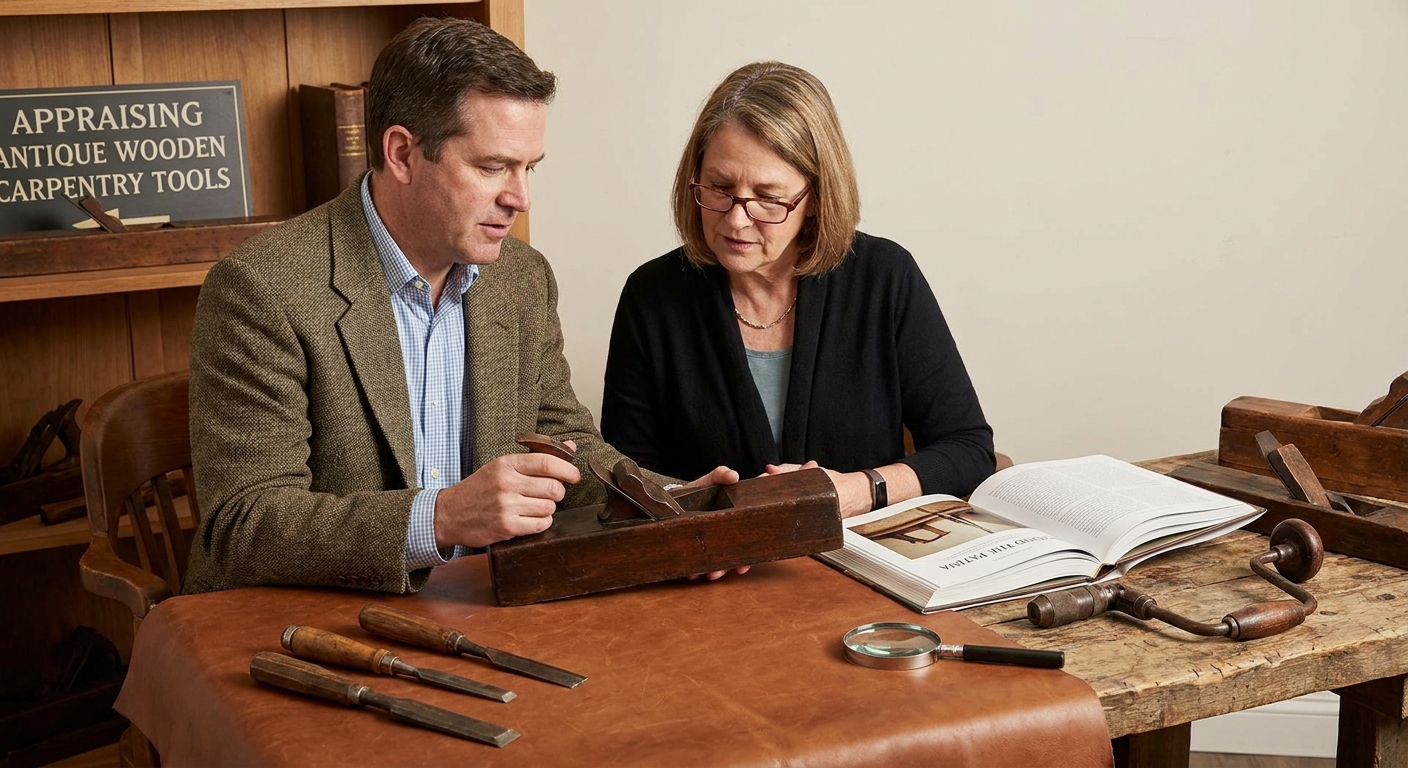
When I'm evaluating an antique wooden carpentry tool, the true story of its value often lies far deeper than its surface appearance. You might see a hand plane, its beechwood body darkened with age and the faint scent of linseed oil still clinging to it, and wonder if it's just a relic from grandpappy's workbench or something more significant. Often, it's the latter, and understanding the nuances makes all the difference in assessing its true worth. That worn, darkened surface, what we call patina, isn't just dirt; it’s a record of a tool’s life, but it only tells part of the tale.
One of the first things we look for is the maker’s mark. These are often subtle stamps or engravings, usually on the toe or heel of a plane, or along the body of a ruler or gauge. Identifying the manufacturer—be it a well-known name like Stanley, or a more obscure but highly prized regional maker such as Sandusky or Auburn Tool Co. from centuries past—can dramatically impact value. Some early American or European makers produced tools in limited quantities or with unique designs that are highly sought after by collectors today. This mark, combined with any provenance, which is simply the history of who owned the tool and where it came from, can elevate a common item to a rare find. Maybe it was used by a famous craftsman, or perhaps it’s part of a documented collection; these details add layers to its story and value.
Beyond the identity of its creator, the condition and completeness of an antique wooden tool are paramount. It’s not just about whether it still works, but how much of it is original. Has the iron blade been replaced? Are the wedges, nuts, and screws the ones it left the workshop with? Minor wear from honest use is usually acceptable and even desirable, as it speaks to the tool’s history. However, significant repairs, missing parts, or alterations can detract from its value. For instance, a molding plane designed to cut a specific decorative profile needs all its intricate parts intact to command top dollar. We also consider the wood itself—is it free from major cracks, rot, or active insect damage? A bit of careful inspection can reveal a lot.
Finally, we consider the rarity and desirability of the specific tool. While a simple wooden jack plane might have sentimental value, certain specialized tools—like complex plow planes, intricate dado planes, or early forms of measuring devices—can be quite rare. These were often produced in smaller numbers and required particular skill to use, making them fascinating to collectors. The market for antique tools is always shifting, and what might have been overlooked a decade ago could be highly desirable today, especially if it represents a significant innovation in carpentry history or a particularly beautiful example of craftsmanship. Y'all might be surprised at what an old wooden ruler or a set of specialized chisels could be worth.
So, if you’ve got an old wooden tool tucked away, perhaps from a grandparent’s workshop, don’t just dust it off and assume its fate. It could be a treasure waiting to be rediscovered. A professional appraisal can uncover its true story and value, ensuring you make informed decisions about your cherished items and their place in history.