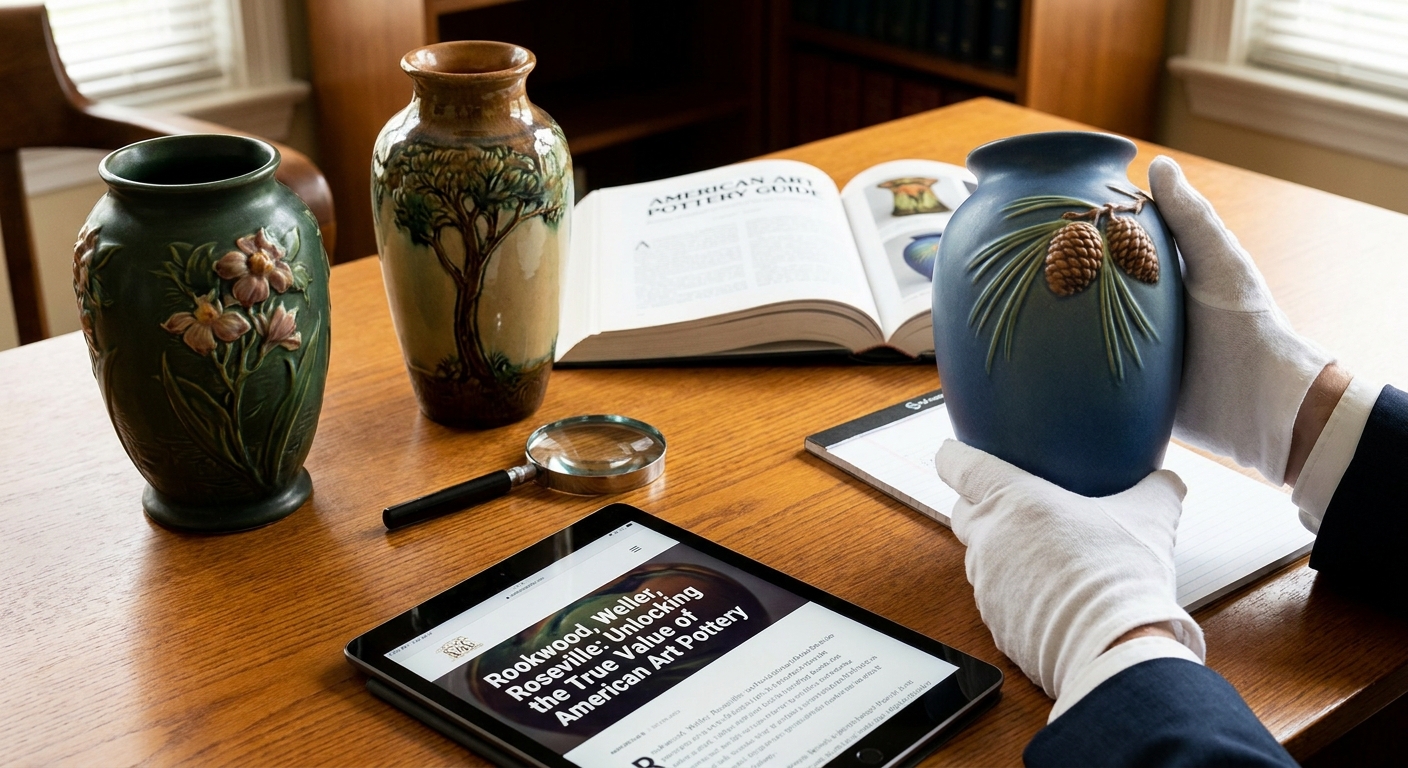
A common scenario I encounter involves someone bringing in a piece of pottery, often a vase or a bowl, that has been a quiet fixture in their home for years. They might have always admired its unusual glaze or the way the colors blend, but never truly considered its origins until a friend mentions “Rookwood” or “Roseville.” Suddenly, that decorative item on the mantelpiece transforms from a family keepsake into a potential treasure, and the question shifts from "Is this pretty?" to "What's this truly worth?"
Understanding the actual value of American art pottery, like pieces from Rookwood, Weller, or Roseville, is a bit more involved than just recognizing the name. While these makers are certainly celebrated, not every piece carries the same weight in the market. The first thing I often look for, and what y'all should always check, is the maker's mark. Rookwood, for instance, is famous for its distinct flame mark, which evolved over the years and often includes a Roman numeral indicating the year of manufacture. Weller and Roseville also used various marks, from impressed names to foil labels, each helping to date the piece and confirm its authenticity. Knowing which mark, and its specific characteristics, tells us a lot about the period and potential rarity.
Beyond the mark, the condition of the piece is paramount. Even a rare Rookwood vase can see its value plummet if it has a significant chip, a hairline crack, or a noticeable repair. Minor flaws can be overlooked on extremely rare items, but generally speaking, collectors are looking for pieces in excellent, original condition. Think of it like a beautiful piece of jewelry; a chipped diamond, no matter how large, will always be worth less than one without damage. Don't be tempted to "fix" a piece yourself, either; professional restoration is a highly specialized skill, and a poorly executed repair can do more harm than good to a piece's value.
Next, we consider the form, glaze, and decoration. Some shapes are far more desirable than others, especially those that are unique or less common. The glazes themselves play a huge role; Rookwood's Vellum glaze, known for its soft, matte finish that mimics parchment, is highly prized, as are some of their more vibrant, experimental glazes. Roseville's various lines, like Futura, Pine Cone, or Water Lily, each have their own distinct aesthetic and market demand. For many of these potteries, pieces that feature hand-painted decoration, especially if signed by a known artist, will command a premium over those with more common or mass-produced designs. It’s a bit like comparing a custom-designed pendant to a mass-produced charm – the artistry and uniqueness make a real difference.
The world of American art pottery is rich with history and artistic expression. Deciphering the true value of a Rookwood vase, a Weller jardinière, or a Roseville bowl involves a careful eye for detail, knowledge of market trends, and an understanding of the specific characteristics that make each piece unique. If you've got a piece that makes you wonder, "What's the real story here?", then getting a professional appraisal is the best way to unlock its true potential and understand its place in the market. It ensures y'all have an accurate picture, whether for insurance, estate planning, or simply your own curiosity.