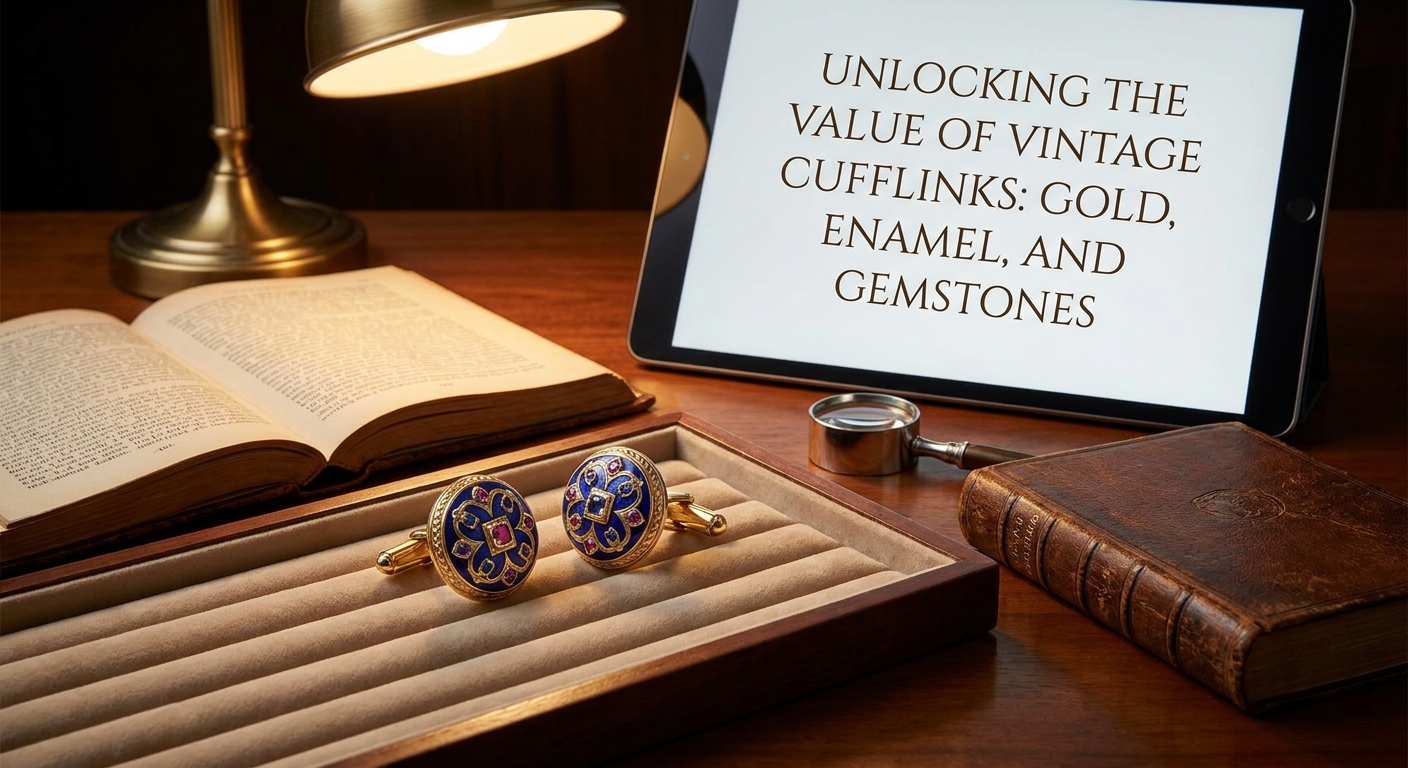
When someone brings in an old jewelry box or a dresser drawer full of forgotten treasures, it’s often the larger, flashier pieces that catch the eye first. But sometimes, tucked away in a corner, you’ll find a pair of cufflinks, perhaps inherited or simply overlooked for years. These small, often intricate pieces are more than just functional accessories; they can be fascinating capsules of history and, quite often, hold a surprising amount of value. As an appraiser, I’ve seen time and again how these unassuming items, especially those crafted from gold, enamel, or set with gemstones, can truly shine once their story and material worth are properly understood.
Let’s talk a bit about what makes these little beauties tick, value-wise. For starters, the metal itself is a big factor. Many vintage cufflinks were made from gold, and just like any other piece of jewelry, the karat weight—whether it’s 9K, 14K, or 18K—makes a real difference. You might find a tiny hallmark, a small stamp on the back or side, that tells you the gold content. Sometimes it’s a number, like "585" for 14K gold, or "750" for 18K. We’ll also consider the actual weight of the gold, as even a small amount adds up, especially in today’s market. It’s not just about the gold price, though; the era and maker can also significantly influence a piece's desirability. Think about the elegant designs from the Art Deco period, for instance, with their clean lines and geometric precision.
Then there's the artistry of enamel work, which can truly elevate a pair of cufflinks. Enamel is essentially powdered glass fused to metal at high temperatures, creating vibrant colors and intricate patterns. You’ll find different techniques, like cloisonné, where thin wires form compartments filled with enamel, or champlevé, where the metal itself is carved out to hold the enamel. Some of the most exquisite pieces feature plique-à-jour, which is like miniature stained glass, allowing light to pass through the translucent enamel. The condition of the enamel is paramount here; chips, cracks, or significant wear can decrease value, but a well-preserved piece with fine enamel work, particularly from periods like Art Nouveau or Edwardian, can be highly sought after by collectors. These aren't just pretty; they represent a significant level of skill and craftsmanship.
And let’s not forget the sparkle of gemstones. While you might not expect a large diamond on a cufflink, many vintage pairs feature small, well-cut diamonds, often old mine cuts or rose cuts, that add a lovely glimmer. Beyond diamonds, you'll also see other precious and semi-precious stones. Onyx, mother-of-pearl, and various colored stones were popular choices, sometimes cut into cabochons for a smooth, domed look, or faceted to catch the light. Even tiny pearls can be found. When I’m evaluating these, I’m looking at the quality of the stones, their condition, and how securely they’re set. Even small stones contribute to the overall value and appeal, particularly if they are natural, well-matched, and free from damage.
Understanding the true value of vintage cufflinks involves looking beyond their size and recognizing the quality of materials, the historical context of their design, and the skill of the artisans who created them. If you’ve got a pair of these little treasures tucked away, perhaps it’s time to give them a closer look. An appraisal can help you understand not just what they're worth for insurance or estate planning, but also the fascinating story they tell. It’s always a pleasure to help folks here discover the hidden gems right in their own collection.