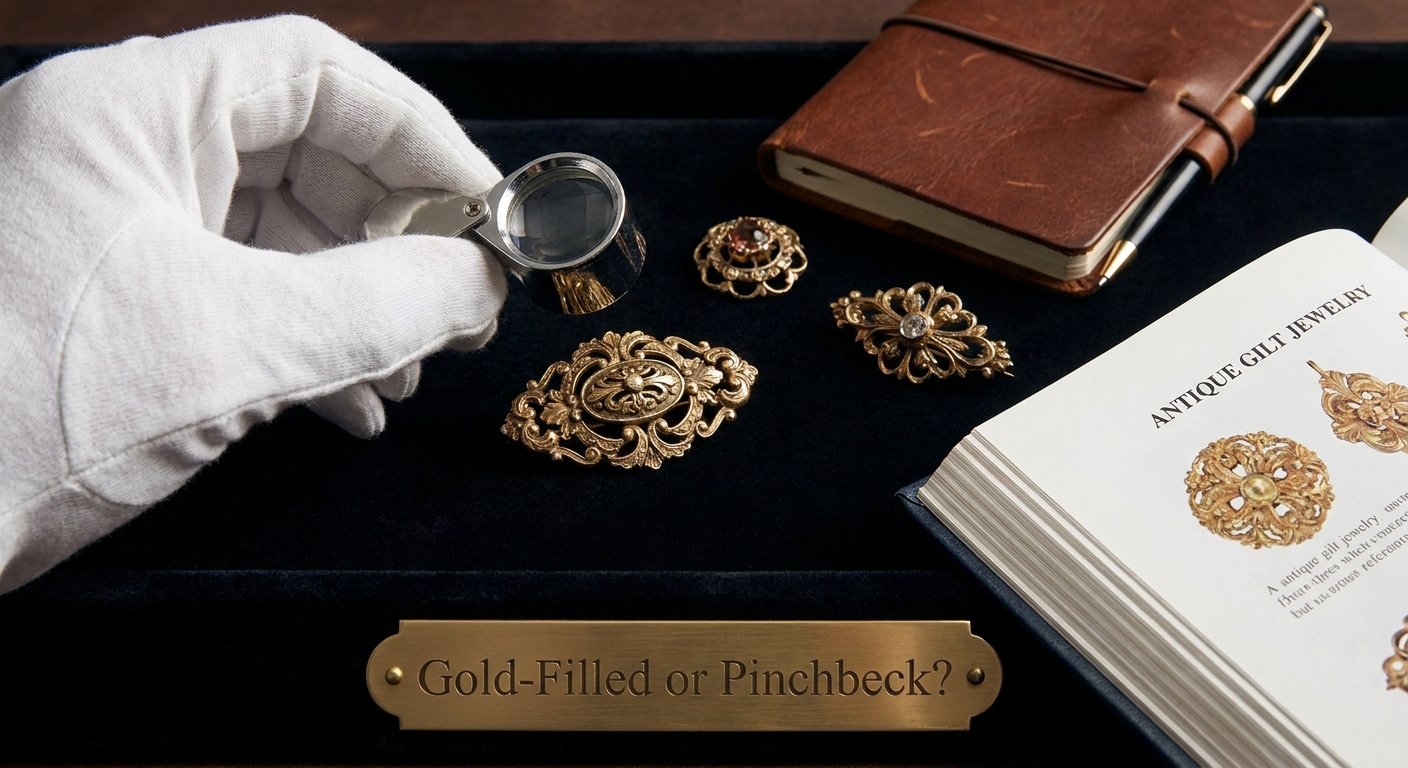
Holding an antique locket, its surface gleaming with a warm, golden luster, you might find yourself wondering about its true nature. Is this a precious family heirloom crafted from solid gold, or something else entirely? Many folks discover beautiful old pieces that look every bit like gold but aren't quite what they seem. Often, the mystery boils down to deciphering whether you have a piece that is gold-filled or made of a material called Pinchbeck. Understanding the difference is key to appreciating both the history and the potential value of your treasured item.
Let's start with gold-filled jewelry. This isn't just a thin layer of gold plating. Instead, gold-filled items are made by mechanically bonding a much thicker layer of gold – typically 5% or 1/20th of the total weight – to a base metal, usually brass. This process involves heat and pressure, creating a durable bond that’s far superior to electroplating. Because the gold layer is substantial, gold-filled pieces wear beautifully over time, resisting tarnish and showing their golden gleam for decades, sometimes even centuries. You'll often see these pieces marked with "GF" or a fraction like "1/20 12K GF" or "1/10 14K GF," indicating the proportion and karat purity of the gold used. While it’s not solid gold, the gold content does give these pieces some intrinsic value, and their durability makes them wonderful, wearable antiques.
Then there's Pinchbeck. Now, this is a fascinating material with a rich history, dating back to the early 18th century. It was invented by a London watchmaker named Christopher Pinchbeck, who created an alloy – that's a mix of metals, usually copper and zinc – that mimicked the color and luster of gold so convincingly that it was quite revolutionary for its time. Unlike gold-filled, Pinchbeck contains absolutely no real gold. Its value comes purely from its historical significance, its craftsmanship, and its aesthetic appeal. Before reliable gold plating techniques were developed, Pinchbeck allowed people to wear fashionable jewelry that looked expensive without the hefty price tag. You typically won't find any gold content markings on Pinchbeck; its authenticity is often determined by its age, style, and the absence of other markings. Some very rare and expertly crafted Pinchbeck pieces can be highly collectible, valued for their historical context and the artistry involved in their creation.
So, how do you tell them apart? The first thing to look for, as I mentioned, are those markings. If you see "GF" or a fraction, it's a strong indicator of gold-filled. Pinchbeck, on the other hand, is usually unmarked in terms of material. You might also consider the age of the piece; true Pinchbeck largely predates the widespread use of gold-filled, typically found in pieces from the 18th and early 19th centuries. The wear can also offer clues: while gold-filled wears down slowly to reveal the base metal, Pinchbeck, being an alloy throughout, won't show a different metal underneath in the same way. Its color might just lighten a bit with heavy wear.
Ultimately, whether you're admiring a gleaming gold-filled locket or a historically significant Pinchbeck brooch, both types of antique gilt jewelry offer their own unique charm and story. But if you’re holding a piece and just can’t quite tell what you’ve got, or if you’re curious about its true market value, bringing it to an experienced appraiser is always the best path forward. Y'all deserve to know the full story and worth of your treasures.