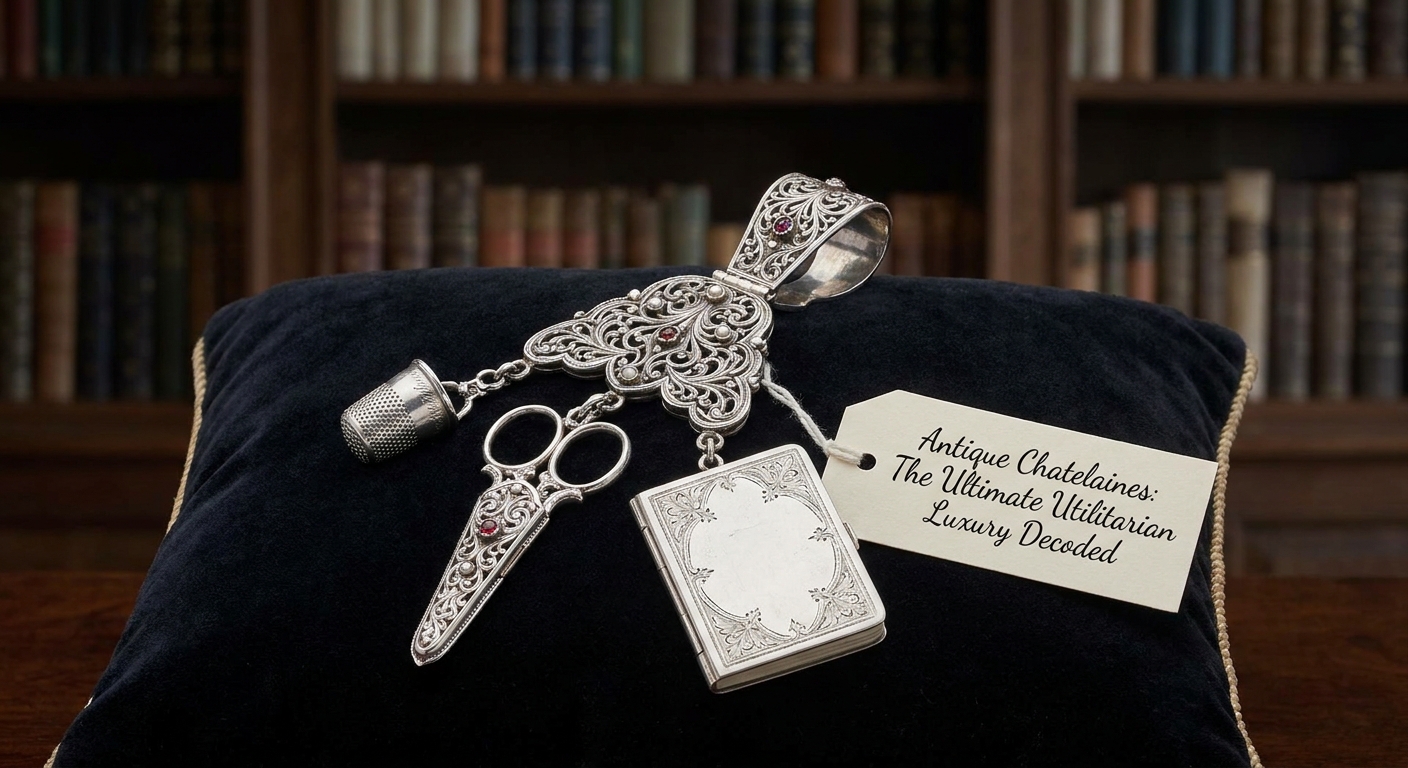
Peering closely at an intricate silver piece, perhaps a Victorian-era clip with several delicate chains dangling, you might initially mistake it for an elaborate decorative accessory. But hold it a moment longer, and its true purpose begins to reveal itself, hinting at a bustling life from centuries past. These fascinating objects, known as chatelaines, are a wonderful example of how practical necessity could be elevated to an art form, blending everyday utility with exquisite luxury.
A chatelaine is essentially a fancy belt hook or brooch from which a series of short chains suspend useful household or personal items. Think of it as a wearable toolkit, a forerunner to the modern handbag, but far more elegant and specialized. The name itself comes from the French word "châtelaine," referring to the mistress of a castle, who would hold the keys to all its domains. While medieval chatelaines were primarily about key-holding, by the Victorian era, they had transformed into intricate fashion statements, indispensable for the well-appointed lady or gentleman.
What makes a chatelaine so intriguing from an appraisal standpoint is its dual nature. On the utilitarian side, these pieces were designed for function. You'll often find miniature scissors, thimbles, notebooks, pencils, button hooks, coin purses, watches, or even vinaigrettes for smelling salts hanging from their chains. Each tool tells a story about the daily routines and social customs of the time. A sewing chatelaine, for instance, speaks to the domestic arts, while one with a dance card and pencil points to an active social life. The completeness and originality of these tools can significantly impact a chatelaine's value, as finding a full, matching set is quite rare.
Then there's the luxury aspect. These weren't just simple hooks; they were often masterworks of craftsmanship. Many chatelaines were fashioned from sterling silver, gold, or gilded metals, adorned with intricate engraving, repoussé work, chasing, or even gemstones and enamel. The artistry involved could be breathtaking, reflecting the status and taste of the wearer. When I’m evaluating one, I pay close attention to the quality of the metalwork, the fineness of the details, and any maker's marks or hallmarks, which can tell us a great deal about its origin and period. A well-preserved example, especially one from a renowned maker or a specific historical period like Art Nouveau, truly stands out.
Assessing a chatelaine requires a keen eye for both its practical history and its artistic merit. We look at the condition of the main clip and each individual tool – are there signs of heavy wear, damage, or repairs? Are the chains all original, or have they been replaced over time? Sometimes, a chatelaine might only have a few chains left, or the tools attached aren't original to the piece, which can affect its overall value. It's a bit like piecing together a miniature puzzle, y'all, figuring out its complete story.
So, if you happen upon one of these remarkable pieces, whether it’s been tucked away in an old jewelry box or passed down through your family, don't underestimate its potential. A chatelaine is far more than just a decorative trinket; it's a tangible link to a bygone era, a blend of necessity and beauty that holds both historical significance and often, considerable market value. My best advice? Get it professionally evaluated. A qualified appraiser can decode its unique story, identify its materials, assess its craftsmanship, and determine its true worth, ensuring that this ultimate utilitarian luxury gets the recognition it deserves.