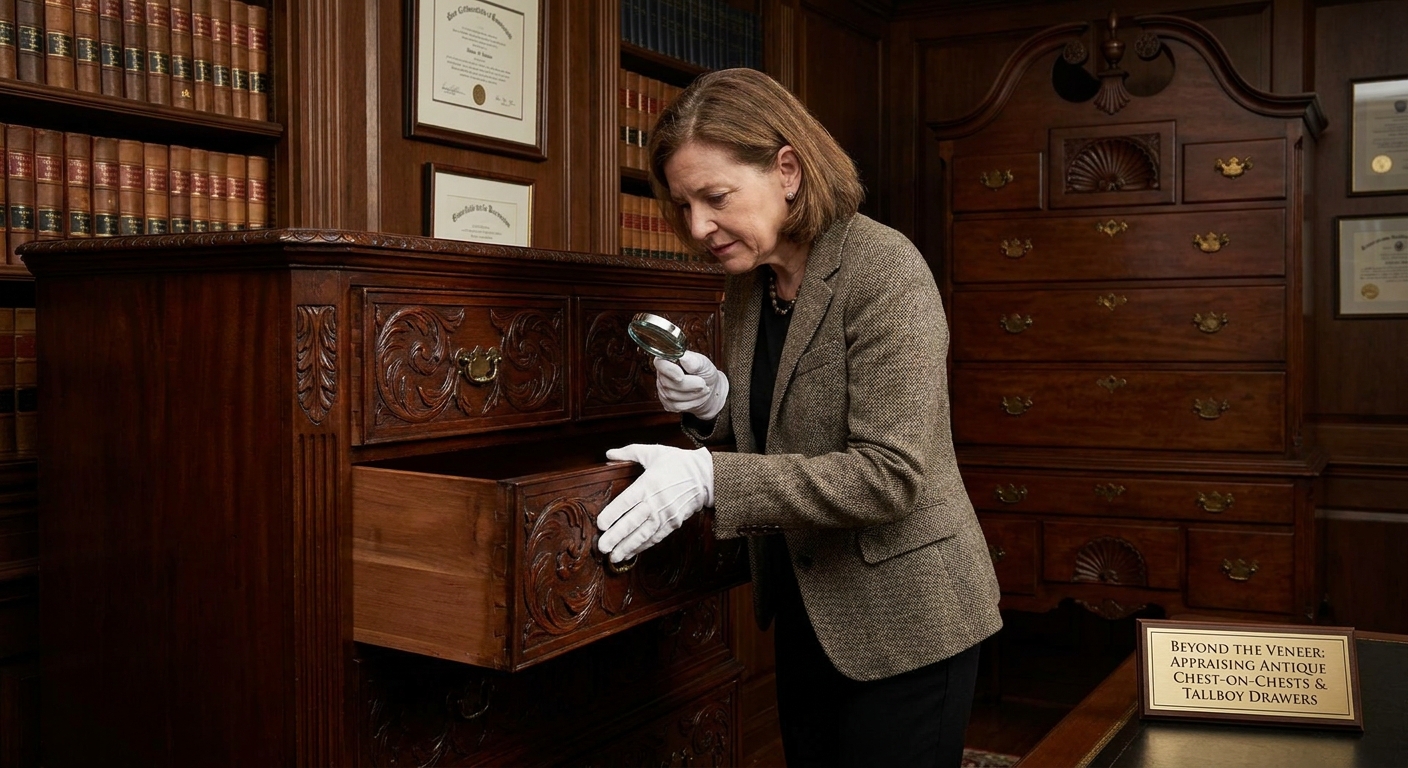
We often walk past the imposing stature of an antique chest-on-chest or a tallboy, admiring its general form without realizing the intricate stories its construction can tell about its true age and value. These magnificent pieces, designed for substantial storage, have graced homes for centuries, evolving in style and technique with each passing era. Yet, discerning their true worth goes far beyond a quick glance at their handsome veneer.
When I evaluate these substantial pieces, my first step is always to look beneath the surface, much like examining a gemstone for its internal characteristics. A crucial aspect is the construction methods used. For example, a careful look at the drawer sides can reveal the type of dovetails—those interlocking joints that hold the drawer together. Hand-cut dovetails, often irregular and slightly varied, are a strong indicator of earlier craftsmanship, typically pre-1860s, and suggest a true antique. Compare that to the uniform precision of machine-cut versions, which point to a later, mass-produced era. We also examine the "secondary woods"—the timber used for drawer sides, backs, and interior framing. These are often less expensive woods like pine or poplar, and their presence and how they’re joined can help pinpoint the period and even the regional origin of the piece.
Next, we delve into the originality of the hardware and finish. Those brass pulls and escutcheons, the decorative plates around the keyholes, can tell a significant story. Original hardware, even if a bit tarnished or showing signs of age, often holds more value than shiny, new replacements. Sometimes, a piece might have "ghosts" – faint outlines on the wood where earlier, different hardware was once attached, indicating a change over time. As for the finish, that deep, rich patina you see on an antique isn't just dirt; it's the accumulated history of the piece, built up over generations. A professional appraiser can distinguish between genuine age and a later refinishing, which can impact value. An untouched, original finish, especially on a desirable period piece, is often highly prized.
Finally, we consider the overall condition and market demand. While repairs are common on furniture this old, the quality of those repairs matters immensely. A well-executed, stable repair that preserves the integrity of the piece is far different from a shoddy one that compromises its structure or aesthetics. We also look at the current market. Certain periods or styles of chest-on-chests or tallboys—say, a finely proportioned Queen Anne or a bold Federal piece—might be in higher demand than others. Understanding these nuances, along with any documented history or provenance, helps to build a comprehensive picture of value. It's a bit like detective work, gathering all the clues right here to understand the full story.
For a piece as complex and historically rich as an antique chest-on-chest or a tallboy, a professional appraisal isn't just about assigning a number; it's about understanding its unique story, its place in history, and its true market standing. If you have one of these grand pieces in your home, and y'all are curious about its potential, I always recommend getting a thorough evaluation. It’s the best way to ensure you know exactly what treasure you possess.