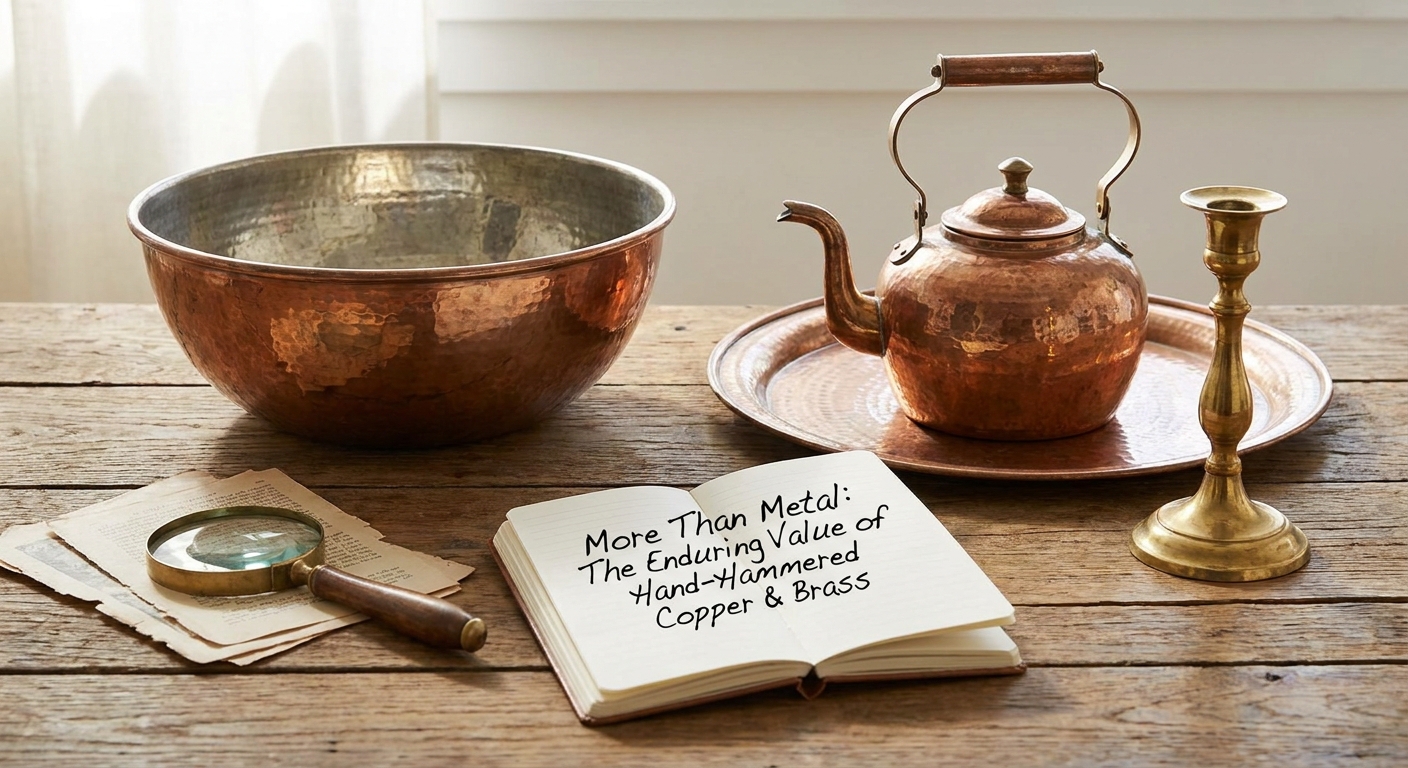
The polished gleam of a machine-pressed brass bowl often catches the eye, shining with a uniform, factory-perfect finish. But take a closer look at a truly old copper pot, perhaps one that’s seen generations of use in a busy kitchen, or a substantial brass tray that’s served countless guests. You might notice subtle irregularities, a gentle ripple across the surface, or a distinct pattern of small, overlapping facets that reflect the light in a softer, more nuanced way. These aren't imperfections to be overlooked; they are often the signature of a hand-hammered piece, the very evidence of human craftsmanship that gives these metals an enduring value far beyond their material weight.
Many folks tend to dismiss copper and brass pieces as just "old," sometimes even thinking they’re only decorative items with little monetary significance. It’s easy to focus on the flashier antiques or the obvious sparkle of gemstones. Yet, when I’m called to evaluate an estate or a family collection, I always make a point to carefully examine any hand-wrought metalware. What we're often looking for is that unmistakable evidence of an artisan’s touch, a history etched directly into the metal itself.
One of the primary indicators of value in these pieces is the craftsmanship. Modern manufacturing uses powerful machines to stamp or spin metal, creating perfect uniformity. Hand-hammering, on the other hand, involves a skilled artisan shaping the metal sheet by striking it repeatedly with various hammers and mallets, often over specialized anvils or forms. Those subtle depressions and slight variations in thickness you feel and see? Those are what we call planishing marks – the direct, tangible record of each strike as the metal was patiently worked and refined. Think of it like a potter’s fingerprints on clay, but in metal. Each one is unique, carrying the story of the maker’s hand. This individual touch makes every hand-hammered piece one of a kind, quite different from its mass-produced cousins.
Beyond the visible marks of labor, consider the historical context and artistic movements these pieces often represent. Hand-hammered copper and brass were particularly celebrated during eras like the Arts & Crafts movement in the late 19th and early 20th centuries, which prioritized handmade items over industrial production. Makers like Roycroft in America, for instance, produced exquisite hand-hammered pieces that are highly sought after today. Their work wasn’t just utilitarian; it was art, embodying a philosophy of honest labor and beauty in everyday objects. Knowing the potential origin or the design period can dramatically impact a piece’s value, identifying it not just as an old pot, but as a significant example of a particular artistic tradition.
Then there's the beautiful story of durability and patina. Copper and brass are inherently sturdy metals. They withstand the test of time, and when properly cared for, they can last for centuries. Over the years, these metals develop a natural surface coloration called patina. This isn't tarnish in the negative sense, but a rich, often deep coloring that forms through oxidation, signifying age and authenticity. A pleasing, undisturbed patina can actually enhance the value of an antique piece, telling its journey through time. Resist the urge to aggressively polish everything, especially if you’re unsure; sometimes, y'all might be wiping away history, and with it, a bit of that unique character and value.
So, the next time you come across a seemingly ordinary copper pot or a brass serving dish, pause for a moment. Feel its weight, look closely at its surface. Those ripples, those subtle indentations, they might just be whispering tales of an artisan’s skill and a rich past. If you suspect you have something special – something that feels "more than metal" – considering a professional appraisal can help you understand its true significance and enduring value. It’s a chance to fully appreciate the craftsmanship and history right there in your hands.