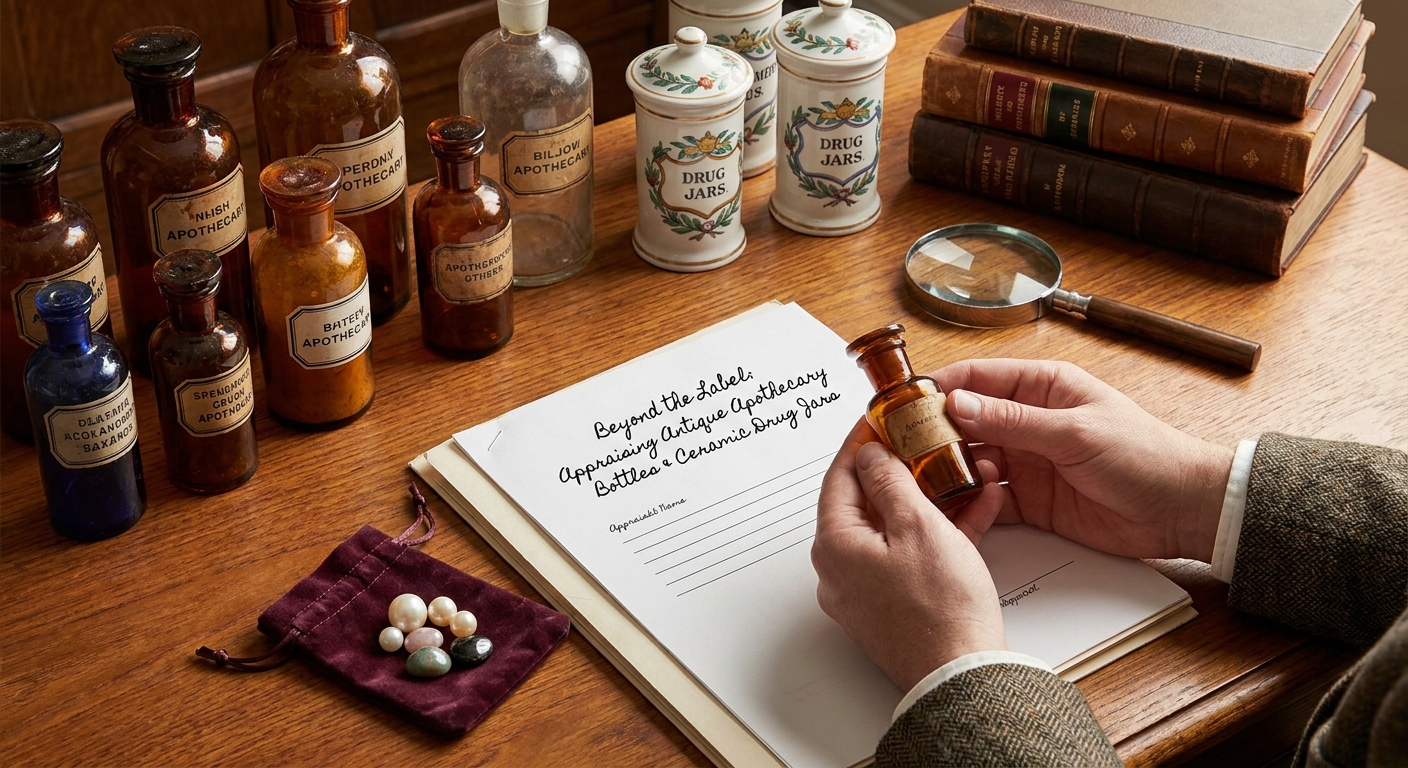
Sometimes, the most unassuming items hold the richest stories, quietly residing on a dusty shelf or tucked into an old chest. Think about those humble apothecary bottles or sturdy ceramic drug jars, perhaps passed down from a grandparent or discovered in a forgotten corner of an estate. They rarely sparkle like jewels, yet their appeal to collectors and historians is undeniable, especially when we look beyond just the faded label. These containers, once essential tools for pharmacists and doctors, are fascinating relics of medical history, and their value often lies in details you might easily overlook.
For glass apothecary bottles, the manufacturing technique itself tells a significant tale. Take a closer look at the bottom: a rough, irregular "pontil mark"—that's the scar left where the glassblower’s rod was detached—often indicates a hand-blown bottle from an earlier era, generally pre-1860s. After that, molds became more common, and you might see smooth mold seams running up the sides, perhaps disappearing before reaching the lip, which suggests a two-piece mold. Fully machine-made bottles, common after the turn of the 20th century, typically have mold seams running all the way to the top. The color and clarity of the glass also offer clues, with some early glass having charming imperfections like bubbles or variations in tint due to the mineral content, all contributing to its historical authenticity and appeal.
Now, if you're holding a ceramic drug jar, we're looking for different indicators. The type of pottery is key: is it a finely potted, tin-glazed faience jar with vibrant, hand-painted decorations, perhaps from 18th-century Italy or France? Or is it a simpler, robust stoneware pot, often with a more utilitarian glaze and maybe a transfer-printed label from a Victorian English chemist? The quality of the ceramic body, the artistry of the decoration, and the particular style of the lettering can all help pinpoint its origin and age, influencing its market desirability quite a bit. A unique maker's mark or an unusual pharmaceutical inscription can certainly add to its allure, y'all.
Condition is, as always, paramount. Even the rarest bottle or jar loses significant value with chips, cracks, or repairs. For glass, we also consider "sick glass"—that's a cloudy, etched appearance caused by chemical reactions over time—which can diminish its appeal unless it's very minor and doesn't detract from the overall aesthetic. And for either glass or ceramic, the presence of its original stopper or lid, especially if it matches perfectly, is a huge bonus. A complete, undamaged example of an historically significant pharmaceutical container will always fetch a higher value than a compromised one.
Understanding the true worth of these pieces requires more than just a quick glance at what’s written on the front. It involves a careful examination of their construction, materials, provenance, and condition, placing them within their proper historical and market context. If you have a collection of these quiet treasures and wonder about their stories and value, considering an appraisal is a smart step. It’s how you truly uncover what lies beyond the label.