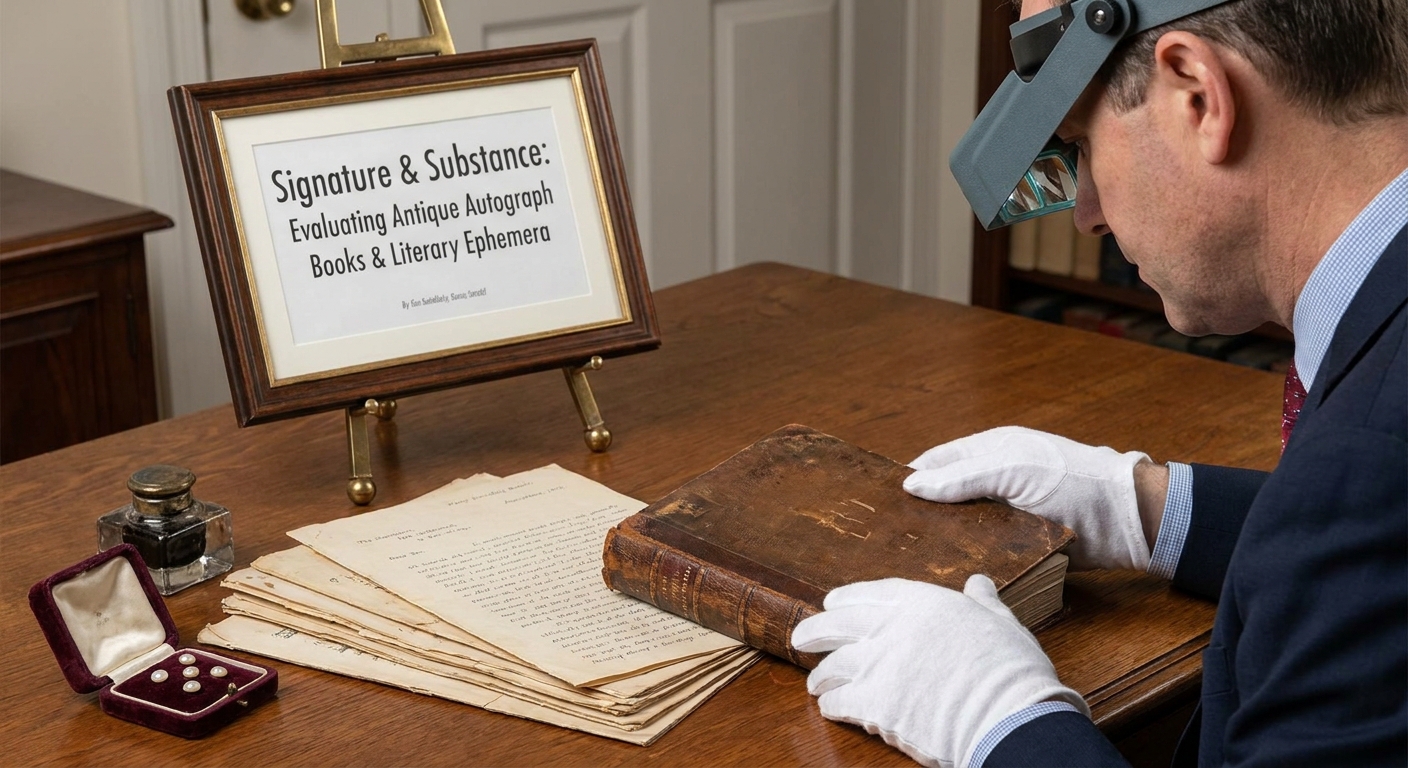
Imagine uncovering an old, leather-bound volume, perhaps tucked away in a dusty box in the attic, its pages filled with elegant, looping penmanship and a scattering of pressed flowers. To the casual eye, it might simply be a family heirloom, a sweet reminder of days gone by. But for an appraiser like me, especially when we're talking about antique autograph books and literary ephemera, what you hold in your hands could be a fascinating piece of history with significant market value. It's not just about the sentiment; it's about the verifiable story and connections embedded in that paper and ink.
When I look at an item like this, my mind immediately starts evaluating the core elements that define its substance and potential worth. First off, we consider the significance of the signer. It’s not just about a famous name, mind you. What truly adds value is the context surrounding that signature. Was it a noted author penning a verse in a friend's album? A historical figure signing during a pivotal moment? Or perhaps a whole host of influential people from a particular literary salon or social circle. A short, handwritten note by an author, even if it’s just a line of poetry or a quick dedication, can carry more weight than a mere signed page if it speaks to a unique event or relationship. Literary ephemera—things like handwritten letters, drafts of poems, signed pamphlets, or even annotated books—offer direct glimpses into the minds and lives of writers, and their personal touch makes them truly special.
Beyond just the "who," we delve into the content and condition of the item itself. Is the signature clear and legible? What else is written on the page? A full poem, a personal message, or a dated entry can significantly enhance value. Dates and locations are often critical clues, helping to place the autograph in a specific historical or biographical context. The physical state of the autograph book or ephemera is also paramount. Faded ink, brittle paper, tears, water damage, or amateur repairs can all impact value. A well-preserved piece, with strong, unfaded ink and intact binding, will always fetch more. Now, of course, there’s also the crucial matter of authenticity. It takes a trained eye and access to known examples to confidently verify a signature. Sometimes, that means comparing it to authenticated examples, looking at ink patterns, and understanding the writing styles of the era.
So, if you happen upon an old autograph book, a stack of handwritten letters, or some antique literary pamphlets tucked away, don’t just dismiss them as old paper. You might be holding a tangible connection to history, a piece of someone's legacy that offers far more than just sentimental worth. The best thing you can do for those treasures, and for yourself, is to get them looked at by a professional appraiser who understands the intricacies of the market and can properly evaluate their true value.