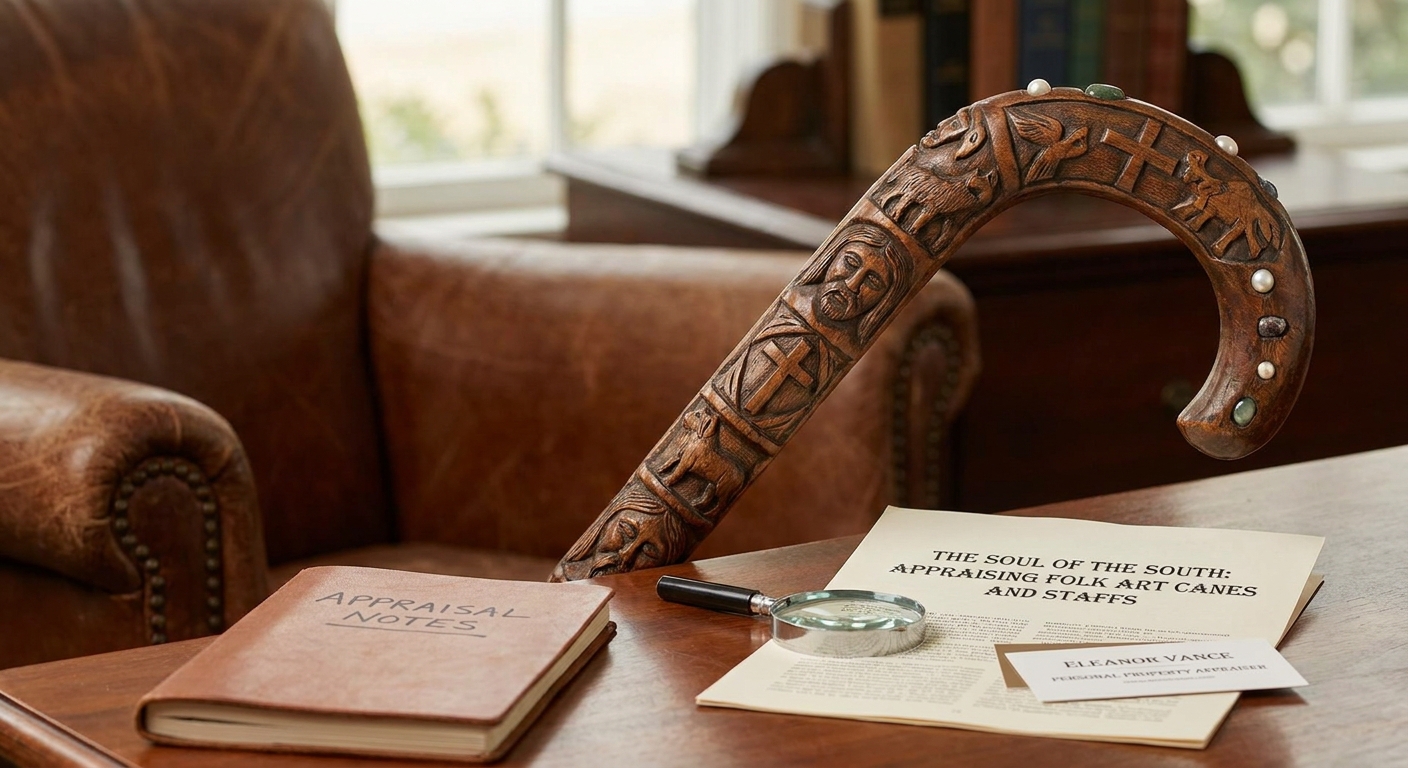
A weathered walking stick, perhaps leaning quietly in a hall corner or tucked away in an old chest, might seem like just a humble piece of wood to the untrained eye. But here in the South, these aren't just utilitarian objects; often, they are vibrant expressions of a rich cultural heritage, holding stories and artistic merit that can surprise even seasoned collectors. When we talk about appraising folk art canes and staffs, we're not just looking at a carved stick; we're peering into the very soul of the piece, uncovering the hands that shaped it and the spirit it embodies.
One of the first things I consider when evaluating a folk art cane or staff is its authenticity and provenance. Folks often ask, "How can you tell it's real folk art, and not just something someone whittled last week?" It’s a good question! True folk art is generally created by self-taught or informally trained artists, using traditional materials and techniques. We look for signs of age, natural wear, and tool marks consistent with hand-carving rather than machine production. Provenance, which simply means the history of ownership and origin of the piece, is incredibly important. Knowing who made it, where it came from, and when it was created can significantly impact its value. Sometimes, a piece is attributed to a known folk artist, even if they never signed their work, through strong oral histories or documented family tradition.
Beyond just being old, the craftsmanship and unique artistic expression are vital. These aren't always about perfection; in fact, the quirks and individual style of the maker are often what make a piece exceptional. Has the artist carved intricate figures, animals, or symbolic motifs into the wood? Is there a distinctive style of carving, perhaps a recognizable hand that tells a story through its form? Some pieces incorporate found objects, like bottle caps, coins, or glass, which adds another layer of artistic intention. The choice of wood itself, whether it's local cypress, hickory, or sassafras, can also contribute to its regional identity and value.
Ultimately, appraising these pieces is about understanding their narrative and cultural context. Many folk art canes and staffs were more than just walking aids; they were personal statements, spiritual symbols, or records of historical events. They might have been carried by preachers, conjure doctors, veterans, or simply everyday people expressing their creativity and resilience. The "Soul of the South" isn't just a romantic notion; it’s a tangible presence in these items. They reflect the ingenuity, faith, and often the struggles of their creators, preserving a slice of Southern life that might otherwise be forgotten. It’s a privilege, y'all, to hold these pieces and help families understand the true worth of these cultural treasures.
If you have a folk art cane or staff tucked away, wondering about its story and its value, please consider having it professionally appraised. A certified appraiser can help you understand its unique attributes, research its potential provenance, and establish an accurate market value, ensuring its legacy is properly honored and understood for generations to come.