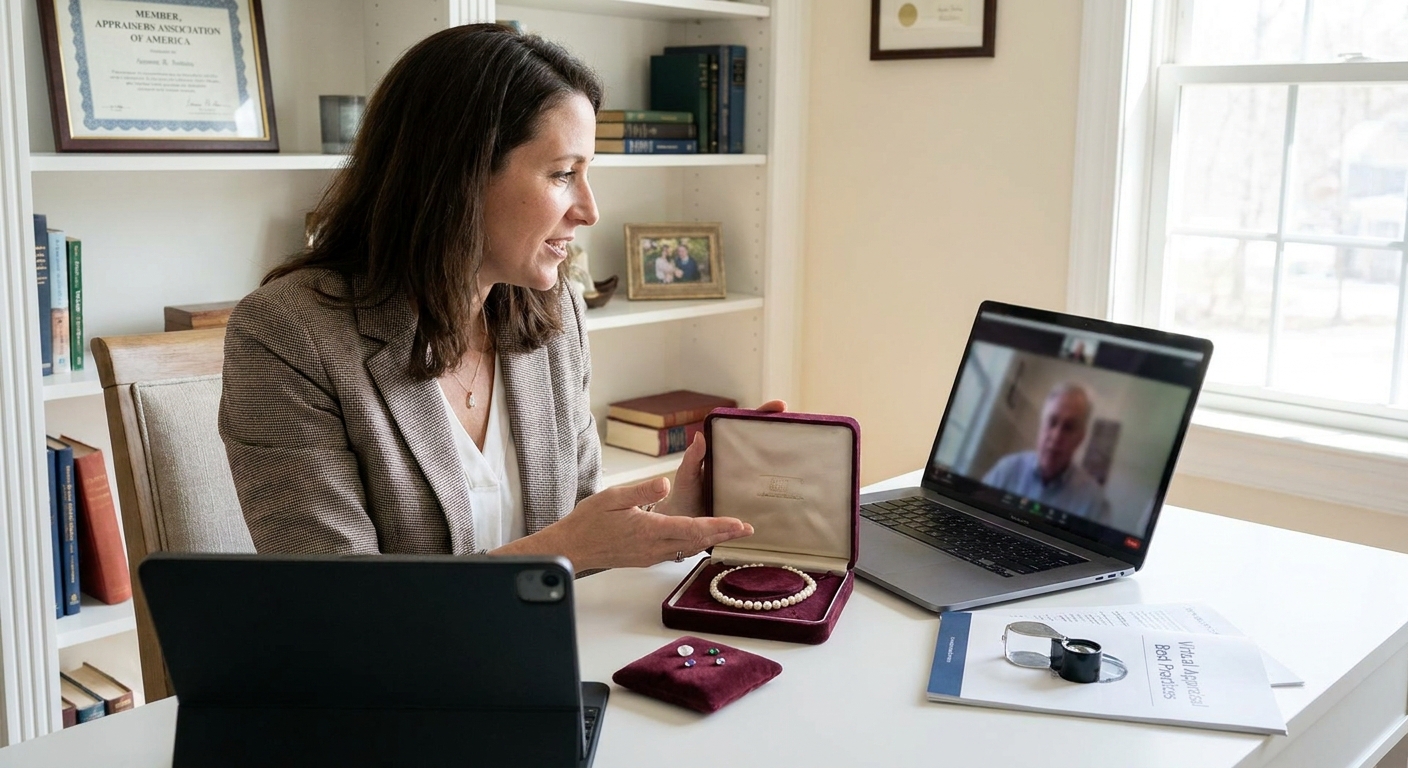
Looking at a grainy, out-of-focus photo of a gold brooch is a bit like trying to read a book through a screen door. You can tell there is something there, but the fine details—the tiny hallmark stamped on the pin or the way the light catches a stone—stay hidden. As we move more of our lives online, virtual appraisals have become a handy way for y’all to get a professional opinion without leaving the house. But for us to get it right, we have to work as a team.
The biggest hurdle in a virtual appraisal is always the lighting. I often tell folks to take their jewelry over to a window during the day, but stay out of direct sunlight. Harsh kitchen lights or a camera flash can wash out the color of a sapphire or hide the "fire"—those little rainbow flashes of color—in a diamond. When you are sending photos, try to get a clear shot of the front, the back, and any tiny markings you see. If your phone has a macro setting, which is usually marked with a little flower icon, please use it. It helps the camera focus on things that are very close so I can see the wear on the prongs or the specific style of the metalwork.
Now, I am currently neck-deep in my GIA Graduate Gemologist studies, and if there is one thing I have learned, it is that a screen has its limits. I can see the shape and color of a stone through a high-definition video call, but I cannot put it under my microscope to look for "inclusions." Those are the tiny natural birthmarks inside a gemstone that help me tell a natural stone from one made in a lab. I also cannot feel the weight of the metal in my hand to check the "heft," which tells me a lot about whether a piece is solid gold or just plated.
To make a virtual appraisal truly successful, gather any paperwork you have lying around. Old sales receipts, previous insurance papers, or even the original velvet box can fill in the gaps that a camera lens might miss. These documents provide what we call "provenance," which is just a fancy word for the history and ownership of the piece. Knowing where it came from is often just as important as the sparkle itself.
Virtual tools are a wonderful way to start the process, especially for a preliminary look or a general estimate. However, they are not a total replacement for holding a piece of history right here in my hand. If you are fixin’ to have your items looked at virtually, my best advice is this: provide the clearest photos possible and be my eyes and ears. A quick video call where you move the piece slowly under a steady, natural light can often tell me more than twenty blurry snapshots. Before you hit record, give your jewelry a gentle wipe with a soft cloth; a clean stone always tells a better story than a smudged one.