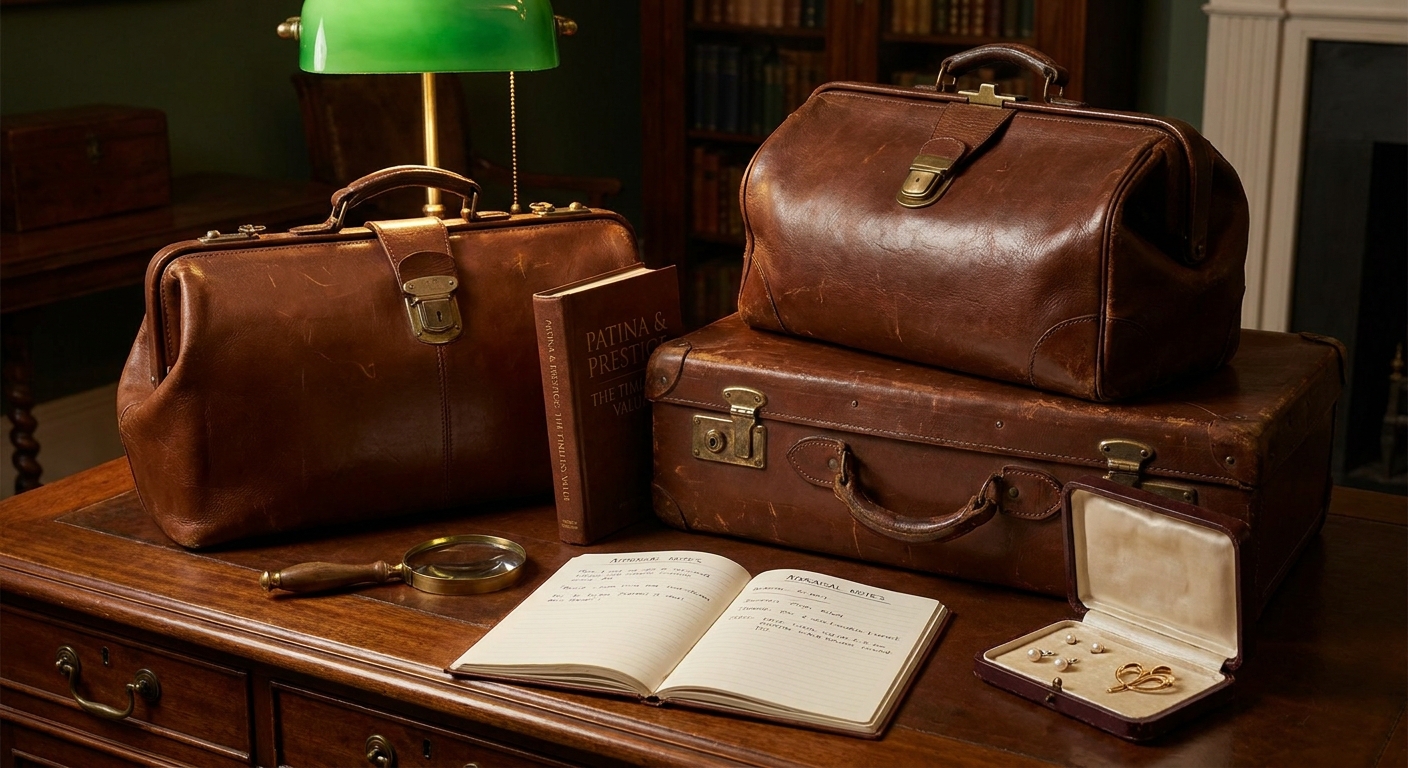
The heavy, distinctive scent of aged hide and beeswax usually hits you long before you even unbuckle the straps of a vintage steamer trunk. When I am looking at a piece of luggage from the early 20th century, I am not just looking for a brand name; I am looking at how that leather has "grown up" over the decades. A well-traveled piece of Louis Vuitton or Hermès gear tells a story through its surface, and in the appraisal world, we call that story "patina."
Now, patina isn’t just a fancy way of saying a bag is old or dirty. It is that soft, honey-colored glow that untreated leather develops after years of being out in the world. It is the way the oils from a traveler’s hands have darkened a handle to a rich mahogany over time. When y’all find an old trunk tucked away in a family attic, your first instinct might be to scrub it clean or—heaven forbid—get it repainted. Please, don’t do that. That honest wear and tear is exactly what collectors are looking for. It is the difference between a piece that looks like it was born yesterday and one that has actual soul and market value.
When I am evaluating these collections for an estate or an equitable distribution, I pay close attention to the "hardware." That is just our professional term for the locks, rivets, and hinges. High-end makers like Goyard or Cartier used solid brass that is heavy and substantial. If you tap it with your fingernail, it should have a solid thud, not a tinny ring. I always look for a serial number or a maker’s mark stamped right into the metal. If those locks are still functional and you happen to have the original skeleton key tucked away in a side pocket, you have just added a healthy bit of value to the appraisal.
In my work with large business inventories and IRS-qualified appraisals for donations, I often see how vintage luggage bridges the gap between furniture and fashion. A large, flat-top Hartmann trunk isn't just for storage anymore; it is a coffee table with a history. For those of you looking at your own closets, remember that while condition is important, "originality" is the real winner. We generally want the original lining—even if it is a bit stained—rather than a brand-new interior that doesn't match the age of the piece.
The market for these items stays strong because folks are tired of things that fall apart after one trip through an airport. They want something that has survived a steamship and a dusty train ride. If you are sitting on a collection of vintage travel gear, take a moment to look at the labels inside. If you see a faded address from a Parisian workshop or a heavy brass lock stamped with a famous name, it is time to get a professional valuation. My best advice for y'all is to keep those pieces out of damp basements; leather needs to breathe just as much as we do to keep its value.