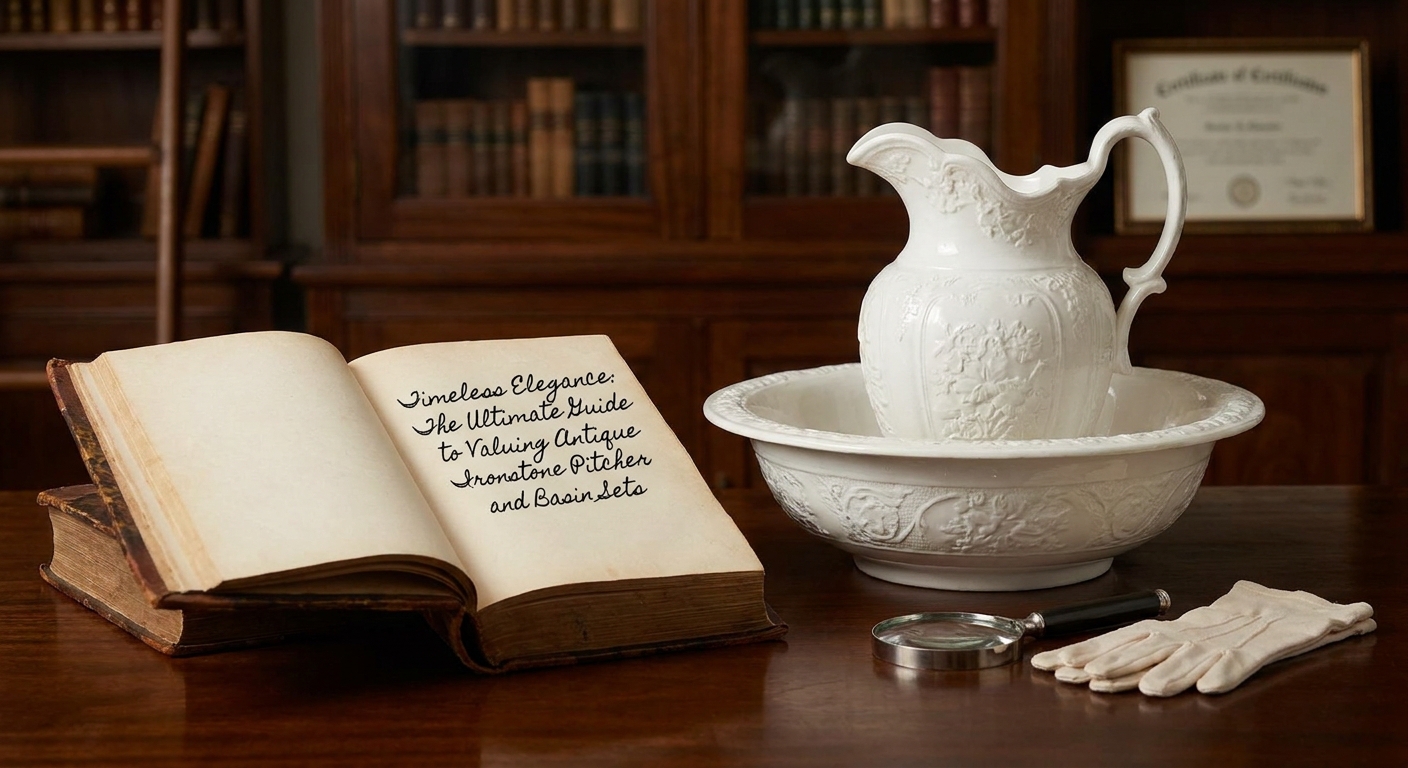
Running your hands over the cool, milky surface of a heavy ironstone pitcher feels a lot different than touching modern ceramic. It has a density and a weight that tells you it was built to survive a hundred years of daily use on a washstand. When I’m looking at these sets, the first thing I notice isn’t just the size, but that specific "clink" they make—a clear, ringing sound when tapped that tells me we’re looking at true ironstone and not just a thick pottery imitation.
Ironstone isn’t actually made of iron, though the name makes it sound like it should be. It’s a durable stoneware developed in early 19th-century England as a tougher, more affordable alternative to delicate porcelain. If you’ve got a set at home, give the pitcher a little lift. If it feels surprisingly light, it might be a later reproduction. Real antique ironstone has some serious heft to it, which is exactly why it’s lasted through generations of family moves and attic storage.
To figure out what your set is worth, the first thing y’all should do is flip that pitcher over and look at the bottom. We are searching for "maker’s marks." You’re looking for names like Mason’s, J&G Meakin, or T&R Boote. If you see a royal coat of arms—that classic lion and unicorn symbol—you’re likely looking at a piece from the mid-to-late 1800s. These marks are the fingerprints of the piece, helping me track down exactly which factory in the Staffordshire region of England produced it. While American companies made ironstone too, those early British imports usually hold their value a bit better in the current market.
Next, take a close look at the surface for "crazing." That’s just a professional term for those tiny, spider-web cracks in the clear glaze. While a little bit of crazing is expected with age, heavy brown staining inside those cracks can lower the value. We also look for "sculptural" elements. A plain white set is a classic look, but if the handle of the pitcher is shaped like a stalk of wheat, a leaf, or a twisted vine, that’s where collectors really get interested. These sets weren't just for washing up; they were the centerpieces of a bedroom, and the more "fancy" the molding, the higher the price tag usually goes.
Condition is the final hurdle. Because these sets were used daily, finding a pitcher and a basin that have stayed together without any chips or large cracks is getting harder and harder. A "married" set—where the pitcher and bowl don't actually match in pattern or maker—is still lovely for decor, but it won’t command the same price as a true original pair.
If you’re sitting on a set that’s been passed down through the family, the best thing you can do is keep the pieces together and avoid using harsh chemicals to clean any staining. If you need a formal value for an insurance policy or an estate settlement, reach out to a certified appraiser who can identify those subtle maker’s marks and give you a clear picture of what your "white gold" is worth in today’s market.