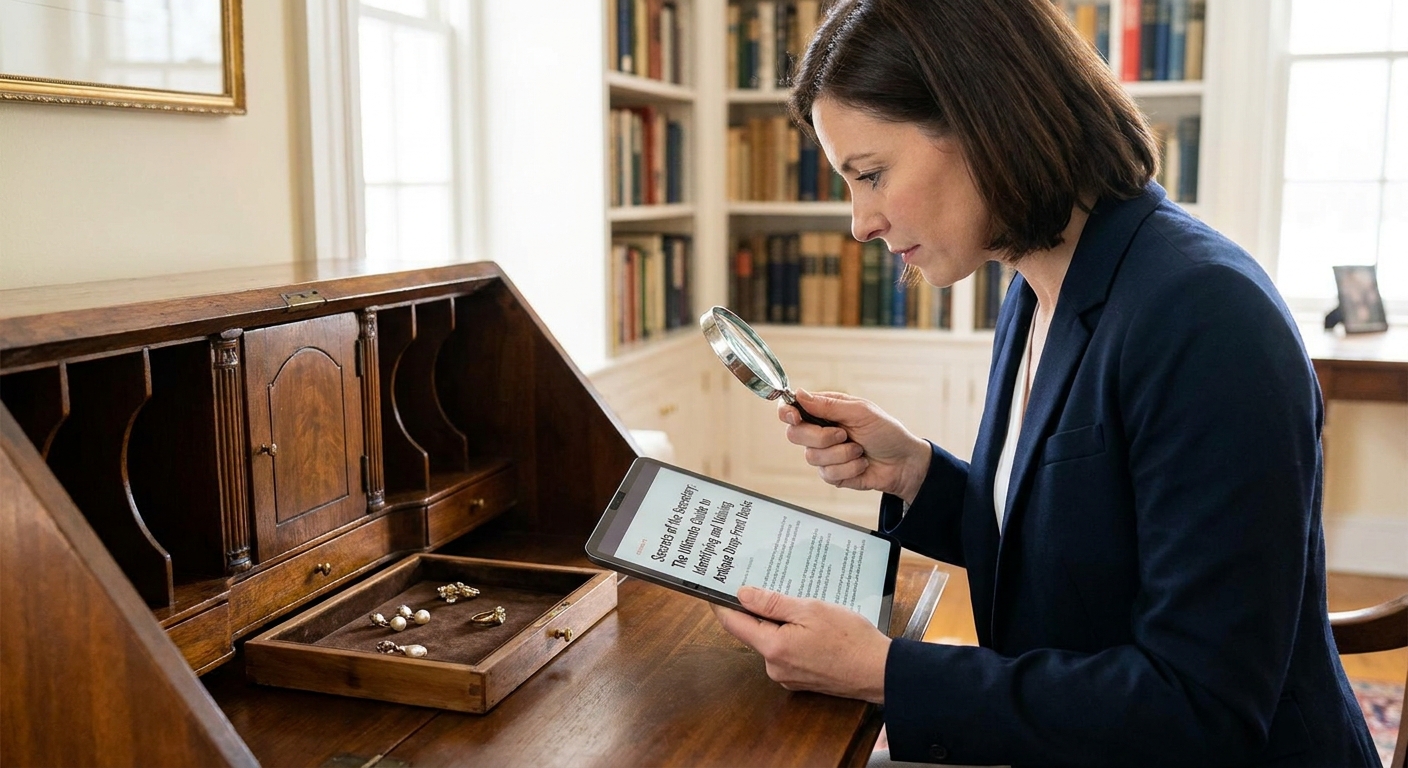
When you stand in front of a massive cherry or walnut secretary, don’t just admire the grain; look closely at how the wood meets at the corners. A drop-front desk—that classic piece where the writing surface folds down on a hinge—is one of the most hardworking items I ever have the pleasure of appraising. It was the home office of the 1700s and 1800s, designed to hold everything from tax records to love letters, and it carries those stories in its joints and drawers.
If you’re wondering whether yours is a high-end antique or a mid-century reproduction, start by pulling a drawer all the way out. Look at the sides where the front piece of wood meets the side piece. You’re looking for "dovetails," those interlocking joints that look a bit like teeth. In a truly old piece, those teeth will be uneven and thin, showing they were cut by a person with a hand saw rather than a machine. If the dovetails are perfectly uniform and thick, y’all are likely looking at a factory-made piece from the late 1800s or even the 1940s. While those later pieces are sturdy and handsome, they don’t command the same market price as an early hand-crafted desk.
The real magic of a secretary is often tucked away in the "gallery"—the nest of little cubbyholes and tiny drawers inside the desk. I always tell families to check for "secret" compartments. Sometimes a small vertical strip of wood between two drawers is actually a hidden pull-out box, or the floor of a cubbyhole might slide back to reveal a shallow tray. These features were designed for privacy in an era before digital passwords. If your desk has its original interior with no major replacements or "marriages"—which is what we call it when someone has put a top from one desk onto the bottom of another—its value remains much higher.
I often see these pieces when I’m handling equitable distribution for a divorce or cataloging a large estate inventory. People sometimes worry that "brown furniture" has lost its luster in today’s market. While it’s true that massive, dark pieces aren't the height of fashion right now, a desk with its original brass hardware and a signed maker’s mark is still a blue-chip investment. Take a look at the brass handles; if you see a faint circular shadow or extra holes behind the current hardware, it means the "brasses" were replaced at some point, which can ding the value quite a bit.
Before you decide to move a piece like this or list it online, take a flashlight to the underside of the drawers. If you see hand-planed wood—wood that feels slightly wavy or irregular to the touch rather than perfectly smooth and flat—you’ve likely got a piece of history. My best advice for anyone holding onto a family heirloom is to avoid using heavy cleaners or oils, as these can ruin an original finish. If you’re preparing for a charitable donation or an estate settlement, get a qualified appraisal first so you don't accidentally let a piece of 18th-century craftsmanship go for a "yard sale" price.