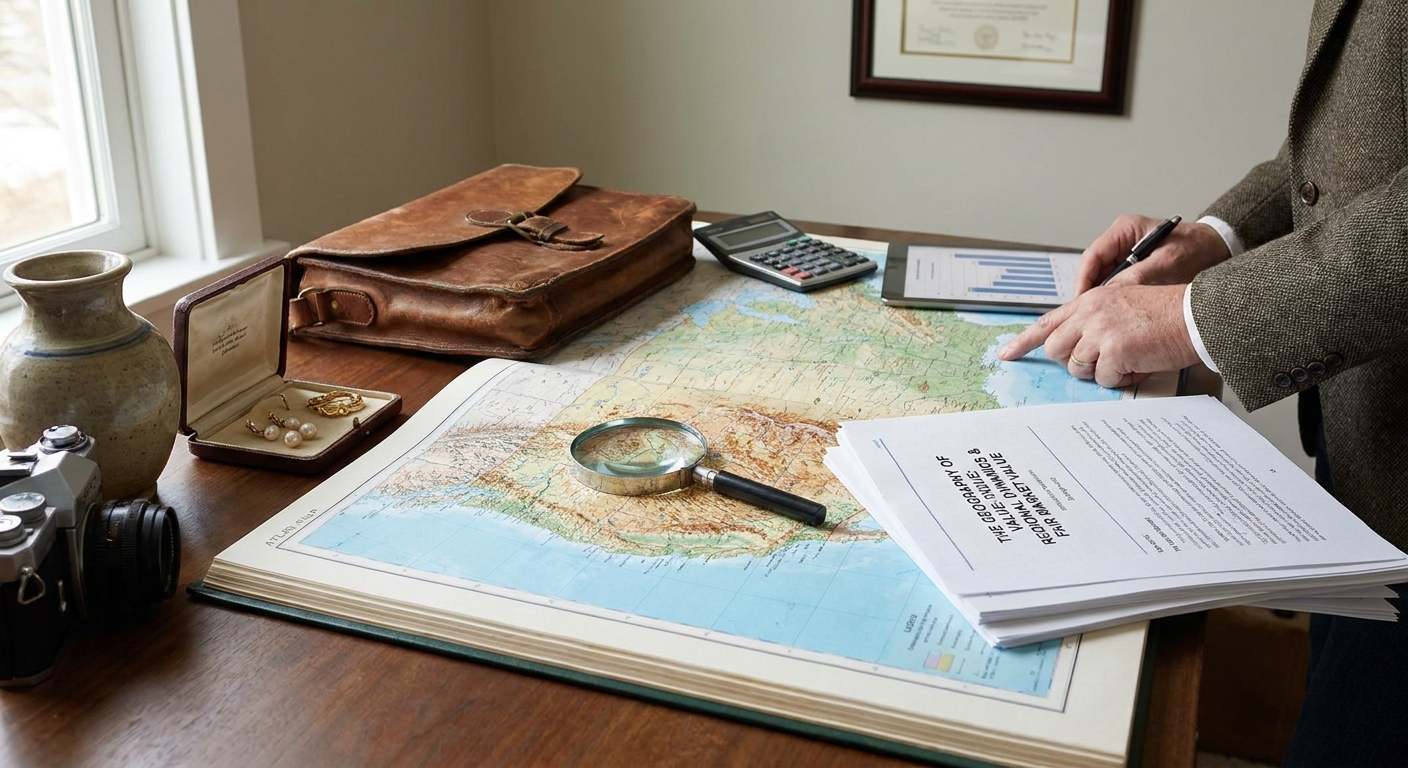
A heavy, hand-carved cherry wood sideboard might be the crowning jewel of a historic dining room in Savannah, but that same piece can feel like a burden in a sleek, minimalist apartment in Los Angeles. When I sit down to calculate Fair Market Value, the first thing I have to ask isn’t just "What is it?" but "Where would it sell?" Geography isn't just about dots on a map; it is a major factor in what an item is worth at any given moment.
Fair Market Value, or FMV, is the price a willing buyer and a willing seller agree on when neither is being forced to buy or sell. For things like IRS donations or dividing up an estate during a divorce, we have to look at the "relevant market." This is the place where an item like yours is most commonly bought and sold by the public. If you’re selling a high-end Chanel flap bag, that market might be a global online auction. But if you’re looking at a massive suite of traditional bedroom furniture, your market is likely much closer to home.
Taste varies wildly by region, and that drives price. Right here in the South, we still have a soft spot for fine brown furniture and traditional sterling silver patterns. However, in other parts of the country, those same items might sit in a showroom for months because buyers there are hunting for mid-century modern pieces or industrial styles. As an appraiser, I have to account for these local appetites. If I’m appraising a large collection for equitable distribution, I can’t just use a price I saw in a New York City gallery if the items are physically located in a small town where nobody is buying that style.
Then there is the matter of logistics. Shipping a two-carat GIA-graded diamond to a buyer across the country is easy and relatively inexpensive. Because diamonds are small and highly portable, their value stays pretty steady regardless of zip code. On the other hand, moving a 400-pound French provincial armoire is a whole different ballgame. The cost of moving large, heavy items often eats into the final price a seller actually pockets, which is something we have to consider when determining what a "willing buyer" would realistically pay.
Even high-end jewelry from houses like Cartier or Hermès can see regional price shifts. While a gold Love bracelet has a fairly universal price point, specific colored gemstones might be more popular in certain cities or climates. It’s my job to know which markets are currently "hot" and which are "cold" for your specific treasures.
Before you decide to sell or donate a significant collection, take a moment to consider who your local buyers are. If you’re looking for an appraisal, make sure your appraiser is looking at sales data from markets that actually fit your items, rather than just pulling the highest number they can find online. Knowing exactly where your items belong in the marketplace is the best way to ensure the numbers on that final report are fair and accurate for everyone involved.