That crisp, navy Chanel tweed jacket hanging in the back of your closet isn’t just a memory of a gala from a decade ago; it is a significant asset that could offer a substantial tax benefit. Many of y'all are incredibly generous when it comes to thinning out your collections, whether you are parting with high-end couture, a suite of Cartier jewelry, or a handful of loose diamonds. However, there is a specific number you must keep in mind before you drop those boxes off at a charitable organization: $5,000.
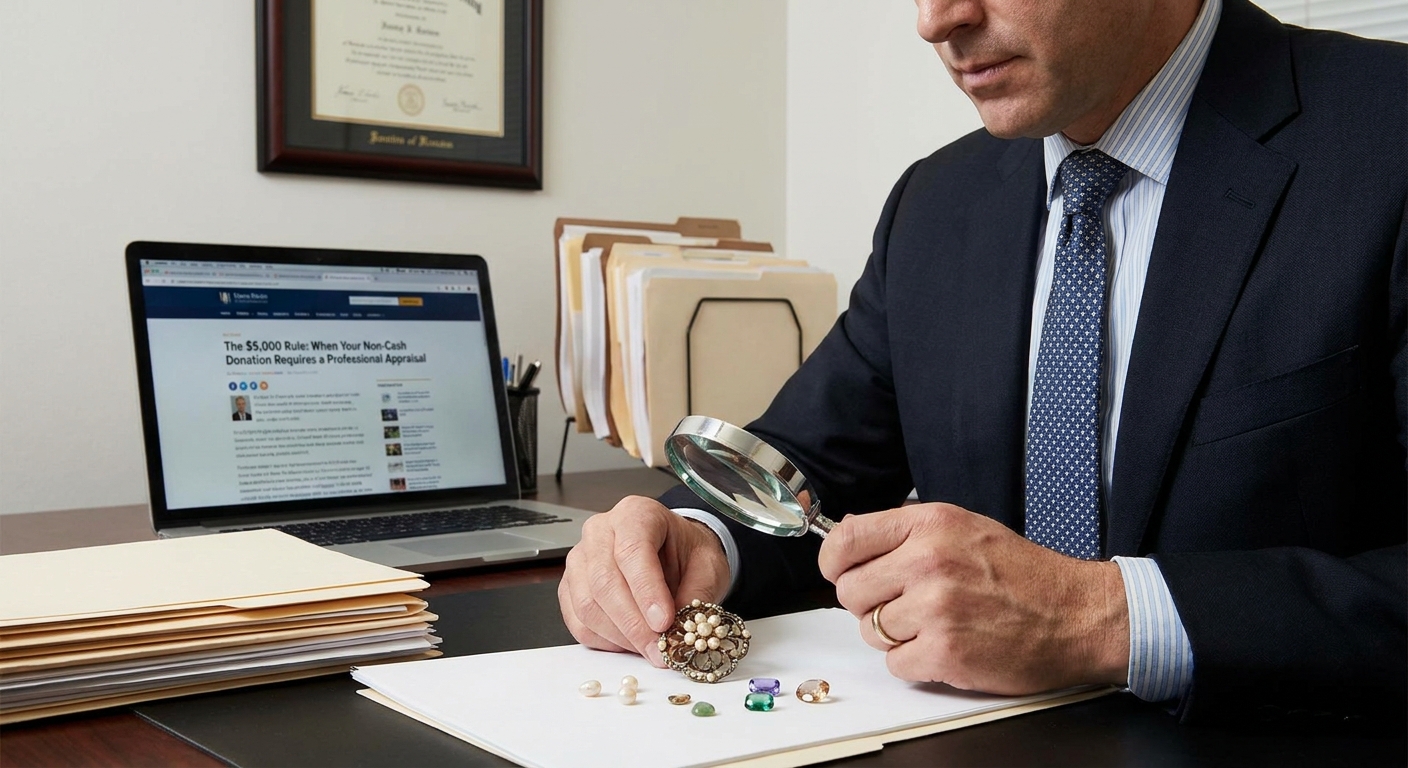
The IRS has a very firm line in the sand regarding non-cash donations. If the total value of the items you are donating is more than $5,000, you are required to obtain a "Qualified Appraisal" from a professional appraiser. This isn't just a suggestion or a simple handwritten note; it’s a formal, technical document that proves to the government that the value you’re claiming is based on current market reality. As someone currently deep in the GIA Graduate Gemologist program, I can tell you that the difference between a "nice diamond" and a "five-thousand-dollar diamond" comes down to very specific details in the 4Cs—color, clarity, cut, and carat weight—that only a trained eye can document for a legal report.
One rule that often surprises folks is the "similar items" clause. The IRS groups like-kind objects together. If you donate five vintage Hermès scarves to three different charities, and their combined value exceeds $5,000, you still need a professional appraisal. You can’t avoid the rule by spreading the items around. Whether it’s a group of jewelry pieces, a collection of designer accessories, or a set of fine silver, the IRS looks at the "aggregate" or total value. If that total hits the magic number, you’ll need a qualified appraiser to sign off on your IRS Form 8283.
When I perform these appraisals, I’m not just looking at what a piece might sell for in a flashy boutique. I am looking at "Fair Market Value." This is a bit of a technical term, but it simply means the price a willing buyer and a willing seller would agree on when neither one is being forced to sell. I document the condition, the brand markings, and the quality of the gemstones to ensure your paperwork is airtight.
The paperwork itself involves a bit of a three-way handshake. I provide the appraisal and sign my portion of Form 8283, you sign your part, and the charity signs to acknowledge they received the items. It’s a straightforward process, but it requires a bit of timing. You generally need to have the appraisal performed no earlier than 60 days before the date of the contribution.
If you are looking at a stack of designer boxes or a jewelry roll and thinking your gift might be worth a pretty penny, don't wait until tax season to start the conversation. My best advice for y'all is to take a few clear photos and make a rough list of what you plan to donate. If it looks like you’re nearing that $5,000 mark, bring in a certified appraiser before those items leave your house. It ensures you get the full credit you deserve for your generosity while keeping everything perfectly "above board" for the IRS.