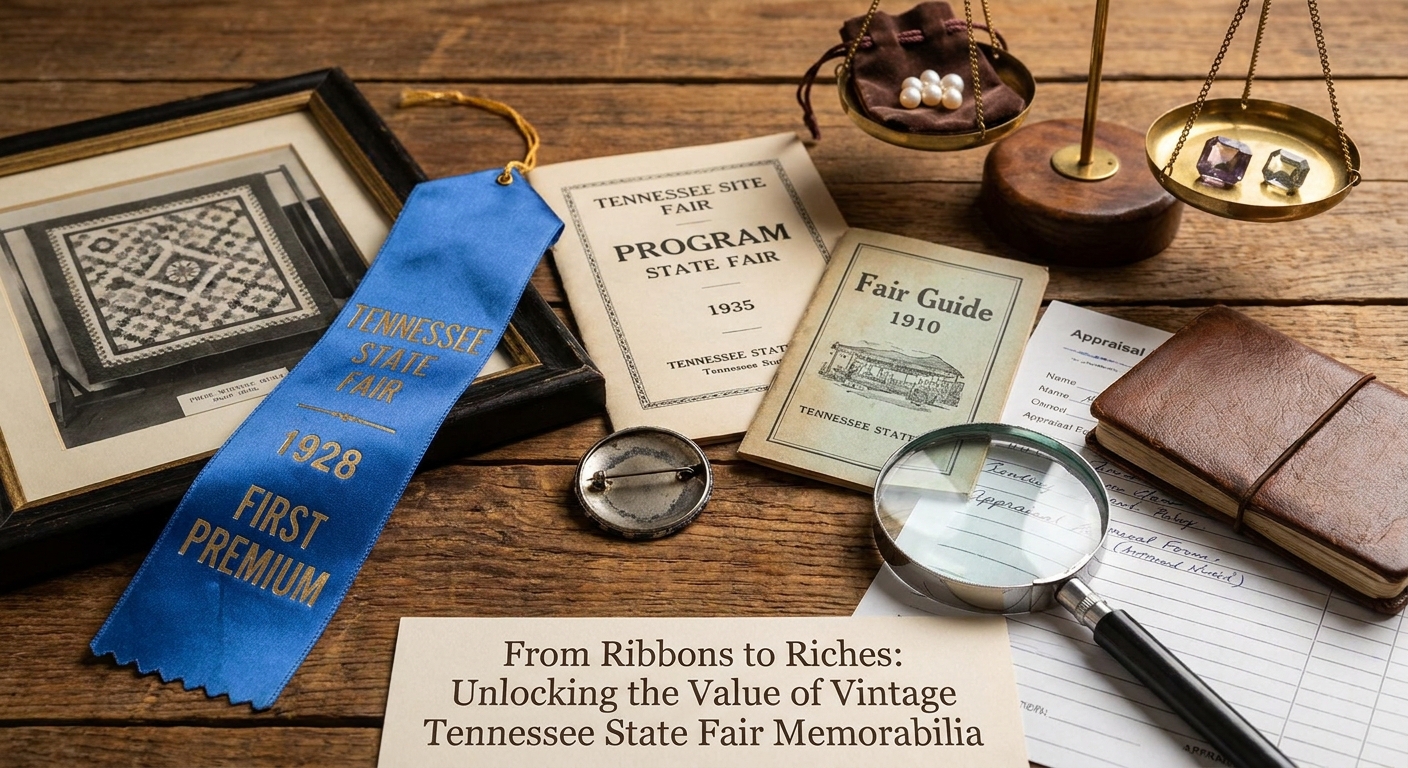
A tattered purple silk ribbon, stamped in gold leaf with "Grand Champion, Tennessee State Fair, 1912," might look like a bit of scrap at the bottom of a cedar chest, but it carries the weight of history and a surprisingly solid market value. For many families across Tennessee, these relics are more than just souvenirs of a hot September afternoon; they are tangible pieces of our state’s agricultural and social heritage. When I am sorting through a large estate or helping a family with an equitable distribution, it is often these "ephemeral" items—things originally meant to be used and then tossed away—that hold the most delight for collectors.
To understand the value of these items, we have to look at them through the lens of rarity and condition. Most people think of "antiques" as heavy furniture or fine jewelry, but vintage fair memorabilia falls into a category we call ephemera. This includes posters, programs, tickets, and ribbons. Because these items were made of paper or silk, most of them simply didn't survive the humidity and the years. If you find a poster from the Nashville fairgrounds dating before World War II, you might be holding a significant asset.
The first thing to check for is the printing quality. In the early 20th century, fair posters and programs were often printed using stone lithography. This process gave them vibrant, layered colors that modern printing just cannot mimic. A pristine 1920s poster with its original colors can fetch a handsome price because so few avoided the trash bin. If the paper feels thick and the colors are still "pop," y’all are off to a great start.
Next, consider the "category" of the win. While a blue ribbon for "Best Peach Jam" is a lovely heirloom to keep in the family, collectors often pay a premium for livestock-related pieces. Items from the "Grand Champion Bull" or specific horse shows have a dedicated following. We are looking for more than just the ribbon here; keep an eye out for heavy silver-plated trophies or branded ceramic jugs that were sometimes given as prizes. These are documented records of Tennessee’s farming prestige, and their value often reflects that.
Finally, look for "specialty souvenirs." In the 1940s and 50s, the Tennessee State Fair was a hub for local advertising. Small celluloid buttons, branded hand fans, or localized toys given away by Nashville businesses can be worth a bit. The key here is the "Maker’s Mark." Much like how I check for a Cartier stamp on a gold bracelet, I look for specific printers or manufacturers on these fair items to verify their age.
If you have uncovered a collection of these colorful mementos, the best thing you can do right now is to keep them flat and out of the light. Silk ribbons are prone to "shattering," where the fabric becomes brittle and breaks. Lay them in a cool, dry place and avoid using tape or glue on them. Before you decide to sell or donate the collection, have a professional take a look to identify the truly rare pieces from the common ones. Knowing exactly what you have is the first step in ensuring these family treasures are protected for the next generation.