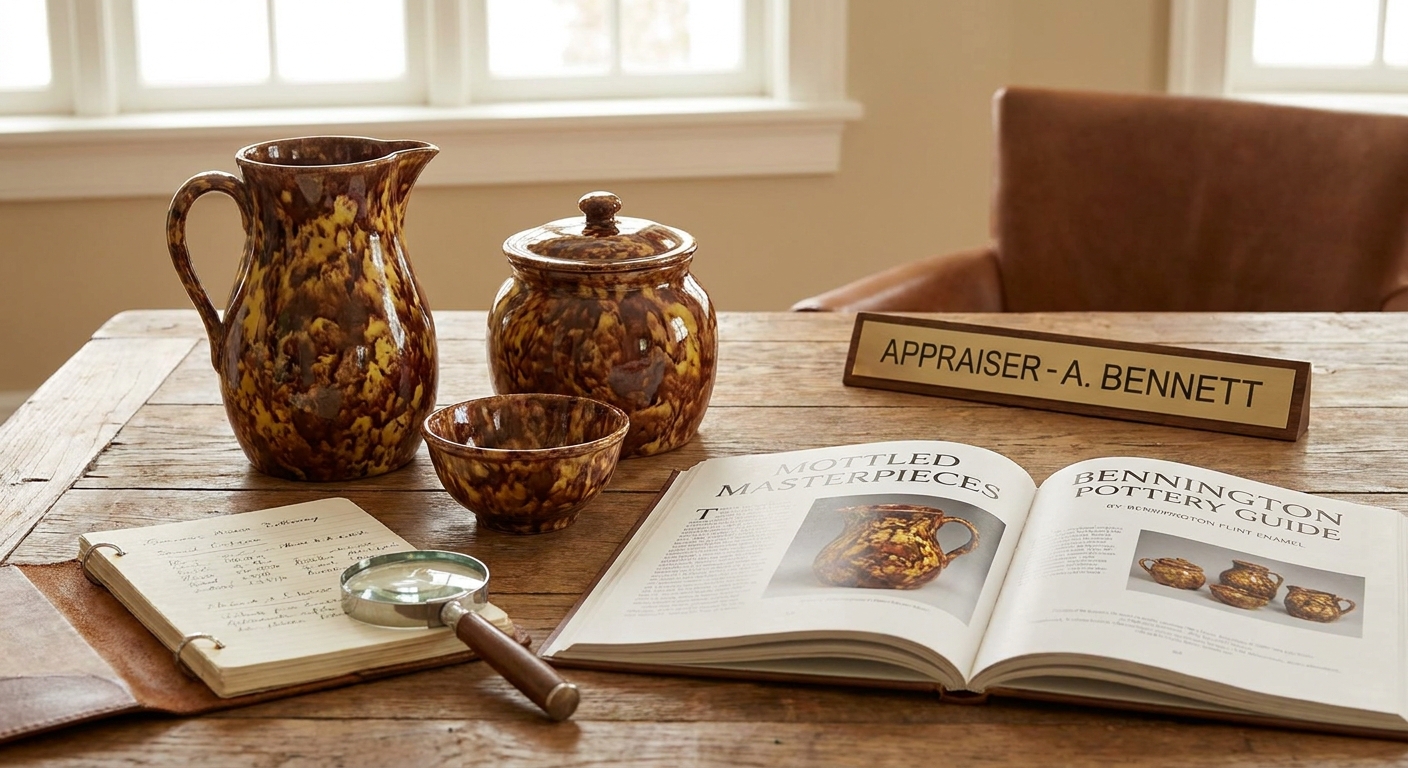
That deep, swirling mix of amber, burnt orange, and forest green on a heavy ceramic pitcher can stop you mid-stride, especially when the glaze looks so thick and glossy you'd swear it was still wet. This isn't your standard brown-and-tan kitchen stoneware. If you are holding a piece of Bennington Flint Enamel pottery, you’re holding a bit of 19th-century Vermont history that was truly ahead of its time.
Back in 1849, Christopher Webber Fenton patented a way to make common pottery stand out. He took standard glazes and sprinkled them with metallic powders—think of them like tiny grains of copper or cobalt—right before the piece went into the kiln. When the heat climbed, those powders melted and ran, creating a "mottled" or spotted look. It resembles tortoiseshell, but with a vibrant, glassy depth. As an appraiser, I look for that specific "melted" appearance where the colors bleed into one another naturally.
When y’all are sorting through a family collection, there are three practical things to check. First, look for the mark. Flip the piece over and look for a circular stamp that mentions the "1849" patent. However, don't fret if it’s missing; plenty of authentic Bennington was never stamped. Second, look for the "holy grail" colors. While the brown and yellow tones are classic, pieces featuring splashes of brilliant blue or emerald green are much rarer and often command a higher price. Third, look at the form. A simple bowl is fine, but "figural" pieces—like a pitcher with a handle shaped like a hound or a flask made to look like a stack of books—are what really get collectors excited.
Condition is just as vital as the color. Because this glaze is essentially a layer of glass, it is prone to "flaking" or "pinging," where small bits of the color pop off the ceramic body. A tiny nick on the base might be expected for something 170 years old, but a large crack or a repaired handle can significantly change the math during an equitable distribution or an estate valuation.
If you find one of these mottled beauties tucked away in a china cabinet, resist the urge to give it a heavy scrubbing. These glazes can be delicate, and a soft, damp cloth is all you need to let that 1840s shine come through. My best advice for anyone who thinks they’ve found a Bennington masterpiece is to have it professionally identified before you decide its fate. There are many later look-alikes that lack the weight and the specific "flinty" texture of the originals, and a qualified appraisal is the only way to be sure you aren't overlooking a true museum-quality treasure.