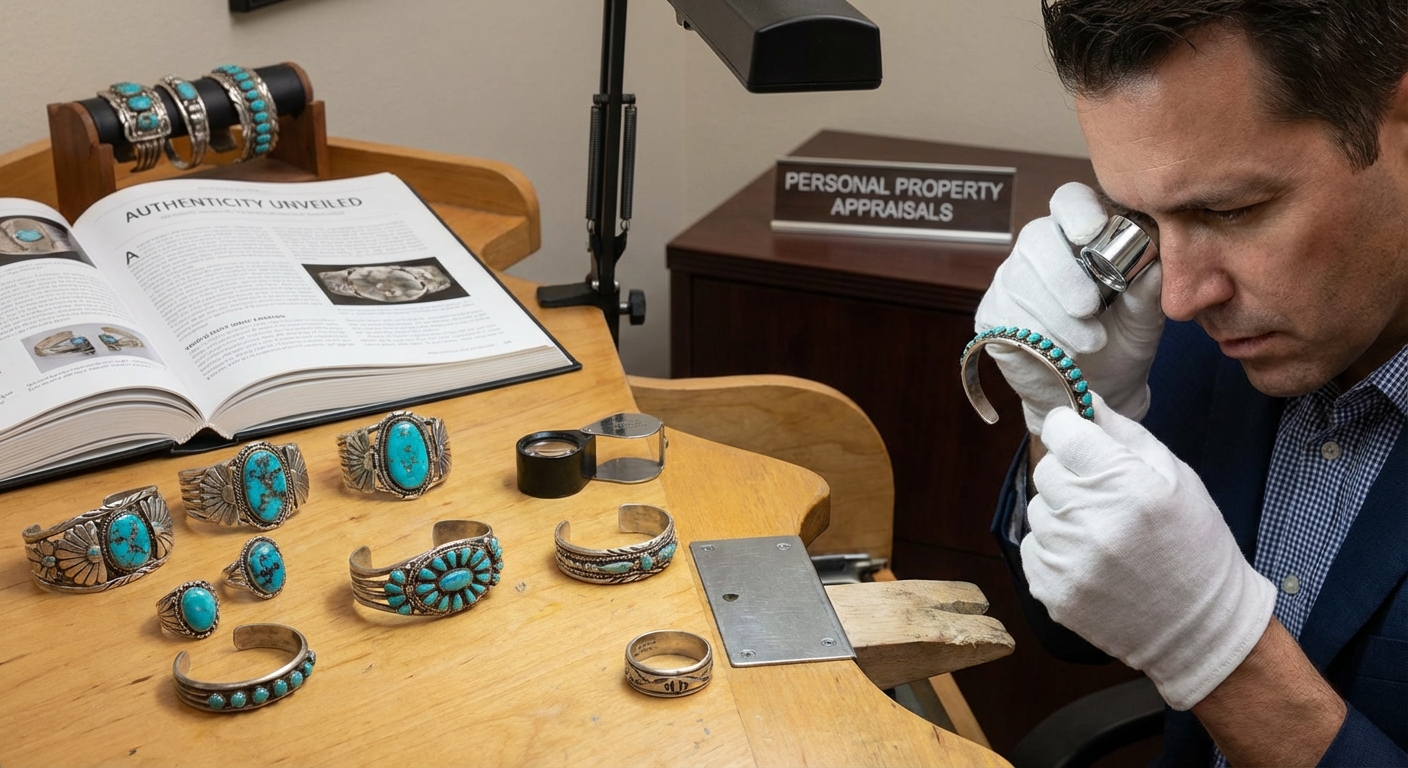
Imagine holding a stunning Native American cuff bracelet, its deep blue stones catching the light. You’ve always admired its artistry, but a nagging question lingers: is it truly genuine turquoise, or a clever imitation? This isn’t just about aesthetics; it's about understanding the intrinsic value and cultural significance of these pieces. Many collectors, myself included, have encountered this dilemma, whether admiring an estate sale find or considering a new acquisition. The allure of turquoise is undeniable, but its prevalence has also led to a market filled with substitutes, making discernment crucial.
When approaching the authenticity of turquoise in Native American jewelry, a multi-faceted approach is key. One of the most fundamental strategies is to examine the stone's matrix, the natural web of veins that runs through it. Genuine turquoise often exhibits a matrix that is irregular, organic, and consistent with the stone's origin. Look for variations in color and thickness within these veins. For instance, a matrix that appears too uniform, almost like a printed pattern, can be a red flag. Remember, nature rarely produces perfect symmetry.
Another critical technique involves observing the stone's color and texture. Natural turquoise displays a range of blues and greens, often with subtle variations within a single stone. It should feel cool to the touch, a characteristic of many natural minerals. Conversely, dyed howlite or magnesite, common imitations, might exhibit an overly vibrant or unnaturally consistent color. They can sometimes feel warmer or even slightly waxy to the touch. This tactile and visual assessment, while not definitive on its own, provides valuable initial clues.
Furthermore, understanding the concept of trace element analysis can be helpful, even if you're not conducting it yourself. This scientific principle explains that each mineral, including turquoise, has a unique chemical fingerprint due to the trace elements present during its formation. While you won't be performing lab tests, this knowledge reinforces why subtle differences in color, matrix, and inclusions are so significant. Reputable dealers and appraisers often rely on this underlying scientific reality when identifying stones.
In practice, I once evaluated a necklace that was presented as vintage Native American. The turquoise stones were a beautiful, vibrant blue, but the matrix was unusually uniform and almost perfectly symmetrical across every single bead. Upon closer inspection, the color also lacked the subtle variations typically found in natural turquoise. While the craftsmanship of the silverwork was excellent, the stones themselves raised concerns. A gentle scratch test in an inconspicuous area, a technique best left to professionals, confirmed it was a dyed composite material, not genuine turquoise.
Ultimately, when you're holding a piece you suspect might be authentic Native American turquoise jewelry, the most actionable takeaway is this: if you're considering a significant purchase or need to understand the true value of a piece you already own, seek a professional appraisal. An experienced appraiser, like myself, has the knowledge, tools, and experience to differentiate genuine stones from imitations, providing you with confidence and clarity regarding your treasured possessions.