It’s a common scenario in my office: a client brings in a beautiful 14k gold necklace, perhaps with an intricate pendant adorned with a scattering of small, sparkling diamonds. Their immediate thought, often fueled by late-night infomercials, is the gold's melt value. "It's just scrap, isn't it?" they ask, holding a piece that clearly represents more than just its weight in precious metal. This initial perspective, while understandable, often drastically undervalues the true worth of diamond accent gold jewelry.
As a personal property appraiser with over a decade specializing in jewelry, I've seen countless pieces dismissed prematurely. My role is to look "beyond the melt," to uncover the integrated value that makes a piece truly special. It's about recognizing that even small diamonds, when set thoughtfully in well-crafted gold, contribute significantly to the overall value, transforming a simple commodity into a coveted possession.
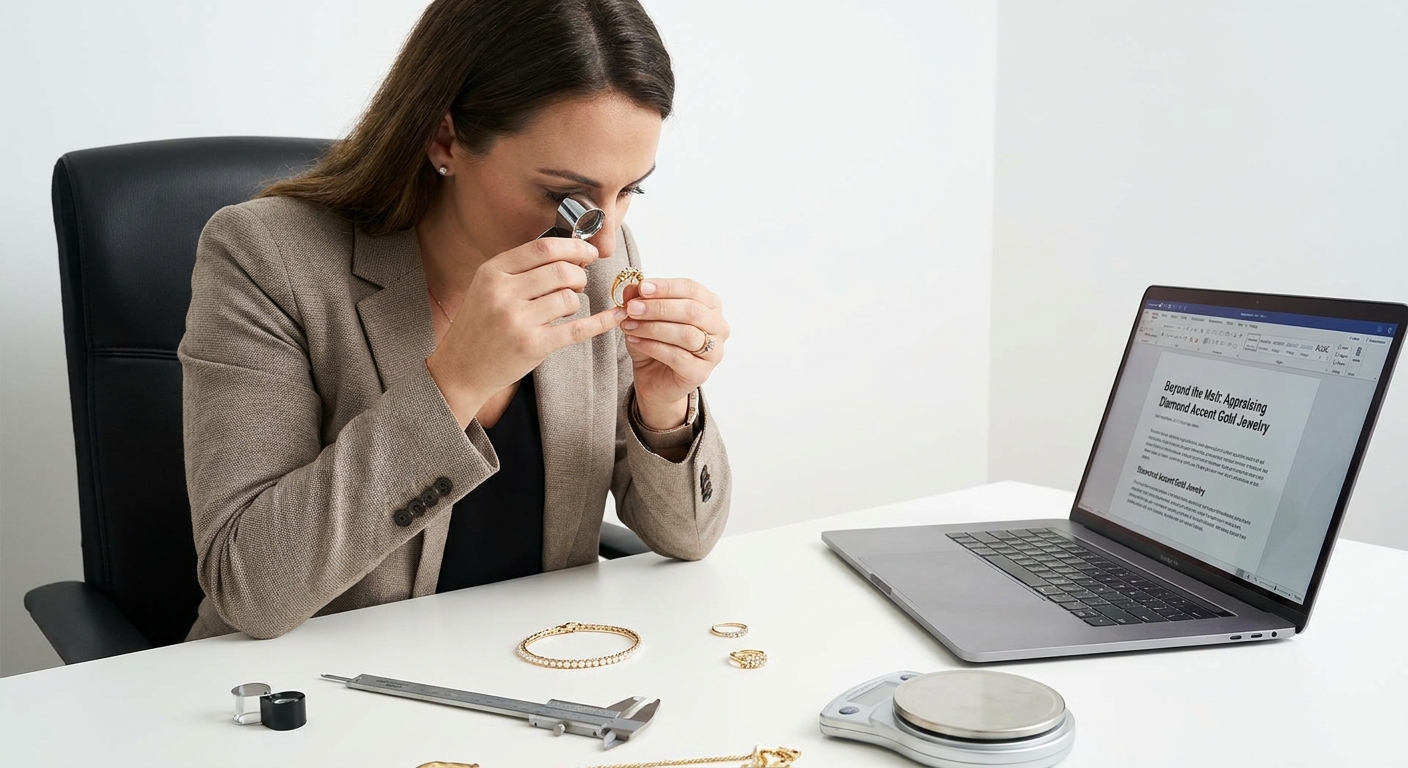
One crucial strategy is to deconstruct the value components. We begin by assessing the gold itself – its purity and weight. This provides a baseline. However, the next step involves a meticulous examination of the diamonds. Even if they are small "accent" stones, their cumulative effect can be substantial. I’ll count each stone, estimate its size (often in millimeters), and carefully inspect its cut quality, clarity, and color using professional tools. While I don't provide GIA certification for every tiny diamond, I can certainly discern brilliance, obvious inclusions, or significant color tints that impact desirability. A ring with twenty well-matched, brilliant accent diamonds, even if each is only a point or two, holds far more value than the gold alone.
Another key strategy is understanding manufacturing quality and design integrity. Is the gold setting robust and well-finished? Are the diamonds securely set with precision? Poor craftsmanship can detract, while superior artistry, even in mass-produced items, adds value. Consider a vintage piece from a reputable jeweler versus a contemporary, poorly constructed item. The design itself plays a huge role. Is it a classic solitaire with diamond shoulders, a unique art deco design, or a modern, minimalist piece? Each style appeals to different buyers and commands different prices. This is where market research comes in; I'll compare it to similar pieces that have recently sold, not just current retail prices, but secondary market transactions.
This comprehensive approach aligns with the appraisal concept of Highest and Best Use. For diamond accent gold jewelry, the highest and best use is almost always as a wearable piece of jewelry, not as raw materials. Its value is derived from its integrated aesthetic appeal, its craftsmanship, and its ability to adorn and delight, rather than just its component parts melted down.
In practice, when a client presents a delicate filigree bracelet set with tiny rose-cut diamonds, my process is systematic. I’d carefully measure the bracelet, determine the gold karat, and then, under magnification, meticulously count each diamond, noting its cut, approximate size, and overall condition. I'd check for any missing stones, excessive wear, or repairs. This detailed observation allows me to build a comprehensive picture of the piece's intrinsic quality and market appeal.
So, for anyone considering selling or insuring their diamond accent gold jewelry, my actionable takeaway is this: Do not rely solely on the melt value. Seek out a certified personal property appraiser who understands the nuances of jewelry beyond just its precious metal content. We are trained to identify and quantify the value of craftsmanship, design, and the collective sparkle of those often-underestimated accent diamonds, ensuring you receive a fair and accurate assessment of your treasured possessions.