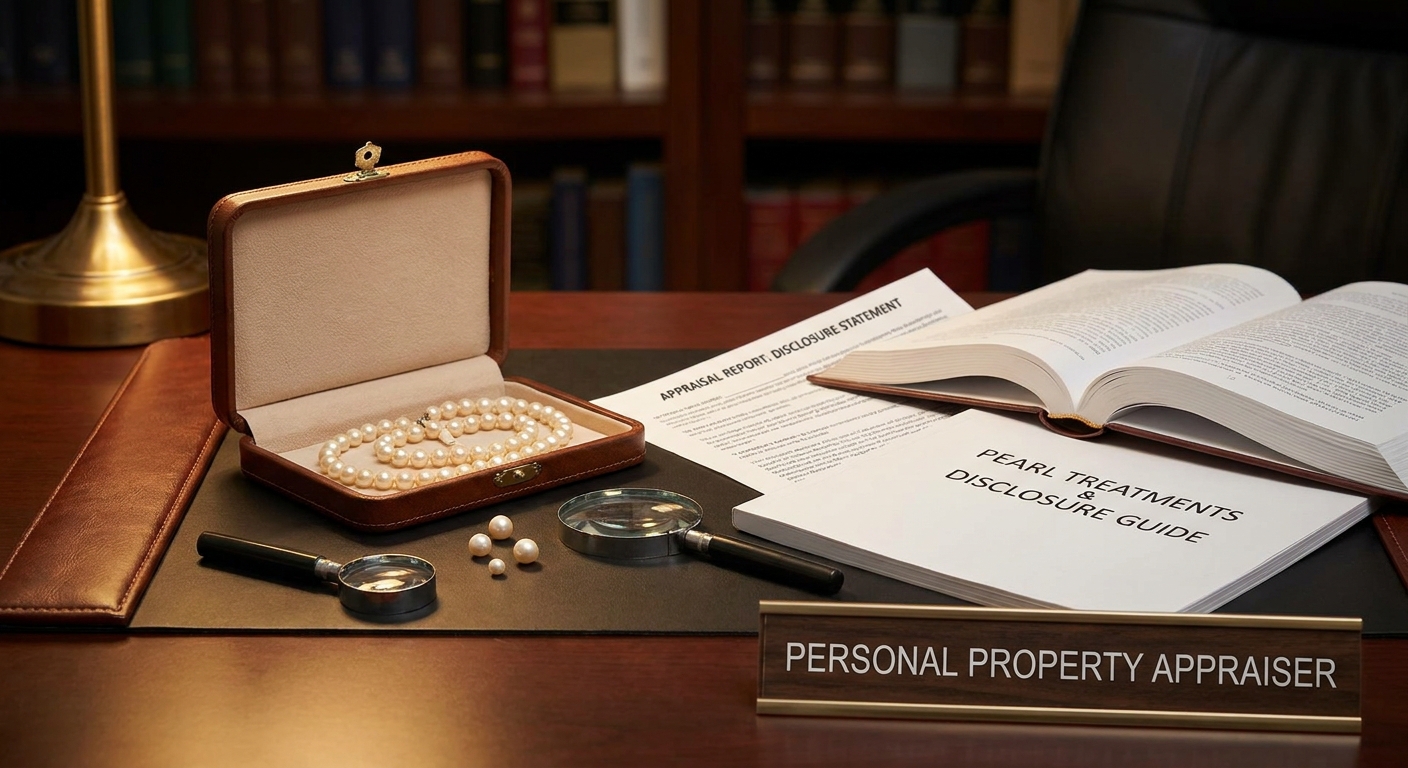
Imagine inheriting a beautiful, lustrous pearl necklace, a cherished family heirloom passed down through generations. You’ve always admired its deep, almost iridescent glow, believing it to be a testament to nature’s untouched artistry and immense value. When you bring it in for appraisal, perhaps for insurance or estate planning, you anticipate a high valuation reflecting its perceived natural origins. Then, the conversation takes an unexpected turn. I explain that while the pearls are indeed lovely, my examination reveals evidence of treatment—perhaps bleaching to enhance uniformity or dyeing to achieve that specific, deep hue. The news can be disheartening, even shocking, as the market value for treated pearls, while still significant, is often considerably different from their untreated counterparts.
This scenario isn't rare in my decade of appraising jewelry. Pearl treatments are incredibly common, ranging from simple cleaning and polishing to more significant alterations like bleaching, dyeing, and even irradiation. These enhancements, while often improving the aesthetic appeal of the pearls, fundamentally change their identity and, crucially, their market value. The challenge for both appraisers and clients lies in the fact that many treatments are not readily apparent to the untrained eye, making mandatory disclosure an absolute necessity.
From an appraiser’s perspective, our ethical obligation, rooted in frameworks like the Uniform Standards of Professional Appraisal Practice (USPAP), dictates the "Principle of Full Disclosure." This means we must report all material facts that affect the value of an item. For pearls, treatments are undeniably material facts. To ensure this, my approach involves a multi-faceted examination.
One key strategy is meticulous visual inspection under magnification. Using a jeweler's loupe, I scrutinize the surface for any irregularities, dye concentrations around drill holes, or unusual color banding that might suggest treatment. For instance, dyed pearls often show a heavier concentration of color in fissures or around the drill hole, which is a tell-tale sign. Another strategy involves utilizing specialized lighting and testing where appropriate. UV light can sometimes reveal differences in fluorescence between treated and untreated pearls, offering additional clues. While I'm not a GIA certified gemologist, my basic gemstone and diamond courses, combined with years of practical experience, equip me to identify common indicators. If there’s any doubt, or for complex cases, I always recommend further testing by a GIA laboratory. Finally, clear and comprehensive reporting is paramount. Any detected or suspected treatments must be explicitly stated in the appraisal report, detailing the type of treatment and its potential impact on value. This transparency ensures the client has a complete and accurate understanding of their item.
Just last month, I was appraising a lovely strand of what the client believed were natural black pearls from her grandmother. A quick check under the loupe revealed tell-tale signs of dye concentration around the drill holes and a slightly unnatural uniformity of color. While still beautiful, they were dyed freshwater pearls, not natural black Tahitian, which significantly altered their market value and the advice I provided for insurance. This highlights why an appraiser’s thoroughness is so vital.
When you seek an appraisal for your cherished pearls, be proactive. Ask your appraiser about their methodology for identifying treatments. A professional appraiser will be transparent about their process and will clearly disclose any enhancements found, ensuring you receive an accurate valuation that reflects the true nature of your beautiful pearls. After all, a comprehensive appraisal isn't just about the gem itself, but its full, honest story.