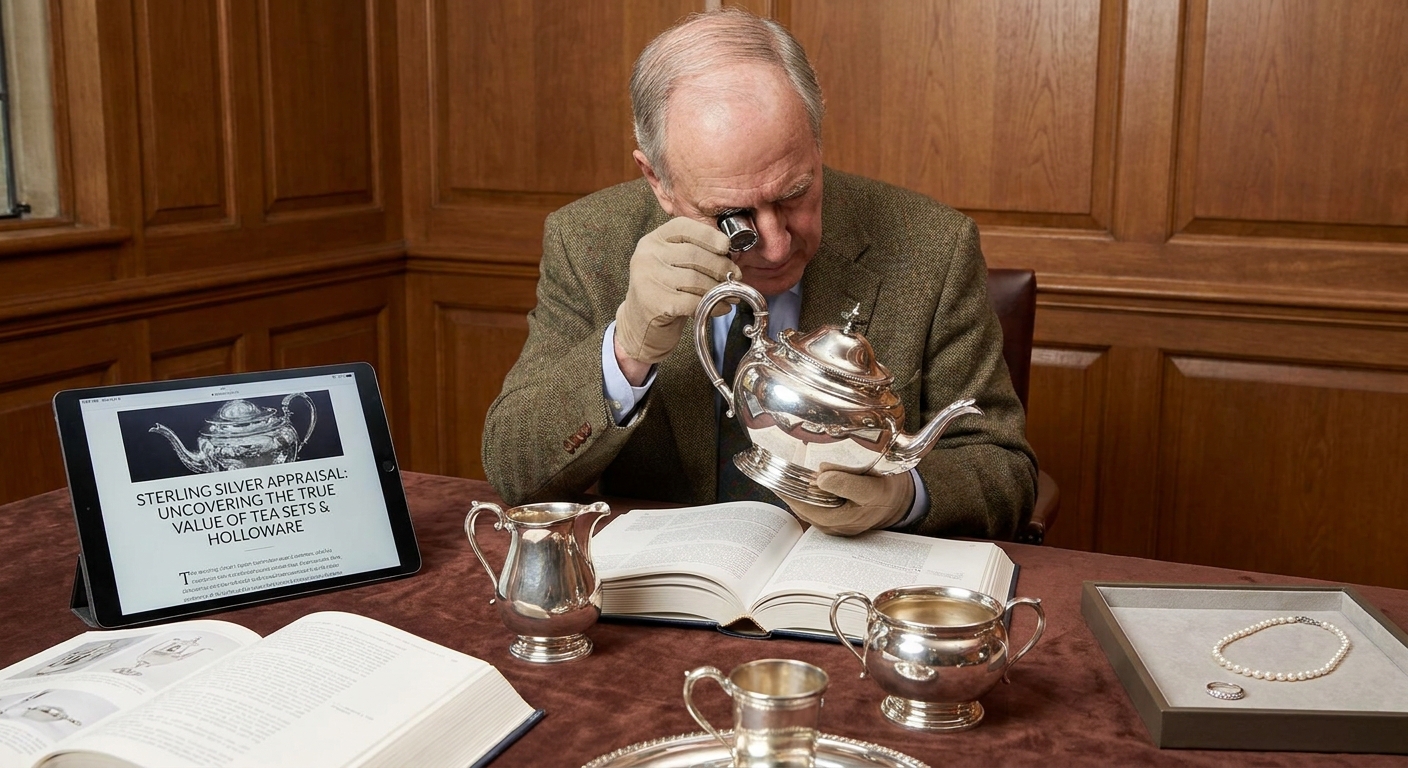
It’s a common scene: a dusty old box emerges from an attic or a forgotten corner of the basement. Inside, nestled amongst yellowed linens, is a tarnished sterling silver tea set, perhaps a creamer, a sugar bowl, a tray, and a teapot. The initial thought for many is often its scrap value – "How much is this silver worth by weight?" This perspective, while valid for some pieces, frequently overlooks the far more significant value inherent in well-crafted, historically significant, or aesthetically unique sterling silver holloware. The glint of silver can be deceiving, hiding a story and a market value that extends far beyond its melt weight.
Appraising sterling silver tea sets and holloware is a nuanced process, requiring a keen eye and a deep understanding of market dynamics. It's about peeling back layers of tarnish and time to reveal the true character and potential worth of an object. My experience has taught me that overlooking these details can mean leaving substantial value on the table.
One of the most critical steps in uncovering true value lies in deciphering the marks. Every piece of sterling silver, especially those of quality, bears hallmarks. These tiny stamps are a treasure map, indicating the purity of the silver (sterling is typically .925), the manufacturer, the country of origin, and often the date of manufacture. A piece marked Tiffany & Co. from a specific period will command a different price than an unmarked piece of equivalent weight, even if the craftsmanship appears similar. Familiarize yourself with common marks from renowned makers like Gorham, Reed & Barton, or international hallmarks from Birmingham or Sheffield. These marks are the first clue to an item's pedigree and potential desirability.
Next, we must thoroughly assess the condition and design integrity. A sterling silver tea set isn't just a container for tea; it's a piece of art and history. Dents, significant scratches, over-polishing that has worn away fine details, or repairs that are not skillfully executed can drastically impact value. Conversely, a piece in excellent original condition, with crisp details and minimal wear, will always be more valuable. Beyond condition, consider the design. Is it a classic Georgian style, a sleek Art Deco creation, or a more ornate Victorian pattern? Rare or particularly well-executed designs by known artists or firms can elevate an item's value far beyond its material worth.
This leads us to the concept of "highest and best use," a framework often applied in real estate but equally relevant in personal property appraisal. It asks: what is the most profitable, legal, and physically possible use of this item? For sterling silver, is it most valuable as scrap metal, as a functional household item, or as a collectible antique? Often, for quality holloware, the highest and best use is as an antique collectible, where its historical significance, design, and provenance (if known) far outweigh its melt value.
Just last month, I appraised a rather unassuming five-piece tea set. The owner thought it was simply family silver, perhaps worth a few hundred dollars. On closer inspection, the subtle hallmarks revealed it was an early 20th-century piece by a lesser-known but highly regarded American silversmith, known for exquisite hand-chasing. The condition was remarkable, and while it didn't have a famous name attached, its artistic merit and excellent preservation elevated its value significantly beyond scrap. The owner was quite pleased to learn its true market standing.
Finally, consider provenance and historical context. While not always present, a verifiable history of ownership by a notable individual or a connection to a significant event can add another layer of value. Even a compelling family story, if it can be reasonably substantiated, can enhance a piece’s appeal to collectors.
If you're wondering about the sterling silver tucked away in your cabinet, don't just see the tarnish or the weight. A professional appraisal can unveil its true story and market worth, ensuring you understand its full potential and make informed decisions about its future.