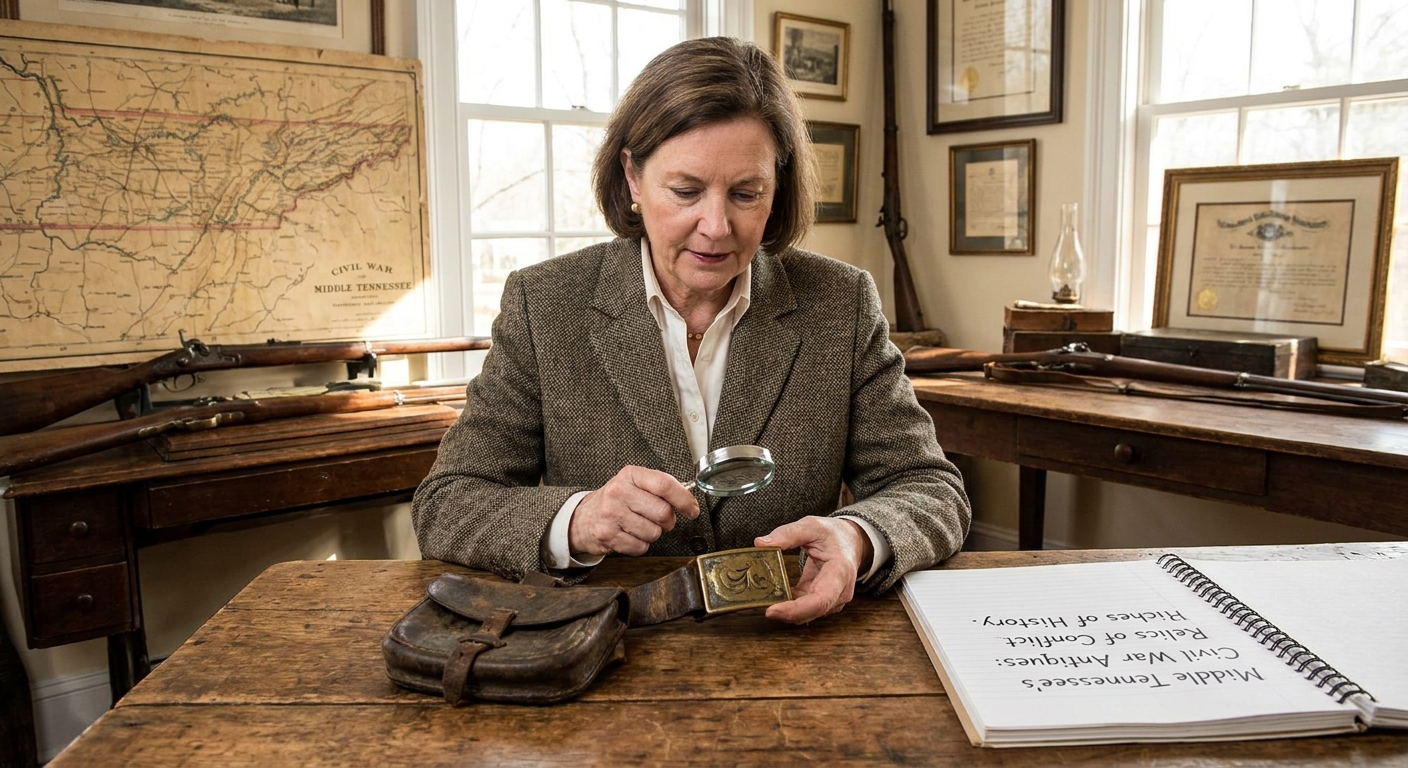
Imagine a scene many Middle Tennesseans can relate to: an elderly relative passes, and the family begins the daunting task of clearing out their beloved home. In an old trunk, tucked away in the back of a dusty attic in Murfreesboro, a descendant discovers a tarnished military-style button, a brittle, faded tintype photograph of a solemn young man in uniform, and a small, leather-bound journal. Initially, they might dismiss them as mere curiosities, perhaps sentimental but of little monetary worth. Yet, a closer look at the uniform in the photo, or a careful read of the journal's entries detailing marches and skirmishes near Stones River, quickly reveals a profound connection to the Civil War, a conflict that deeply scarred and shaped our very landscape. These aren't just old objects; they are tangible echoes of a pivotal, often painful, chapter in American history, particularly rich in Middle Tennessee.
For those of us in the appraisal profession, these discoveries are not uncommon. Middle Tennessee was a hotbed of Civil War activity, from the Battle of Franklin to the occupation of Nashville, leaving behind a wealth of relics. Appraising these pieces requires a blend of historical knowledge, market understanding, and meticulous detective work. One crucial strategy is thorough provenance research. An item's history—who owned it, where it came from, and its journey through time—can dramatically impact its value. A generic Confederate uniform button might be worth a modest sum, but if that same button can be verifiably traced to a specific soldier who fought at the Battle of Franklin, its historical significance and market value can skyrocket. This involves delving into old family records, military archives, and even local historical society documents to establish an unbroken chain of ownership and context.
Another essential step is authenticity verification and condition assessment. The market for Civil War artifacts is unfortunately ripe with reproductions, fakes, and "marriage pieces" (items assembled from various authentic and non-authentic parts). A skilled appraiser must be able to distinguish genuine period pieces from later copies, understanding the manufacturing techniques, materials, and wear patterns of the 1860s. Similarly, the condition of an item plays a significant role. Is a sword blade pitted from rust? Are there repairs to a kepi? Has a document been properly conserved or poorly restored? These factors, along with the item's originality, are critical in determining its fair market value.
At the core of this work is the concept of marketability and comparable sales analysis. We don't just guess at value; we rely on recent sales data from reputable auction houses, specialized dealers, and private transactions involving similar authentic items. This evidence-based framework ensures that our valuations reflect the current market reality, providing a defensible and accurate figure.
I recall a situation where a client brought in a simple, worn leather wallet, believing it was just a family heirloom. It had a faint, almost illegible inscription inside. Through careful research and comparison with period handwriting samples, we were able to link the inscription to a Union cavalryman who was captured during Grierson's Raid and later paroled in Nashville. This personal connection transformed a seemingly ordinary artifact into a highly desirable piece of history, significantly increasing its value to collectors specializing in specific units or campaigns.
The antiques and collectibles market, particularly for Civil War artifacts, is dynamic and complex. What might seem like a simple old object to one person can, with professional insight, reveal itself as a priceless piece of history, holding both monetary and immeasurable sentimental value. If you've inherited or discovered what you suspect might be a Civil War relic from Middle Tennessee, don't leave its story and value to chance. A certified personal property appraiser with expertise in historical artifacts can provide the comprehensive research and market analysis needed to understand its true worth, ensuring that these invaluable relics of conflict become recognized riches of history.