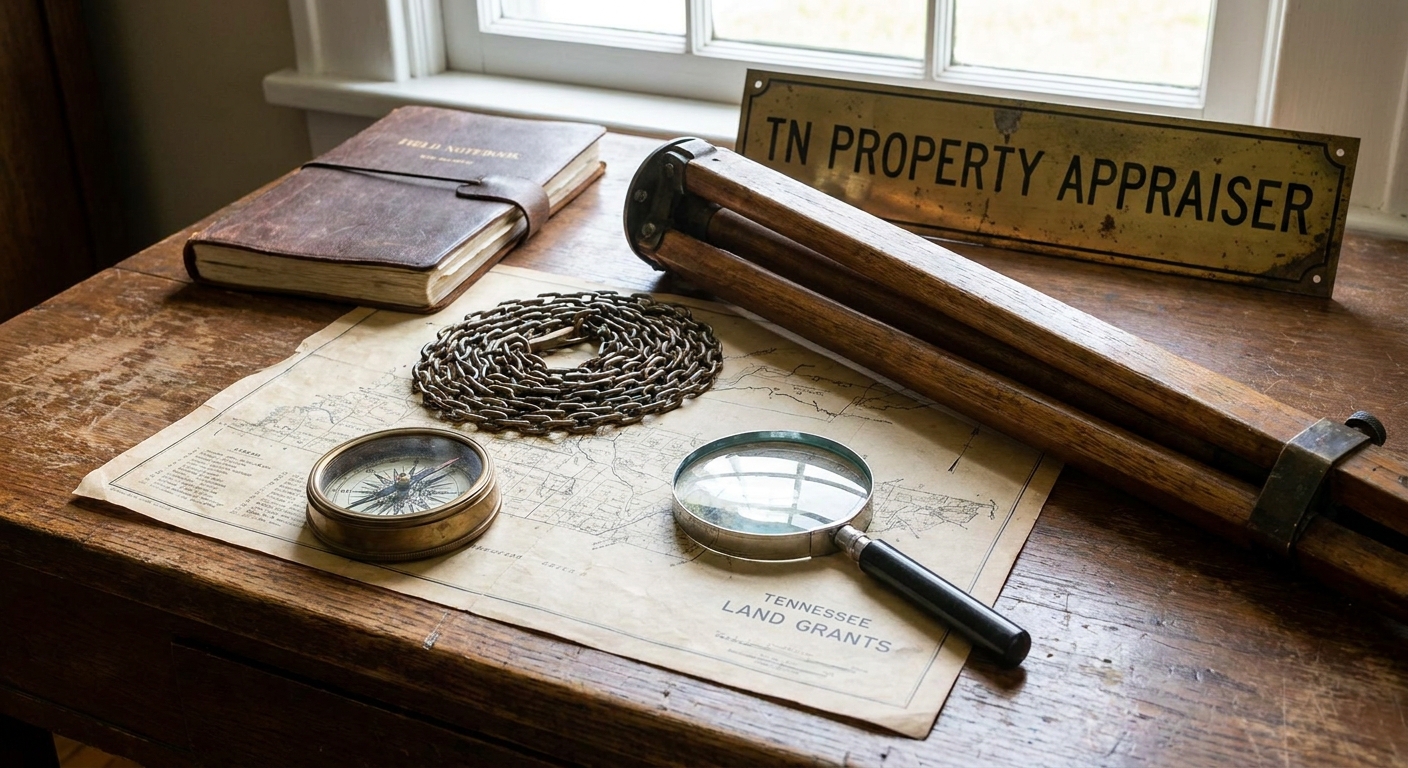
Imagine a dusty old box, perhaps tucked away in a grandparent's attic or unearthed during a barn cleanout in rural Tennessee. Inside, amidst forgotten tools and yellowed newspapers, you might find a brass instrument, gleaming faintly under years of grime, accompanied by a wooden tripod and a metal chain. For many, it's just old equipment, destined for the next yard sale or even the scrap heap. But for an experienced appraiser like myself, and for anyone with an eye for history, these are not just objects; they are tangible links to the very foundation of Tennessee, holding stories of ambition, precision, and the relentless charting of a burgeoning state.
These antique Tennessee survey tools—transits, theodolites, compasses, chains, and leveling rods—are more than mere relics. They represent the ingenuity and perseverance of the men and women who mapped our rivers, established property lines, laid out towns, and built the infrastructure that defines Tennessee today. Their enduring value isn't solely monetary, though many can fetch surprising sums; it's also historical, cultural, and deeply personal for those whose ancestors might have wielded them.
When assessing the value of such items, a systematic approach is crucial. One key strategy involves meticulous research into provenance and maker's marks. Many early American survey instruments were produced by renowned manufacturers like W. & L.E. Gurley of Troy, New York, or Young & Sons of Philadelphia. Identifying the maker, understanding their production dates, and cross-referencing any engraved names or serial numbers can connect a tool directly to a specific era or even a historical figure. For instance, a compass stamped with a local Tennessee maker, or one with an inscription linking it to a major land grant survey, instantly elevates its significance. This involves delving into historical records, old catalogs, and even regional archives to trace the instrument's journey.
Another vital step is assessing the instrument's condition and completeness. A transit in its original dovetailed wooden case, complete with its tripod, plumb bob, and all original accessories, will command a far higher value than a standalone, incomplete, or heavily damaged piece. We look for original finish, intact optics, smooth moving parts, and minimal signs of amateur repair. Even minor details, like the presence of original brass screws or an intact leather strap on the case, contribute to its authenticity and desirability. Scratches and honest wear from use are often acceptable, as they tell a story, but significant damage or missing components can drastically reduce value.
Finally, understanding the historical context and regional significance is paramount. A transit used to survey land for the Tennessee Valley Authority (TVA) during the New Deal era, or a chain employed in the early mapping of Nashville's city limits, carries a narrative weight that transcends its material worth. Connecting a tool to specific historical projects, major infrastructure developments, or influential surveyors within Tennessee can significantly impact its appraised value. This requires knowledge of Tennessee's unique development history, from its frontier days to its industrial expansion.
In practice, I recently appraised a late 19th-century surveyor's compass found in an old Rutherford County farmhouse. Initially, the owner saw it as a decorative curio. However, a small, almost imperceptible engraving on the brass plate referenced "Sec. Line, 1878," and further research revealed a local surveyor connected to the post-Civil War re-establishment of property lines in that very area. This direct link to local history, combined with its excellent condition and a known maker, transformed it from a mere antique into a valuable piece of Tennessee's past. This process draws heavily on the Market Data Approach, where we analyze recent sales of comparable items at auction or through reputable dealers, adjusting for factors like condition, rarity, and historical importance to arrive at a fair market value.
These instruments are more than just tools; they are silent witnesses to the shaping of Tennessee. If you possess what you suspect might be an antique survey tool, don't underestimate its potential. Before you clean it, repair it, or discard it, seek a professional appraisal. A qualified personal property appraiser understands the nuances of these historical artifacts and can provide an accurate, evidence-based valuation for insurance, estate planning, or potential sale, ensuring that these pieces of our shared history are properly recognized and preserved.