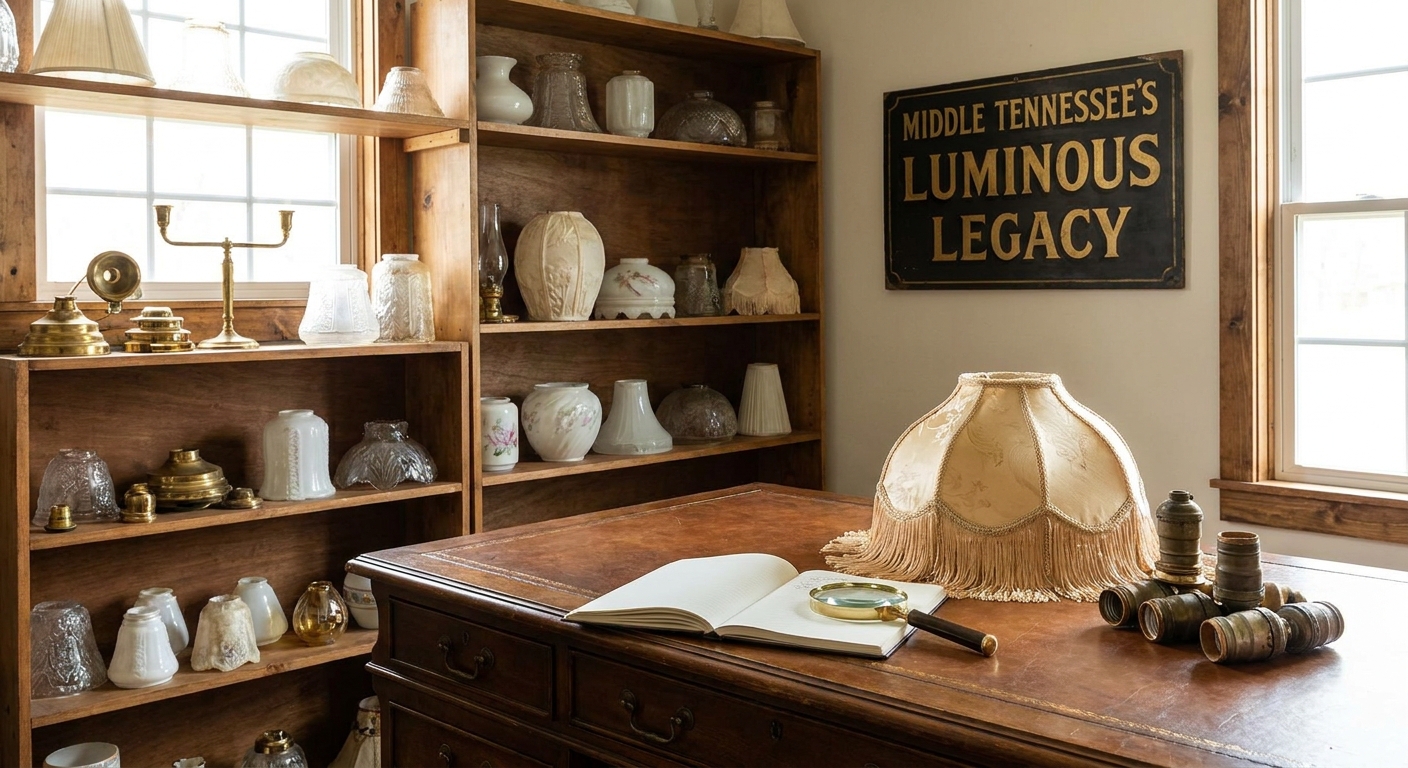
Imagine clearing out a grandparent's attic here in Middle Tennessee, and there, tucked away in a dusty corner, is an old lamp. It’s heavy, probably brass or bronze, and topped with a shade that’s seen better days – maybe a bit faded, a little torn, or even slightly misshapen. Your initial thought might be to donate it or sell it for a few dollars at a yard sale. But then you notice the intricate details, the unique glasswork, or the delicate hand-painted scene. Could this humble lamp, especially its shade, be more than just a dusty relic? In our region, with its rich history and abundance of heirloom pieces, this scenario plays out frequently, and the answer is often a resounding yes. The antique lamp shade, often overlooked, can be a significant part of a lamp's overall value and a fascinating piece of history in its own right.
Appraising these luminous legacies requires a keen eye and a methodical approach. One of the first strategies is to meticulously assess the condition and originality of the shade. Is it the original shade that came with the lamp? This is paramount. An original Handel reverse-painted shade, even with minor wear, will command a far higher value than a reproduction, no matter how well-made. Look for signs of repair, fading, tears in silk, or missing fringe. While some minor wear is expected with age, extensive damage significantly impacts value. For example, a stained-glass shade missing multiple panels or having extensive solder repairs will be valued differently than one with just a few hairline cracks.
Another critical step involves investigating the materials and craftsmanship. Antique lamp shades come in a remarkable variety: intricate leaded or slag glass, delicate silk, hand-painted parchment, or even mica. Each material tells a story about its era and potential maker. For glass shades, examine the quality of the glass, the precision of the cuts, and the artistry of the design. Look for maker's marks not just on the lamp base, but sometimes directly on the shade itself, or on the fitter that connects it to the lamp. A distinctive style, even without a clear mark, can often point to a known manufacturer like Tiffany, Pairpoint, or Handel, whose pieces are highly sought after.
Finally, understand the concept of a "married" lamp. It’s common to find an antique lamp base paired with a shade that is not original to it, or vice versa. Sometimes, a valuable base might have a generic replacement shade, or a stunning, valuable shade might be on a common, inexpensive base. The value is assessed based on the individual components and how well they complement each other, but the highest values are typically reserved for original, complete pairings. When evaluating, we apply the framework of Market Value, determining what a willing buyer would pay a willing seller, neither being under compulsion to buy or sell, and both having reasonable knowledge of relevant facts. This involves comparing the item to similar lamps and shades that have recently sold in the open market, considering condition, rarity, and provenance.
In practice, I once appraised a beautiful floor lamp with a simple, yet elegant bronze base. The client initially focused on the base, assuming its age was the primary driver of value. However, upon closer inspection, the domed, amber-colored slag glass shade, which appeared understated, actually bore a faint, almost invisible signature from a lesser-known but highly respected early 20th-century artisan. This detail, combined with its excellent condition, elevated the lamp’s overall value significantly, demonstrating just how much the shade can contribute.
The legacy of these luminous objects is deeply woven into Middle Tennessee's homes and history. If you've inherited an antique lamp or are curious about a piece you own, don't underestimate the potential value held within its shade. For insurance purposes, estate planning, or simply to understand the true worth of your cherished possessions, a professional appraisal offers clarity and peace of mind. It ensures that the unique stories and intrinsic value of these pieces are properly recognized and preserved.