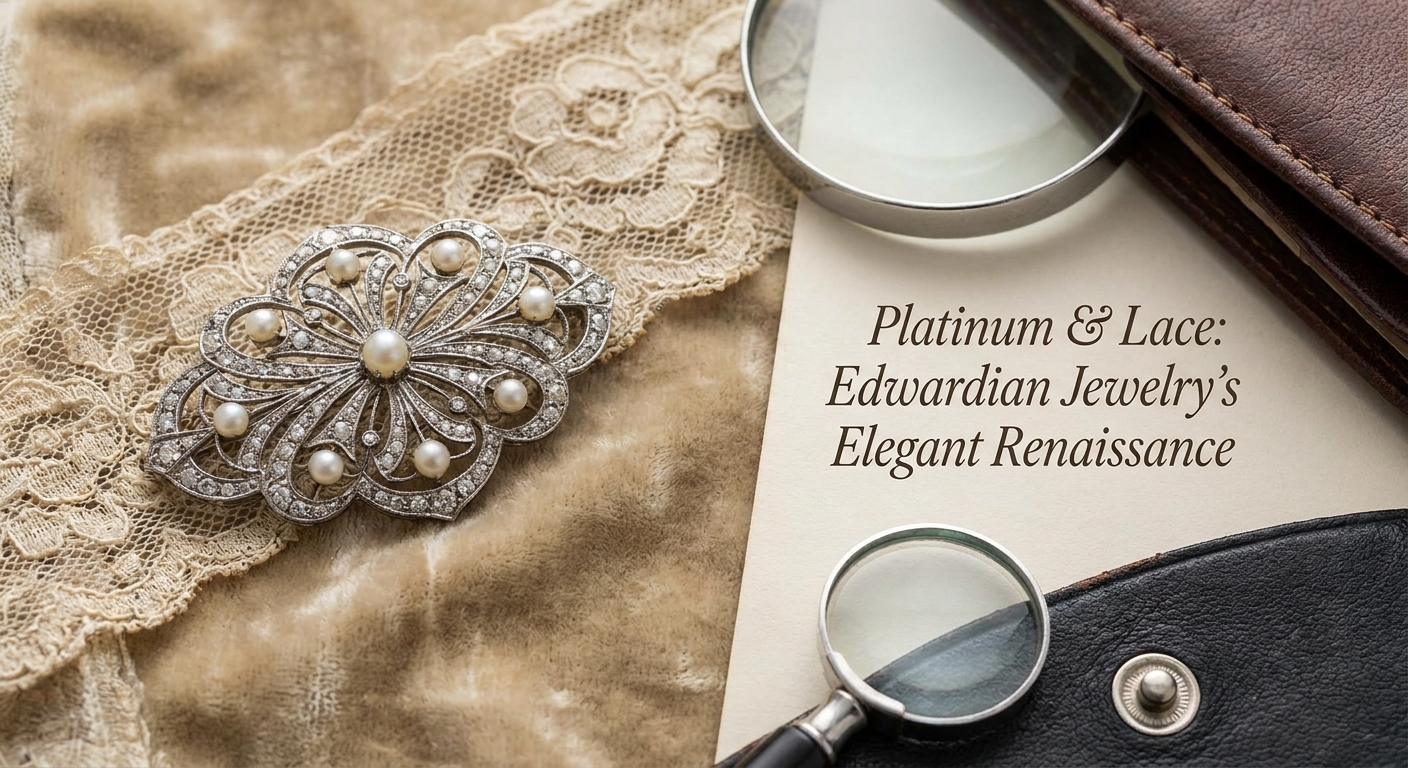
The small, intricate pendant sat quietly in a velvet box, a forgotten heirloom passed down through generations. Its owner, a young woman named Sarah, had almost dismissed it as "just old jewelry," perhaps silver, too delicate for modern wear. Yet, there was an undeniable allure to its lacy, openwork design, sparkling with tiny stones that caught the light with an almost ethereal glow. She wondered if it held any real value beyond sentimental attachment, or if it was simply a charming relic of a bygone era. This common scenario perfectly illustrates the quiet resurgence of Edwardian jewelry, a period often overshadowed but holding immense significance for collectors and appraisers alike.
The Edwardian era, spanning roughly 1901 to 1910, marked a distinct shift in jewelry aesthetics, moving away from the heavier, often somber designs of the late Victorian age. This was the "Belle Époque," a time of optimism, elegance, and technological advancement, all beautifully reflected in its jewelry. The true star of this period was undoubtedly platinum. Its incredible strength and ductility allowed jewelers to craft incredibly delicate, airy designs that were previously impossible with gold or silver. This strength meant less metal was needed to secure stones, creating a nearly invisible setting that emphasized the gems themselves, giving rise to the "white on white" look so characteristic of the era.
When I approach an Edwardian piece, my appraisal process is guided by several key strategies to accurately identify and value these treasures. First, material identification is paramount. While some pieces might appear to be white gold, true Edwardian jewelry often features platinum. Platinum is denser, has a different luster, and, critically, was a revolutionary material at the time. Examining hallmarks or, if absent, testing the metal can confirm its composition. This isn't just about raw material value; platinum's use signifies a level of craftsmanship and investment indicative of the era's finest pieces.
Secondly, design analysis provides crucial clues. Edwardian jewelry is renowned for its delicate, feminine motifs inspired by nature, bows, ribbons, and garlands. Look for intricate filigree work – fine, delicate wire shaped into decorative patterns – and milgraining, the tiny beaded edges that soften the lines of metalwork and enhance the "lace" aesthetic. These elements speak to the meticulous handcraftsmanship of the period, a stark contrast to mass-produced items. A piece exhibiting a high degree of such detailed artistry inherently carries greater value.
Finally, gemstone context is vital. Diamonds were overwhelmingly popular, often set in old European or old mine cuts, which have a unique fire distinct from modern brilliant cuts. Natural pearls were also highly prized, frequently incorporated into designs alongside diamonds or sapphires. While I am not a GIA-certified gemologist, understanding the typical gemstones and cuts prevalent in the Edwardian period allows me to place a piece within its proper historical and market context. This understanding helps in assessing not just the individual stone's value, but its contribution to the overall historical integrity and desirability of the piece.
In practice, I recall appraising a breathtaking Edwardian lavalier necklace. Its intricate platinum framework, adorned with delicate milgraining and tiny bow motifs, held a cascade of old European cut diamonds and two natural pearls. The client initially thought it was "just silver and paste," but upon closer examination, the distinct characteristics of platinum, the unmistakable fire of the diamonds, and the specific luster of the pearls, all pointed to an authentic Edwardian masterpiece. The craftsmanship alone, adhering to the highest standards of the time, contributed significantly to its current market value, far exceeding the sum of its material components. This illustrates the evidence-based concept that an item's value often extends beyond its intrinsic material worth, encompassing historical significance, artistic merit, and market demand for authentic period pieces.
If you find yourself with an item that whispers of the past, with its delicate platinum lacework and subtle sparkle, don't underestimate its potential. Edwardian jewelry represents a pinnacle of elegance and craftsmanship, holding significant value in today's market. To truly understand its worth, both financially and historically, seeking a qualified personal property appraiser is essential. We can accurately identify these pieces, assess their condition, and provide a comprehensive valuation that honors their enduring legacy.