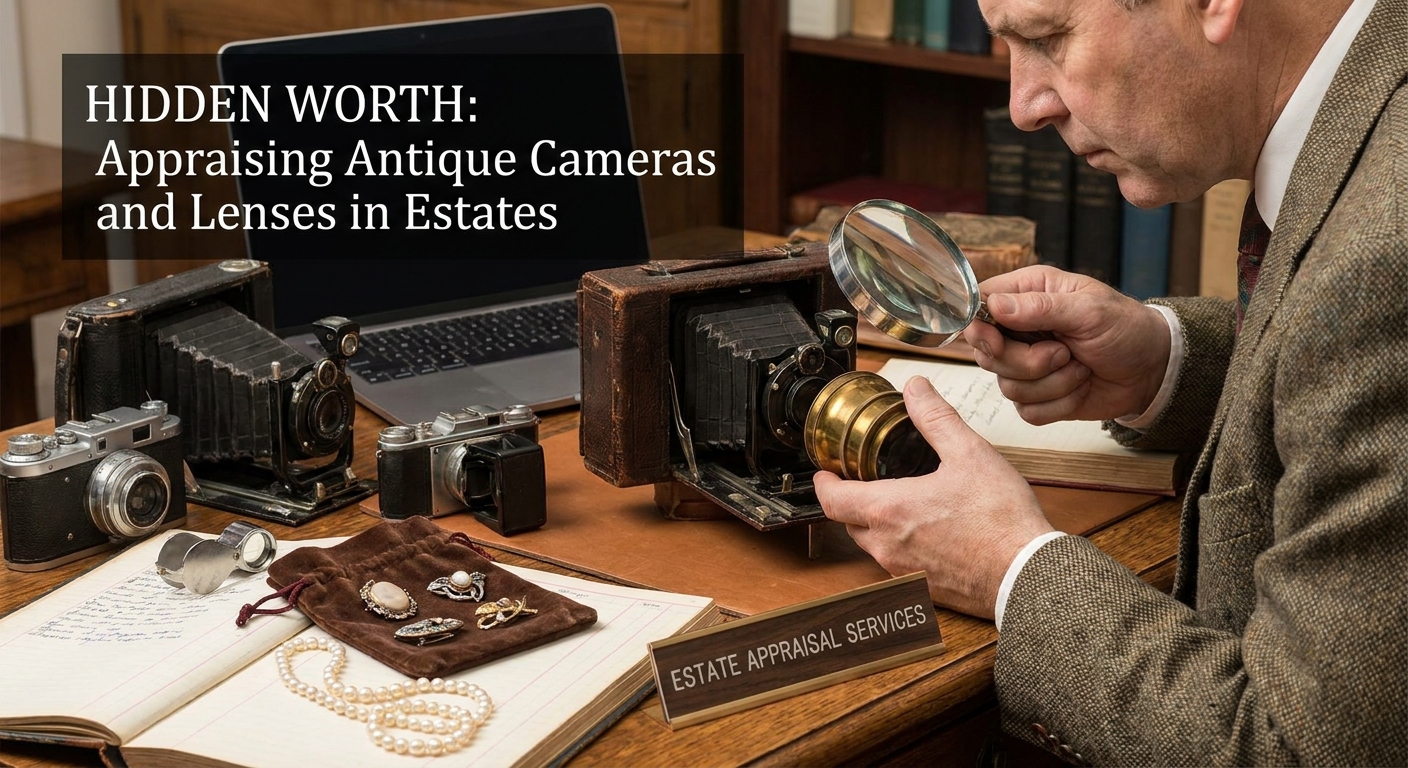
It’s a scene I’ve encountered countless times: a family, sifting through the accumulated life of a loved one, comes across a dusty box tucked away in the attic or the back of a closet. Inside, an assortment of old cameras, lenses, and perhaps some forgotten photographic accessories. Often, the immediate thought is, “These are just old, sentimental relics. Maybe a garage sale item, or a donation to a thrift store.” What they don't realize is that within that unassuming box could lie significant, hidden monetary value, waiting to be properly identified and appraised.
These aren't just obsolete electronics; many antique cameras and lenses are coveted by a vibrant community of collectors, photographers, and historical enthusiasts. Distinguishing between a forgotten relic and a valuable collectible requires a trained eye and specialized knowledge. As an appraiser, my role is to unearth this potential, ensuring estates don't inadvertently discard assets.
One of the first, and most crucial, strategies involves meticulous identification and condition assessment. It’s not enough to simply see an "old camera." We need to identify the manufacturer, model, serial number, and year of production. Brands like Leica, Hasselblad, Rolleiflex, early Nikon, and Canon often hold significant value, but even lesser-known names can surprise. Crucially, condition is paramount. Is the camera body intact? Are there signs of fungus or haze in the lenses? Does the shutter mechanism still fire? Original accessories, such as leather cases, lens caps, and instruction manuals, can also add substantial value. I always advise clients not to attempt cleaning these items themselves, as improper methods can cause irreparable damage and significantly devalue a piece.
My second strategy focuses on researching niche markets and scarcity. The value of these items is often driven by collector demand within specific segments. For example, a rare, limited-production model or a lens known for exceptional optical quality can fetch prices far exceeding general expectations. Sometimes, the lens itself is more valuable than the camera body it’s attached to, particularly with certain high-quality prime lenses from reputable manufacturers. Understanding these specific market fluctuations and collector preferences requires extensive research into auction results, specialized forums, and dealer networks.
Finally, while not always present, provenance and context can significantly enhance value. Did the camera belong to a notable photographer? Was it used during a significant historical event? While verifiable documentation is always best, even compelling family anecdotes can sometimes provide leads for further research, adding a rich layer of history that can appeal to collectors.
In the appraisal world, we often consider the "Highest and Best Use" of an item. For many antique cameras and lenses, their highest and best use isn't as a display piece in a general antique store, but rather as a highly sought-after collectible in a specialized market. This framework guides our valuation process, ensuring we are assessing value based on its optimal market.
Just last year, I appraised an estate where the family had set aside a vintage camera for a yard sale, believing it might fetch fifty dollars. It was a well-preserved Leica M3 with a desirable Summicron lens. After a thorough assessment and market research, its fair market value was determined to be several thousand dollars. That’s the kind of hidden worth that an expert eye can uncover.
The takeaway is clear: before you clear out an estate and dismiss old photographic equipment as mere junk, pause. Consult with a qualified personal property appraiser. Our expertise can help you navigate these specialized markets, accurately identify valuable items, and ensure that the true worth of an estate’s contents is recognized and properly managed. You might just be holding a forgotten treasure.