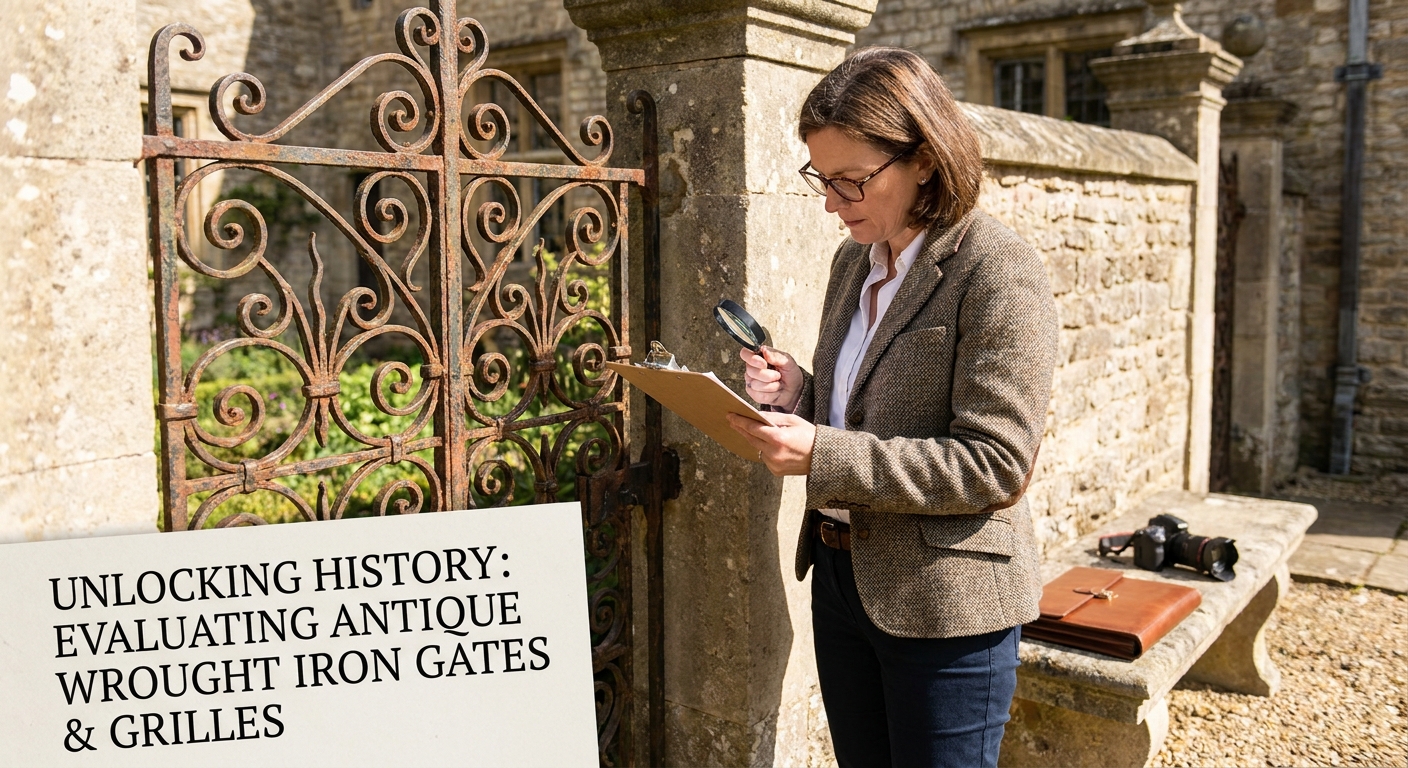
Imagine a family, years after inheriting a sprawling, slightly dilapidated country estate, finally tackling the old carriage house. Tucked away in a dusty corner, beneath decades of forgotten tools and lumber, they uncover what appears to be a massive, corroded iron gate. Their initial thought might be to haul it to the scrap yard, seeing only rust and decay. Yet, to an appraiser, that very rust could be a patina of history, and the intricate, hand-forged details a testament to forgotten craftsmanship, potentially unlocking significant value beyond mere weight in metal.
Evaluating antique wrought iron gates and grilles is less about their material value and more about their artistry, age, and historical significance. These aren't just functional barriers; they are enduring sculptures, often rich with stories and clues about the eras they represent. Uncovering their true worth requires a keen eye and a methodical approach, much like decoding an ancient manuscript.
One primary strategy is to meticulously examine the craftsmanship and construction techniques. True wrought iron, particularly from the 18th, 19th, and early 20th centuries, was hand-forged. Look for evidence of hammer marks, the subtle irregularities that betray the human hand, and traditional joinery methods like rivets, collars, or mortise and tenon joints, rather than modern welds. Intricate scrollwork, repoussé (raised relief) elements, or delicate leaf motifs often point to highly skilled artisans and specific design periods—Rococo, Neoclassical, Art Nouveau, or Art Deco, for instance. A gate with consistent, flowing scrolls and crisp details, free from abrupt angles or machine-stamped uniformity, speaks volumes about its origin and potential value.
Next, a thorough condition assessment is crucial. Distinguish between stable, historical patina and active, damaging corrosion. While some surface rust can be desirable, deep pitting, structural compromise, or significant losses to the ironwork will impact value. Conversely, original components, even with wear, are generally preferred over modern, mismatched repairs. An original latch, hinge, or finial, despite its age, can be a key indicator of authenticity and completeness. Understanding the "condition continuum"—from untouched original to significantly restored—helps place the item within a valuation framework.
Finally, delve into provenance and historical context. Where did the gate or grille originate? Was it part of a prominent estate, a significant architectural landmark, or the work of a known blacksmith or firm? Documented history, such as old photographs, architectural plans, or family records, can dramatically increase an item's value. Without direct provenance, the style, materials, and construction can often provide strong clues about its likely origin and era. This historical detective work is vital in establishing its uniqueness and desirability in the market.
In practice, I once appraised a set of ornate iron grilles salvaged from an old bank building slated for demolition. Initial estimates were low, but upon closer inspection, I noted a barely visible foundry mark on a lower panel. Research revealed it belonged to a renowned Chicago architectural ironworks firm from the late 19th century, known for their work on several landmark structures. This discovery, combined with the grilles' excellent condition and intricate Art Nouveau design, elevated their appraised value significantly, showcasing them as important pieces of architectural history rather than mere scrap.
Ultimately, antique wrought iron gates and grilles are more than just old metal; they are tangible links to our past, embodying the craftsmanship and aesthetic sensibilities of bygone eras. For those encountering such items, whether through inheritance, property acquisition, or simply a fascinating discovery, understanding their true potential is paramount. Don't let rust obscure history. A professional appraisal can help you unlock the stories and inherent value within these remarkable pieces, ensuring they are properly recognized and valued for insurance, estate planning, or sale.