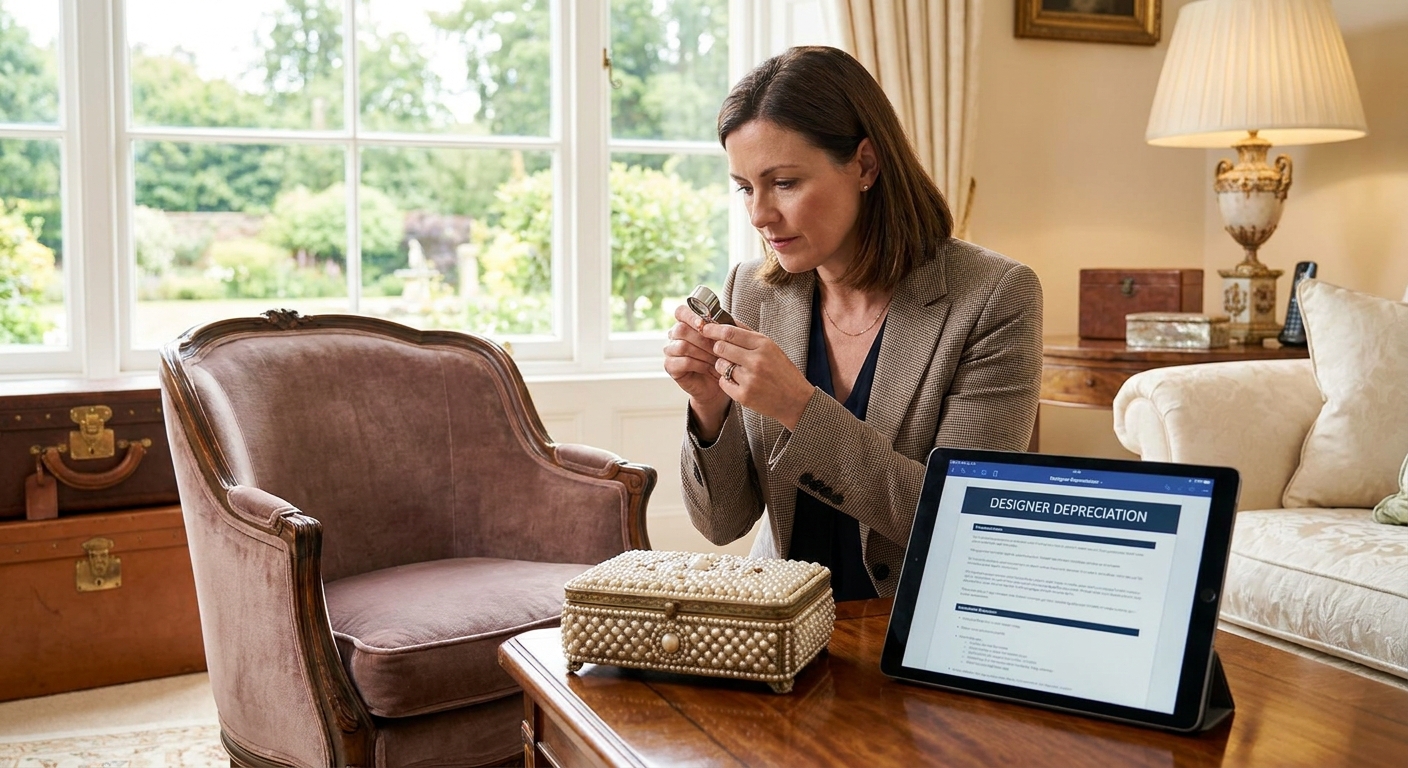
It’s a common scenario: a client, beaming with pride, shows me their meticulously designed living space. Every piece chosen with care, often from renowned designers, reflecting a significant investment and a distinct aesthetic. Years later, perhaps due to a move, an estate settlement, or simply a desire to redecorate, they decide to assess the value of these cherished items. The initial conversation often involves an expectation that these high-end furnishings, purchased at premium prices, will have retained a substantial portion of their original value. However, the reality of designer depreciation can often be a surprising and, at times, disheartening revelation.
Unlike certain categories of fine art or rare antiques, which can appreciate significantly over time, luxury home furnishings generally follow a different trajectory. While they are certainly investments in quality, craftsmanship, and design, their "investment" nature is primarily in lifestyle and aesthetic enjoyment, not necessarily in financial appreciation. The moment a designer piece leaves the showroom floor and enters a private home, its value typically begins to decline, often quite sharply in the initial years. This isn't a reflection of poor quality or taste; it's simply the nature of the secondary market for used goods, even high-end ones.
Mastering the value of these pieces requires understanding a few core principles. First, Market Dynamics and Desirability play an enormous role. A custom-made sofa, while perfectly tailored for one home, might be challenging to resell due to its specific dimensions, fabric, or color choice. Conversely, an iconic, mass-produced but still high-end chair from a celebrated designer might hold its value better because of broader appeal and recognition. The market’s current appetite for specific styles, materials, and even designers shifts continually. What was highly desirable five years ago might be less so today, making an item harder to place in a new home, thus impacting its resale value.
Second, Provenance and Documentation are absolutely critical. For any luxury item, having the original receipts, designer certificates of authenticity, purchase orders, and even care instructions can significantly bolster its perceived and actual value on the secondary market. This documentation verifies the item's origin, confirms its authenticity, and provides a transparent history, which buyers value immensely. Without it, even a genuine designer piece can be viewed with skepticism, reducing its market appeal and potential selling price. Imagine trying to sell a bespoke dining table without any proof of its designer or original cost—it becomes just a "nice table" rather than a valuable design piece.
Finally, Condition is Paramount. This might seem obvious, but for luxury furnishings, even minor wear and tear can have a disproportionate impact on value. A small scratch on a lacquered surface, a subtle fade in upholstery, or a slight wobble in a chair leg can dramatically reduce its desirability and, consequently, its market worth. Unlike some antiques where patina is prized, modern luxury items are often expected to be in near-perfect condition to command premium prices. The cost of professional restoration or reupholstery can easily exceed the potential resale value, making immaculate condition a non-negotiable factor for retaining value. This aligns with what I often refer to as "The Three Pillars of Value Retention" for luxury goods: Authenticity, Condition, and Market Demand. If any pillar is weak, the overall value suffers.
In practice, I recently appraised a magnificent, custom-designed armoire for an estate. The original purchase price was substantial, reflecting its intricate craftsmanship and the designer’s reputation. However, a deep gouge on one side and a missing piece of decorative trim, combined with the current trend favoring minimalist designs, meant its secondary market value was a mere fraction of the original cost. Explaining this depreciation, while sometimes difficult, is crucial for setting realistic expectations.
When you're navigating the complexities of designer depreciation, whether for insurance, estate planning, or potential sale, relying solely on your original purchase price can lead to significant surprises. Engaging a qualified personal property appraiser who understands the nuances of the secondary market, the critical role of provenance, and the impact of condition is your most actionable takeaway. We provide an objective, defensible valuation that reflects true market realities, helping you master the value of your luxury home furnishings.