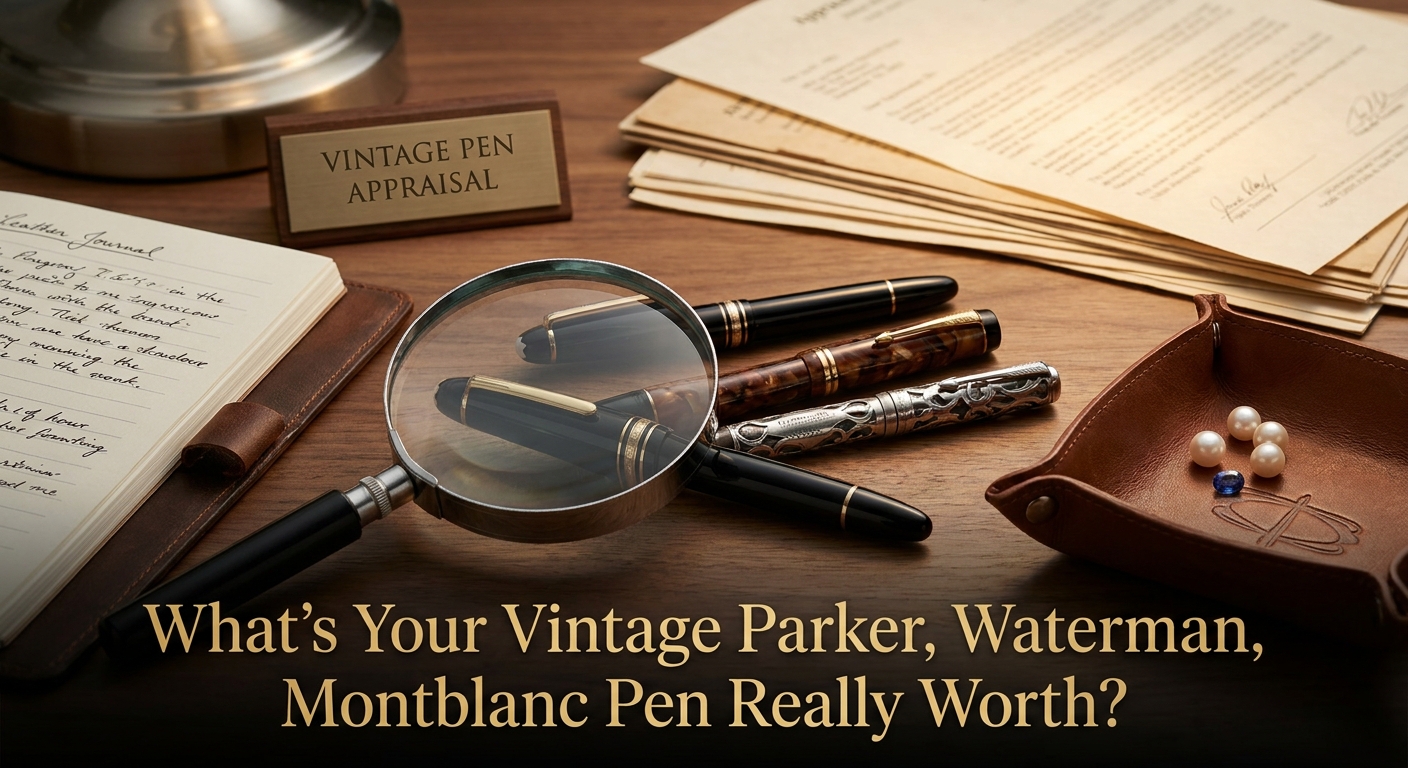
Imagine Sarah, clearing out her grandfather's old study, stumbling upon a forgotten box of desk items. Nestled among yellowed letters and dried-up ink bottles, she finds a sleek, black pen. It feels substantial, elegant, but she initially dismisses it as just another relic, perhaps a sentimental item but not particularly valuable. Her first thought might be to put it in the charity pile. Yet, a quick glance at the engraved "Montblanc" on the cap jewel sparks a flicker of curiosity. Could this "old pen" actually be worth something significant? This scenario plays out more often than you might think, and it perfectly illustrates the hidden potential—and the common pitfalls—of assessing vintage writing instruments.
Determining the true worth of a vintage Parker, Waterman, or Montblanc pen is far more nuanced than simply identifying the brand. It’s a process that combines historical knowledge, keen observation, and a deep understanding of the current market. As an appraiser, I often see pens that owners believe are merely old, only to discover they are coveted collector's items. Conversely, some cherished pieces turn out to be later, more common iterations.
One of the first crucial steps is precise identification of the model and era. A Parker "51," for instance, can vary wildly in value depending on whether it's an early Vacumatic filler from the 1940s, a later Aerometric, or a special edition. Look for distinguishing features: the filling mechanism, cap material (lustralloy vs. gold-filled), and specific nib engravings. Is that Montblanc a classic Meisterstück 149 from the golden era of the 1950s, identifiable by its telescopic piston and specific feed, or a more recent production model? These subtle differences are critical. A Waterman "Patrician" in a rare color like turquoise will command a premium over a common black one. Researching these specific details, often found in specialized pen guides or online databases, is invaluable.
Next, condition is paramount. A pen in "mint, uninked" condition, especially if it retains its original box and papers, will always fetch a higher price than one with visible wear. Examine the pen meticulously for scratches, dents, cracks, or brassing (where the gold plating has worn through to the base metal). The nib, the soul of the pen, must be inspected for bends, cracks, or excessive wear. Is the clip secure? Does the filling mechanism operate smoothly (though I advise against attempting to ink a vintage pen without expertise)? Even minor flaws can significantly impact value, sometimes by hundreds or even thousands of dollars for highly desirable models.
Finally, consider rarity and market desirability. Limited editions, unusual materials, or pens associated with significant historical events or figures naturally hold greater appeal for collectors. The market for vintage pens is dynamic, influenced by trends and collector demand. What was highly sought after a decade ago might have seen a shift in interest, and vice-versa. This is where the Market Approach to Valuation comes into play—looking at comparable pens that have recently sold through reputable auction houses or specialist dealers, rather than just asking prices, gives us the most accurate picture of value.
I once appraised a relatively unassuming Montblanc 146. The owner thought it was a nice pen, perhaps worth a few hundred dollars. However, upon closer inspection, I identified it as an early 1950s model, indicated by its specific feed design and the distinct two-tone nib. These small, often overlooked details, invisible to the casual observer, transformed its perceived value from a common collectible to a highly desirable piece for a discerning Montblanc enthusiast, significantly increasing its market worth.
Uncovering the true value of your vintage pen is an exciting journey, but it’s one best navigated with expertise. These intricate objects hold stories and often significant financial value that only a trained eye can fully appreciate. If you have a vintage Parker, Waterman, Montblanc, or another fine writing instrument, don't leave its worth to guesswork. A professional appraisal can provide you with an accurate valuation for insurance, estate planning, or potential sale, ensuring you understand exactly what your cherished piece is truly worth.