Rough Diamond Sorting & Evaluation
A study reference for translating natural crystal habits, color, and clarity into cut potential. Suitable for GIA G230 coursework review.
1. Shape & Crystal Habit
Categorizing natural isometric crystal structures to determine the best cutting plan and yield.
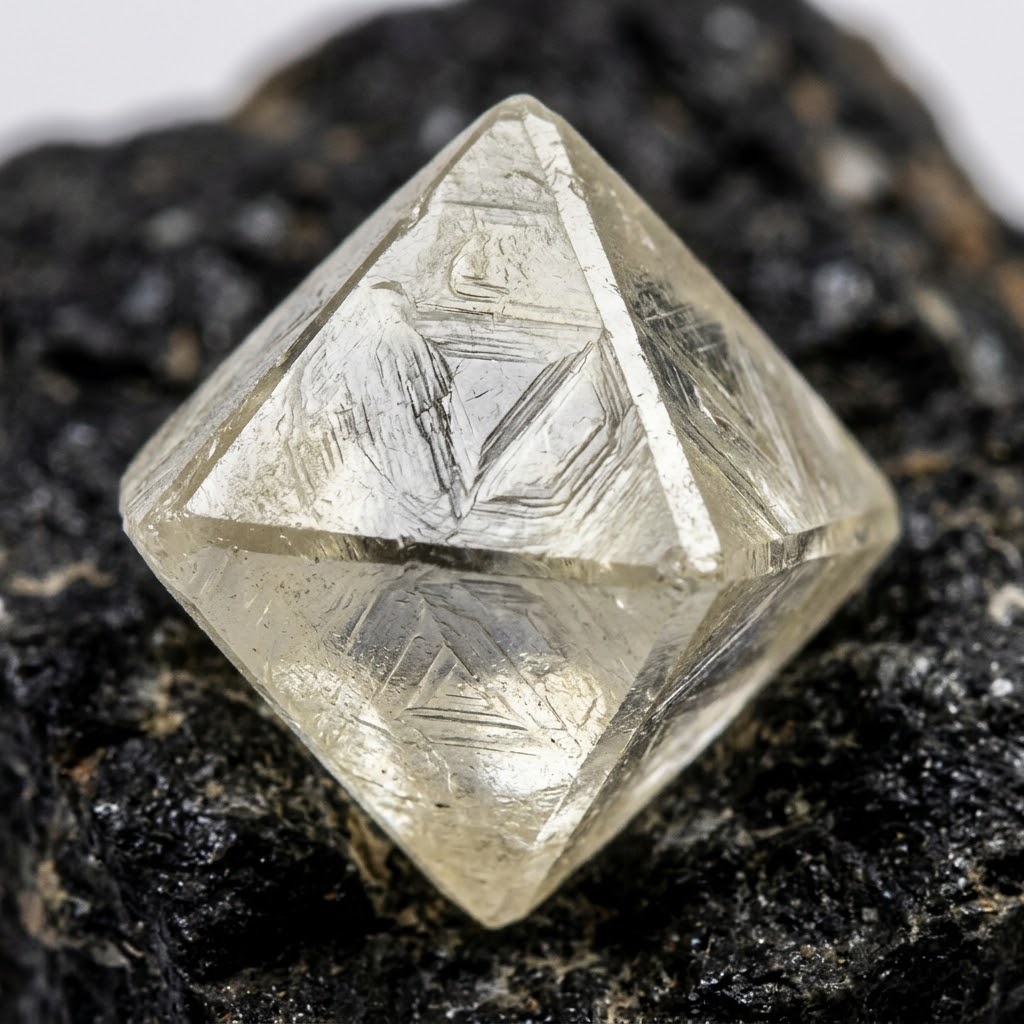
Octahedron
Eight-sided (two pyramids base-to-base). The ideal shape; typically sawn in half to yield two round brilliants.
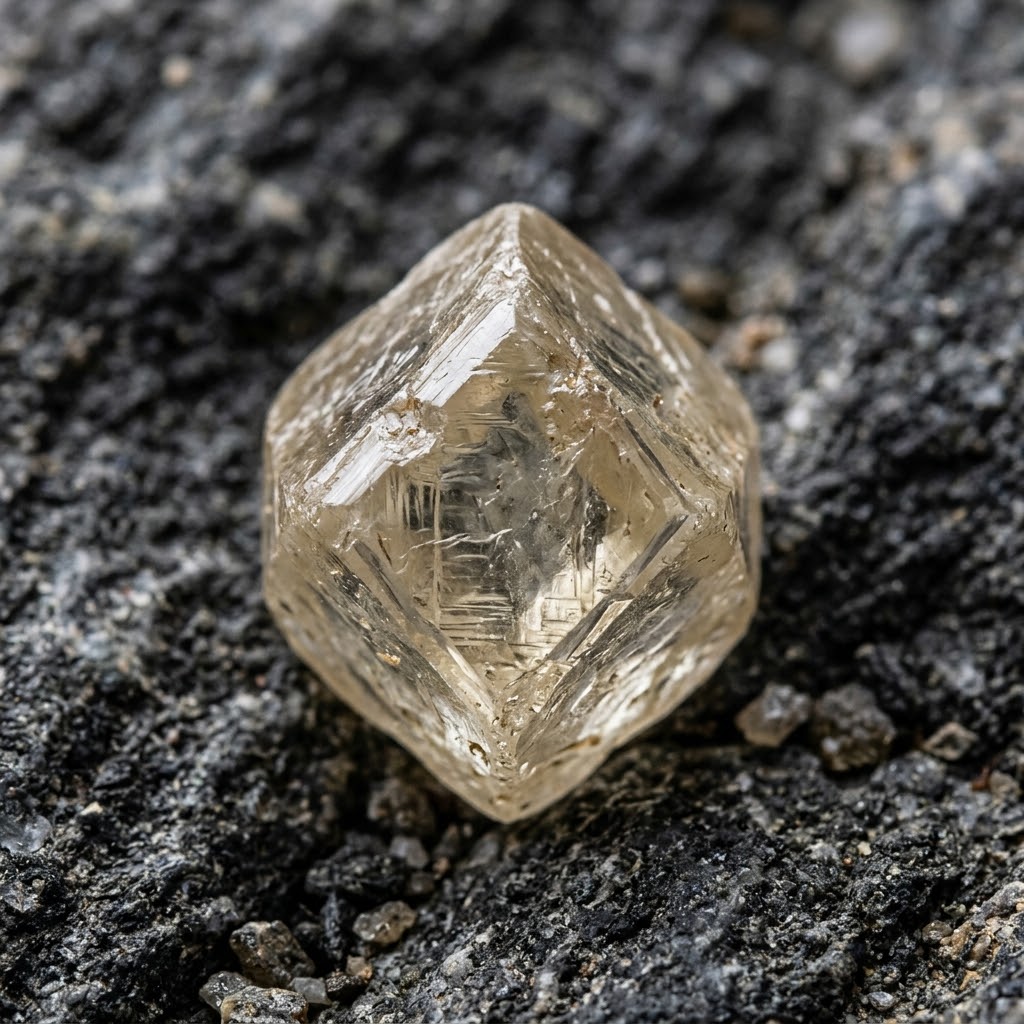
Rhombic Dodecahedron
Twelve-sided with rounded faces. Often yields beautiful round brilliants or fancy shapes.
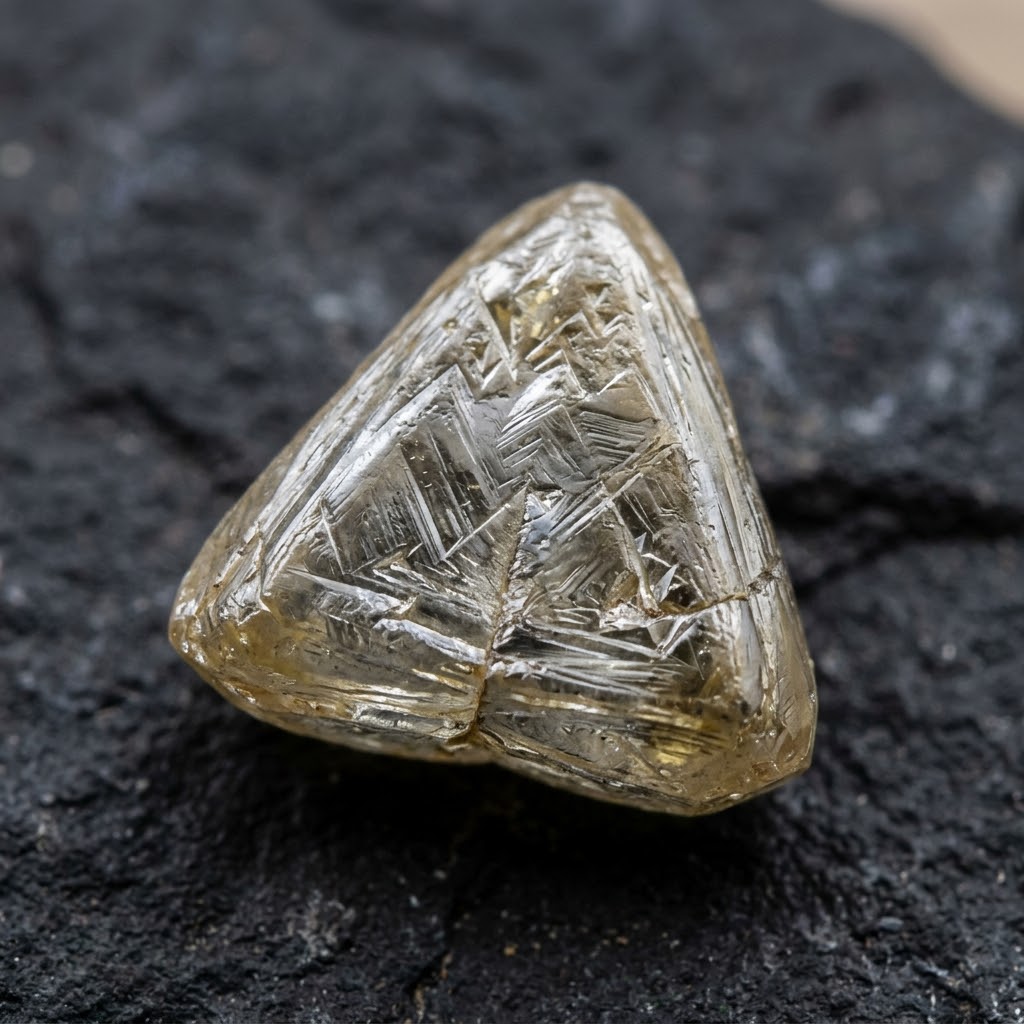
Macle (Twinned)
A flat, triangular twinned crystal. Growth direction changes at the twin plane. Ideal for Pear, Heart, or Triangle cuts.
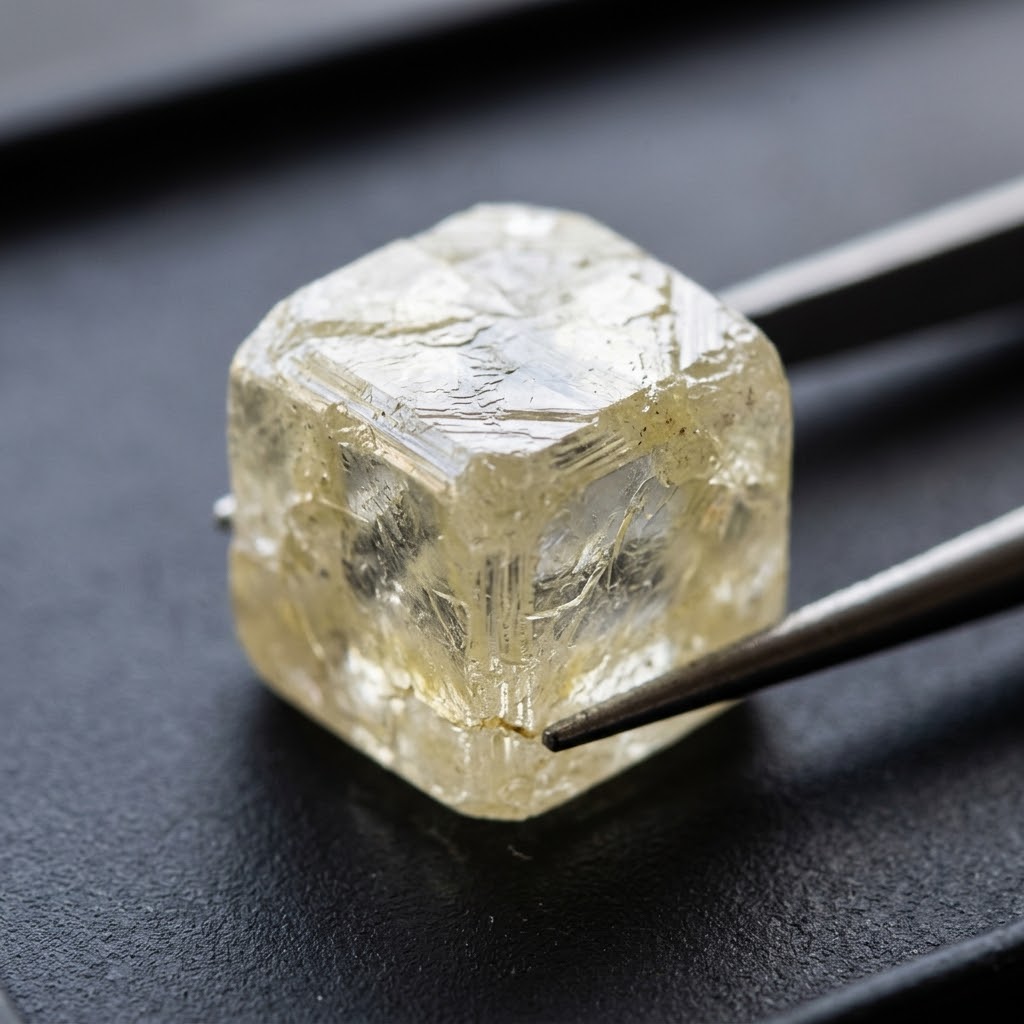
Cube
Six square faces. Often opaque or heavily included. Sometimes used for fancy shapes if clarity allows.
2. Clarity & Manufacturing
Rough is sorted by how it must be manufactured to maximize the final GIA Clarity Grade (IF to I3) under 10x magnification.
Sawables High Potential (IF - VS)
Well-formed crystals (octahedrons/dodecahedrons) that can be sawn into two pieces to maximize yield.
Makeables Variable (SI - I1)
Irregular shapes or crystals where sawing isn't practical. They are polished directly into a single stone.
Cleavages Challenging (I1 - I3)
Crystals containing significant internal tension, cracks (feathers), or knots that must be split (cleaved) before processing.
3. Color (Hue)
Evaluating the presence of yellow/brown tint against master stones under daylight-equivalent lighting.
The GIA D-Z Scale
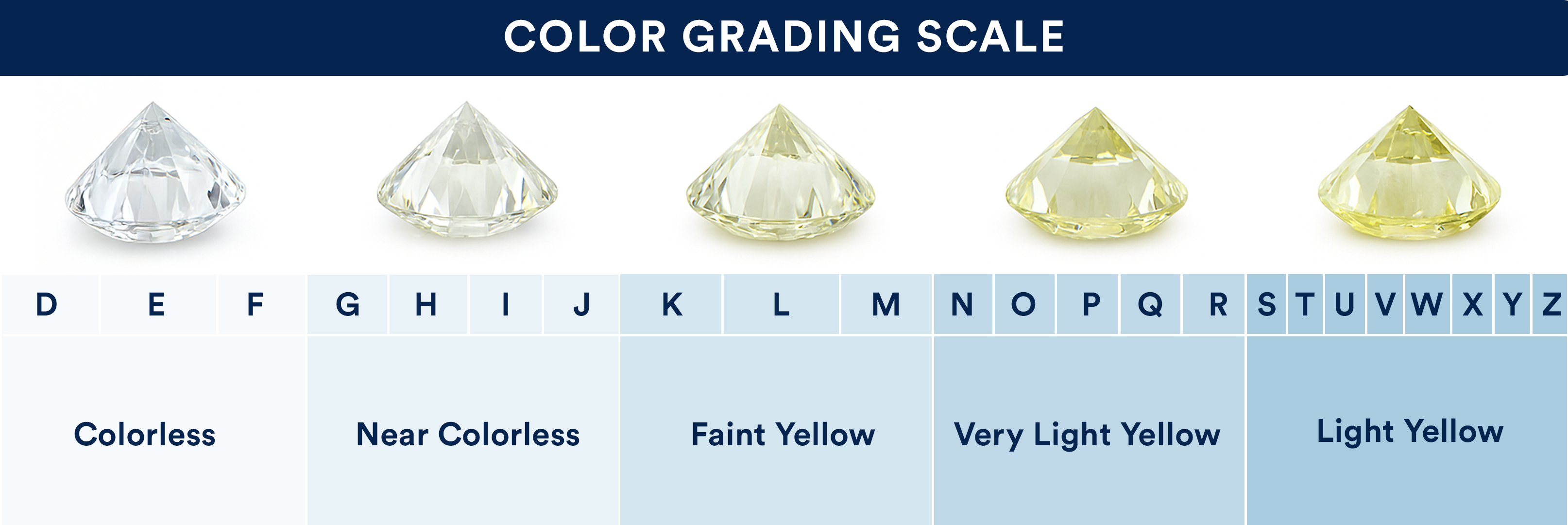
Examining Rough Color
Because rough surfaces are frosted, sorters often look through a natural clear surface, or polish a small "window" onto the stone to accurately gauge the interior body color before cutting.
4. Weight (Carat) & Yield
Measuring mass on precision scales and estimating the final polished outcome.
The Concept of Yield
Yield is the percentage of the original rough diamond's weight that remains after polishing. Because cutting a faceted gem usually results in a weight loss of 50% to 60%, the final polished yield is typically only 40% to 50% of the rough.
Example: A 2.20ct rough Octahedron losing 55% of its weight will yield a 1.00ct polished stone.